The reason we race isn’t so much to beat each other… but to be with each other.
– Christopher McDougall, Born To Run
The iconic Bixby Bridge, midway point of the Big Sur International Marathon
There’s a lot to be said for running on the ragged edge of the Western world.
I could happily fill this post with my usual edge-of-your-seat, 4,000-word race report. After all, there’s a reason the Big Sur International Marathon (BSIM) appears on so many “must-run” lists, including the Men’s Health bucket list of “11 Races to Run Before You Die”. There’s a reason (aside from his likeness appearing on the mile 24 course marker) Bart Yasso of Runner’s World says, “If we were told we could only run one marathon in our lifetime, Big Sur would have to be it.” And there’s a reason this year’s race sold out in a record 59 minutes (after the 2013 edition had taken, appropriately enough, 26.2 hours to fill).
I could easily fill this post with shameless shout-outs to all the friends who reminded me that the benefits of running extend far beyond the cardiovascular:
Bay Area buddies Jen and Tim, who enjoyed what may have been Jen’s strongest marathon to date. Whether you’re planning to run Big Sur yourself or prefer to race vicariously, I’d recommend her meticulously detailed race report.
Otter, who I’d first met in Portland last year and who showed serious fortitude with a sub-4:15 finish at Big Sur, despite a nagging knee injury that had prevented him from running anything longer than ten miles since November. An awful lot of life stuff can happen when you commit to a race nine months in advance.
And a remarkable contingent of fellow Antarctica 2013 travelers in Donn and Rod, Wally and Larissa, Melissa and Wayne, Drew, Gerard, Karen, Liz, Louann and Mike. Amazingly, of the 100 passengers who boarded the Akademik Sergey Vavilov last March, 13 of us (plus one crew member in Liz) were reunited in Monterey. And my loudest shout-out would go to Mike, who in support of his sister Mindy’s battle against breast cancer left nothing in the tank, running a 3:22:49 on what may be the toughest road marathon course in the country.
Me and Jen got it, so we gonna flaunt it!
Sporting a tan camel’s hair blazer over teal race shirt, Otter was an easy find at the start line (photo credit the nice lady holding Otter’s cell phone)
Great to catch up with Antarctica travel mates including Drew (left, celebrating his 24th state and 28th marathon) and Donn (right), without the ground swaying beneath us
If I were to reference old friends, I’d be remiss in not acknowledging new ones – particularly Big Sur Marathon veteran Bala from Sunnyvale, who has the questionable distinction of being the first person to officially recognize and approach me based on having read the blog. Thanks for introducing yourself Bala, it was a pleasure to meet you despite the ribbing I took afterward as “famous blogging guy”. Hopefully your own weekend in Big Sur was a resounding success… and hopefully you’re still reading!
Turning away from the sunbeams and rainbows, I could try (unsuccessfully) to share my angst from the week leading up to the race, an angst I owed to a stubborn case of plantar fasciitis (PF) that had taken hold of my left heel in mid-March, causing both foot and training regimen to suffer. A 26 x 200m track workout ten days before Big Sur – which ironically felt good and seemed like a good idea at the time – reduced me to a zombie-like limp for two days afterward.
But it wasn’t so much the idea of running the Big Sur Marathon with PF that stressed me out – it was the idea of not running the Big Sur Marathon with PF. Big Sur was unequivocally not a race I wanted to DNS. And if I started the race, then I would finish the race, even if it meant awkwardly limp, step, limp, step-ping my way through 26.2 miles. For this reason, I set my “A” goal for race day at a don’t-do-anything-stupid four hours, with my “B” goal being simply to cross the finish line under my own power. I figured if I could complete a hilly midnight marathon at altitude on a sprained ankle in less than four hours, then four hours should be a reasonable goal for Big Sur. All in all, a very scientific appraisal.
View from Hurricane Point, three days after the race (the Bixby Bridge is just visible in the distance)
As for the race itself, I could fill paragraphs reflecting on the easily navigated pre-race expo, the flawlessly executed pre-dawn (4:00am) shuttle ride to Pfeiffer Big Sur State Park, the start-line sendoff from American marathon record-holder Deena Kastor, the finish-line massage tent, and every vivid detail in between. I could recount the most memorable snippets of conversation overheard during my 3:56:19 journey (“A raisin or pistachio out the window in a big city is not littering – fact.”).
And normally I would.
But at the Big Sur International Marathon, the point-to-point course – beginning in Big Sur and running north to Carmel – is the star of the show. With its seemingly infinite blue-on-blue oceanscapes of swirling whitecaps pounding rocky outcroppings, the ragged coastline is quintessential California. And it’s a key reason so many Californians will tell you that the relatively high cost of living here is negligible compared to the higher cost of not living here.
(Google Earth; click on the image for a larger version)
The BSIM course speaks for itself. And so for once – with the help of the GoPro camera I wore (with variable success) during the race – I’ll let it. Apologies for the oft-shaky video… but then again I am running, and despite our proximity this ain’t Hollywood. So turn up the volume, and keep an eye out for:
the soaring, awe-inspiring redwoods of Big Sur (~0:17)
Ultramarathon Man Dean Karnazes, seen at several points wearing a white-and-orange singlet. Dean was running his own Karnazesque version of the BSIM, having already run 32 miles from Monterey to the start line in Pfeiffer Big Sur State Park earlier that morning. I even seized the opportunity to strike up a brief conversation (not shown in the video) – after all, what better time than during a marathon to talk shop with a man who once ran 50 marathons in 50 states in 50 days?
the Watsonville Taiko Drummers, just before the climb up to Hurricane Point (~1:30)
the iconic Bixby Bridge at mile 13 (~2:25)
pianist Michael Martinez on a Yamaha Grand Piano, just past the Bixby Bridge (~3:20)
a fleeting glimpse of a cheering Katie leaning over the Barnyard sign at the finish (~5:15)
as well as crazy ocean views and quirky-cool mile markers (unfortunately I didn’t catch the best of the day’s markers at mile 14, which showed Kenyan marathoner Stephen Muange “motivating” oncoming runners with taunts of “In my country, we call that walking”).
Thanks for watching!
BOTTOM LINE: Not to disagree with the fellow singing plaintively in the above video, but I’d go back to Big Sur in a heartbeat. Nearly as impressive as the course itself is that the BSIM boasts an impressive field of national and international runners (from 50 states and 30 countries) while maintaining a decidedly low-key vibe. Yes, the BSIM will be among the toughest road marathons you’ll ever run, and if you’re looking for a Boston Qualifier then keep looking. But if you’re the type of runner who prefers to run with your head up regardless of pacing, you’ll be richly rewarded with stunning views on even the cloudiest day. And if I were to recommend just one road marathon in California, I have to agree with Bart Yasso that this would be it.
Unfortunately, change for the not-better may be imminent, as rumors swirling around race weekend hinted that registration for next year’s race could move to a {shudder} lottery system. We’ll know for sure come May 15, when new registration procedures are announced. Don’t do it, BSIM organizers!
If you’ll be running the BSIM as a destination race (smart choice!), your most convenient option will likely be to fly into the San José International Airport, then either drive or catch the Monterey Airbus down to the Monterey Peninsula. Alternatively, the Monterey Airport – with direct flights to Denver, Las Vegas, Los Angeles, Phoenix, San Francisco and San Diego – is located only minutes away from downtown, site of both host hotels as well as the race expo. Leave yourself time for a leisurely self-guided tour of this quaint seaside town including its premier destination, the Monterey Bay Aquarium.
Homeward bound!
PRODUCTION: Not to be outdone by the course itself, race production was almost picture-perfect. The Goldilocks-style expo (not too big, not too small, but just right), conveniently located adjacent to both host hotels, was easy to navigate. The pre-race pasta dinner, though a bit pricey at $25, hit the spot without poisoning any runners. The 4:00am shuttles assigned to carry marathoners the 30+ miles to the start were dispatched efficiently and ran on time – and if I’m not mistaken, I thought I heard Race Director Doug Thurston say they mobilized 185 buses (!) on race day. Where they found 185 buses in Monterey and Carmel, I have no idea.
The most consistent element of every race I run seems to be the fantastic volunteers, and the BSIM was no exception. The selfless folks in maroon shirts worked tirelessly to ensure that every runner’s race experience was as positive and as worry-free as possible. Special thanks to Cheryl for my first-ever post-race massage, which refreshed my tired legs despite its inability to appease my overworked plantar fascia.
On a more somber note, my condolences go out to the family and loved ones of the volunteer bike marshal who died after collapsing near the 21-mile mark during the race.
Aside from the prominent Michelob Ultra tent in the post-race Marathon Village (all the appealing local microbrews to pick from, and we end up with Michelob?), my only legitimate gripe from the weekend would be the disappointing performance of the runner tracking app, which after the 13.1-mile mark became increasingly unreliable. I’m not exactly sure why runner tracking is such a difficult technology to implement correctly, but its erratic behavior in this case wreaked havoc on my ability to catch friends at the finish.
At the finish line, “PF” stood for “Pretty F@#&ing happy to be done”
Big Sur is a road marathon with some serious mussels muscle
FINAL STATS:
April 27, 2014
26.4 miles from Big Sur to Carmel, CA
Finish time & pace: 3:56:19 (first time running the Big Sur International Marathon), 9:01/mile (moving time 3:55:15, including one pit stop in mile 6)
Finish place: 630/3,338 overall, 74/264 in M(40-44) age group
Number of finishers: 3,338 (marathon), 631 (21 miler), 1,225 (10.6 miler), 755 (9 miler), 571 (5K)
Race weather: cloudy and cool (starting temp 54°F), with minimal wind
Elevation change (Garmin Connect): 2,235ft ascent, 2,521ft descent
Official first-half split = 1:57:01; second-half split = 1:59:18
John Skipper
President, ESPN Inc. and Co-Chairman, Disney Media Networks
Bristol, CT 06010
Dear Mr. Skipper,
Did you see THAT?
Did you step out of your thrice-daily NFL draft meetings in time to catch the Boston Marathon on Monday? Did you see one of our country’s all-time great marathoners, Meb Keflezighi, not only keep the race close near the end but actually win it, the first time an American has captured Boston since 1983? And did you see him show more heart in 2 hours, 8 minutes and 37 seconds than my rudder-less Dallas Cowboys team has shown in the past 15 seasons?
Did you happen to catch Shalane Flanagan’s act on the women’s side? The rhythmic bouncing of her blonde ponytail gracefully leading the pack for the first 18+ miles? And did you watch as she made it clear from the opening gun that she was in it to win it, fearlessly setting a blistering early pace that would ultimately betray her, before having to settle for a heart-breaking seventh-place finish? Never mind that her personal-best finish of 2:22:02 was the fastest time ever for an American woman in Boston, and would have won the race in 12 of the past 13 years.
To say that emotions were running high out on the course on Monday would be like saying that the sinking of the Titanic was peculiar.
True, I like to jab at ESPN now and again here on the blog for your unapologetic disinterest in the sport of running. Despite your network’s claim-in-the-name to being an Entertainment and Sports Programming Network, I certainly don’t come to you for my marathon updates on race day. On the other hand, I know I can always count on you for timely updates on NASCAR, golf, soccer, boxing, poker, lacrosse, mixed martial arts, the Bassmaster Classic and even the Scripps National Spelling Bee. Marathoning, though? Not so much. Last year on Patriots’ Day, for example, WNBA draft coverage on ESPN.com trumped the Boston Marathon, before two horrifying explosions forced you to confront both Boston and the running community in a way you never could have imagined.
But now, on the heels of your coverage of last year’s bombings and Monday’s defiant resurgence, you have the opportunity and the resources to change all that. If you haven’t noticed, our country is in the midst of another running boom that makes that of the Bill Rodgers/Frank Shorter era look like the Geico lizard walking next to Godzilla. According to Running USA, in 2012 alone over 15.5 million runners crossed the finish line in a U.S. running event, including 487,000 marathoners. Since 2000 the number of race finishers in the U.S.has increased by 80%, and female representation has increased from 42% to an all-time high of 56% in 2012. Simply put, people like to run.
Granted, people also like to sit and watch enormously gifted talents like Lebron James, Peyton Manning and a steroid-infused Barry Bonds perform acts of freakish athletic prowess. But anywhere there are athletes wearing team jerseys and brandishing over-the-top contracts, there also exists a fan base with an inevitable sense of detachment fueled by the sobering recognition that I could never in a million lifetimes do what they’re doing. I may – and in fact I do – love watching David Ortiz hit a baseball. But once I reached junior high and my Mr. Magoo-like eyesight and unexceptional hand-eye coordination kicked in, my own career as a baseball player was effectively over.
Running, though, is different. Imagine stepping up to the plate in the World Series. Or sinking a clutch three-pointer in the NBA Finals. Or throwing a touchdown pass in the Super Bowl. Chances are, unless you win either the genetic lottery or a role in a Bud Light commercial, ain’t none of these ever going to happen for you.
But imagine running on the same course, and at the same time, as some of the greatest and most highly trained athletes in the world. And now stop imagining, because not only is this a possibility, it’s a given. Because that’s what the Boston Marathon and the other World Marathon Majors (Berlin, Chicago, London, New York and Tokyo) are all about.
With its singular qualifying standards, Boston in particular is the Super Bowl, World Series and World Cup of running all rolled into one – an event where decidedly non-elite competitors can run with (though not quite alongside) elite athletes like Meb and Shalane, whose huge hearts reflect more than just their cardiovascular fitness.
I’m guessing more people would rather tune in to your network to hear 50K American record holder Josh Cox break down the elite field for Boston, than spend two minutes trying to decipher Barry Melrose‘s hockey talk and figure out what he has growing out of his skull. Admittedly I’m a hockey fan, and few sporting events rival the Stanley Cup playoffs for sheer drama, but Barry showing up on my TV is the mute button’s immediate cue to do its thing.
You can do this, ESPN! It’s not like you have a shortage of time and space to fill, with your ridiculously extended family of networks – including ESPN, ESPN2, ESPN3, ESPN Films, ESPNews, ESPNU, ESPN Brazil, ESPN Classic, ESPN Deportes, ESPN Plus, the Longhorn Network and the SEC Network. ESPN2’s current five-year contract to broadcast the New York City Marathon is a step in the right direction, but it’s only one step. And I understand that NBC currently televises four of the other five world marathon majors on their obscure affiliate Universal Sports Network – but they seem unwilling to give endurance running the exposure it deserves, to promote it front and center rather than book-ending each marathon telecast by true fringe sports like cycling and rugby. Remind me again, how many Americans competed in a rugby match last year?
Not only that, but ESPN’s budget would allow the network the luxury of buying video equipment that won’t glitch right in the middle of the marathon action (thanks Universal, for that decidedly below-average feed of the women’s race on Monday).
Maybe you’ll argue that running isn’t enough of an American sport, since we don’t restrict participation to North America-based teams while still labeling the championship a “World” Series. But geographical borders in professional sports are now more perception than reality anyway – just look to the wealth of Latin American and Asian talent on Major League Baseball rosters, or to the influx of European players in the National Basketball Association. Even the born-and-bred-here National Football League has kicked around the idea of putting a team in London.
Hockey, golf, tennis, even that spelling bee I mentioned – sporting competitions are increasingly global events played out on international stages. And with 90 countries represented at Monday’s Boston Marathon (compared to 32 in this year’s FIFA World Cup), the marathon embraces the international stage like no other sport.
Maybe, too, you’ll point to the recent dominance of the sport by Kenyan and Ethiopian runners, in which case you’d be absolutely right – before Monday, East Africans had won every Boston Marathon since 1991. But Meb’s victory shows that America can still compete on running’s biggest stages, as does the inclusion of two other American men – Nicholas Arciniaga and Jeffrey Eggleston – among this year’s top ten finishers. Likewise, Jason Hartmann finished fourth here in each of the past two years. And let’s not forget that American Desi Linden (née Davila), the Boston 2011 women’s runner-up, lost that race by two seconds.
Jason Hartmann runs to a fourth-place finish at last year’s Boston Marathon (left); Nicholas Arciniaga celebrates a win at the 2013 Medtronic Twin Cities Marathon (center); Jeffrey Eggleston breaks the tape at the 2011 Pittsburgh Marathon (right)
So then given our nation’s wealth of athletic talent and resources, coupled with ESPN’s clout and ability to educate a vast and impressionable audience from a young age, there’s no reason to think the future of endurance running in this country can’t be dazzlingly bright.
Plus, as parental and scientific concerns about concussions continue to escalate, we’ll soon need somewhere to divert all the talented young’uns who might otherwise turn their attention to football.
Your network’s capacity to reach and inspire new generations of endurance athletes would be just the beginning. At the same time, you’d be motivating the average couch potato/weekend warrior to open their mind to self-improvement, and to try their hand feet at a sport for which the necessary equipment is genetically provided (with the exception of shoes and hopefully shorts), the obstacles to participation are minimal, and the venue lies right outside their door. Tuning into the Boston or Chicago or London Marathon and watching thousands of runners, some with physiques not unlike their own, compete in the same arena as the elites may get them thinking that maybe, just maybe, running isn’t as bad for their knees and other joints as they’ve been led to believe.
And unlike team sports, running knows no age limits. Just ask Fauja Singh, the 103-year-old “Turbaned Tornado” who lives in Britain and who ran his first marathon at age 89 before retiring from the sport at age 102. Wikipedia lists Singh’s occupation as “Marathon runner”. “The first 20 miles are not difficult,” Singh says of the marathon. “As for last six miles, I run while talking to God.”
Even my Mom, who hasn’t run a day in her life, found herself tuning back into the Universal Sports Network yesterday to catch a re-broadcast of last weekend’s Rotterdam Marathon. Nothing reinforces for me the awesome power of running more than reading an email from Mom with the name “Kipchoge” spelled and used correctly.
Taking my argument for ESPN’s involvement in the sport a step further, I envision Meb and Shalane as the “Tiger Woods(es) of running” – minus the surly personality, overturned SUV and sensationalized divorce. What Tiger did (however unintentionally) in attracting a whole new generation to the sport of golf, they could very well do for running. And in the ongoing battle against childhood obesity, I’d wager that reaching that target audience through a couple of world-class athletes on a high-profile sports network would nicely complement the First Lady’s own “Just say no to fat kids” campaign.
If it’s sponsorships and advertising revenue you’re worried about, I can promise you that runners love their gear, apparel, fitness gadgets and nutritional supplements like no other demographic. Running USA’s “State of the Sport” report from June 2013 concluded that the running industry is thriving despite a still-sluggish economy. And since marathoners don’t wear team uniforms during races (the Olympics being a notable exception), the potential advertising opportunities for elites to run with their sponsor’s logo(s) emblazoned across their chest is a no-brainer.
Plus, with your network placing a premium on the “cool” factor of the one-name superstar (Lebron, Kobe, Papi), humble and articulate athletes like Meb and Shalane should integrate seamlessly into the ESPN marketing machine.
There’s nothing dopier or more challenging than trying to run 48.6 miles in a green frock and floppy purple hat (source: rundisney.com)
As a Disney subsidiary, you’ve experienced first-hand the enormous growth of your parent company’s own running events in recent years. Every new race event offered by the geniuses at Disney, despite increasingly exorbitant price tags, reaches capacity before you can say “Steamboat Willie”. One of Disney’s most popular events, for example, the Dopey Challenge, allows participants to run a 5K, 10K, half marathon and marathon through the Disney World theme parks in the span of four days, along the way collecting six different medals at the seemingly goofy price of $10.90 PER MILE (thanks to Dan for crunching these numbers and providing this perspective).
Now then, can I interest you in a series of ESPN-produced running events? The timing couldn’t be better, particularly in light of the explosive popularity of adventure racing in this country.
So then Mr. Skipper, it’s time for your network to step up and ride the Meb wave – after all, it’s a strategy that’s certainly working for Skechers. Clearly ESPN and the sport of running have a lot to offer each other. I’d be happy to lend my expertise and consulting services to an ESPN race series, or to help a fledgling ESPN Running network get off the ground, starting with my recommendations for compelling programming opportunities. If you’re interested, feel free to reach me through the Comments section of the blog.
In the meantime, since I have your attention, can we please talk about Barry Melrose’s hair…?
It’s no exaggeration to say next week’s 118th Boston Marathon will be the most significant marathon in American history. From an historical, cultural and psychological perspective, Monday will stand alone. That’s a mind-boggling thought for the world’s oldest annual marathon, and one that’s witnessed its share of memorable moments through the years including:
1966, when Bobbi Gibb became the first woman to complete the Boston Marathon.
1967, when Kathrine Switzer became the first woman to race (and finish) with a bib number.
1996, the Marathon’s Centennial celebration; with a field of 38,708 entrants it was the largest marathon ever at the time, and remains the largest Boston field to date.
2011, the Year of the Great Tailwind (15-20 mph), when Geoffrey Mutai of Kenya set the current (unofficial) marathon world record in 2:03:02, with Ryan Hall setting the American record in 2:04:58.
Last year, of course, changed everything. If you doubt this for a second, do a Google Images search for “Boston Marathon” and – if you can stomach the results – count how many of the first 100 photos show the race itself.
I still pause whenever I hear someone refer to those “affected” by the bombings, because I don’t know a single runner who wasn’t affected. Physically I sat a continent removed from Boston, and yet I felt an indelible nexus with every person in Copley Square that day. I knew several people who ran the race – some finished, some didn’t, though luckily all escaped physical injury. And in the immediate aftermath, as reality gradually superseded surreality, I couldn’t help feeling as though I passed through all seven stages of grief, my brain periodically regressing to step one to start the process all over again.
So then as all eyes again turn toward the Mecca (check that, Mecc-er) of marathoning, you can bet I’m looking forward to next week’s Boston Marathon for a whole lot of reasons:
I look forward to what may be the most patriotic Patriots’ Day since the Battles of Lexington and Concord. Boston is a proud city on a normal day, and a 26.2-mile urban party on a “typical” Patriots’ Day. So I can only imagine the cathartic high that awaits the city on Monday. As Spinal Tap lead guitarist Nigel Tufnel proudly described his amp’s unconventional volume knobs, “These go to 11.” On Monday, I expect Boston to go to 11.
I look forward to the suffocating media coverage. As much as I’d love to be sporting a Boston Athletic Association bib number on Monday, I’ll instead enjoy chasing the unicorn in spirit, and in solidarity with each of the nearly 36,000 runners who earned their coveted spot.
At the same time, I’ll stand ready here in California to join in on the national anthem, or the city’s adopted civic anthem (“I’m Shipping Up to Boston” by Dropkick Murphys), or wherever my vocal stylings may be needed. Or more importantly not needed, as during the pre-race moment of silence to honor the victims and survivors of April 15.
I look forward to reading first-hand accounts of the day – at least those that don’t succumb to the writing equivalent of hyperventilation before the race even begins (OMG OMG OMG, BOSTON!!!!!! Here are ten selfies in my blue and yellow gear I bought at the expo!!!). I can’t wait to ride the day’s whirlwind of emotions, on social media and through the eyes of my fellow bloggers – from charged anticipation, to irrepressible anxiety, to overwhelming love and respect for the bent-but-not-broken resolve of a city and running community that so easily and eagerly embrace each other.
I look forward to tales from seasoned runners – Boston veterans among them – who find themselves faced with legitimate pre-race butterflies for the first time in years. And I look forward to feeling my own vicarious shot of race-day adrenaline and sharing their start-line goosebumps from 3,000 miles away.
I look forward to mentally wallpapering over the smoke-filled chaos and carnage of 2013, in favor of scenes from the real Marathon – the adrenaline-fueled stampede out of Hopkinton; the unconditional support of raucous and oft-inebriated spectators; the deafening screams of the Wellesley College Scream Tunnel; the quiet confidence of medical personnel treating nothing more than muscle cramps and exhaustion; the exquisite triumph of mylar-wrapped finishers embracing friends and family. Boston 2014 promises to be everything that Boston 2013 could not.
Of course I look forward to the actual race. Although the men’s field reads like a “who’s who” of American distance running (including all-time great Meb Keflezighi), I have no delusions that an American will win on either the men’s or women’s side. Still, I’ll be watching:
as Jason Hartmann and Shalane Flanagan strive for the podium after each finishing fourth last year (for Hartmann his second consecutive fourth-place finish);
as Dennis Kimetto of Kenya, who ran a course-record 2:03:45 in Chicago last year, chases Geoffrey Mutai’s Boston record of 2:03:02 (weather and tailwind willing)
as Ryan Hall – who holds the American marathon record (2:04:58) but who hasn’t raced competitively since DNF’ing at the 2012 London Olympics due to injury – runs to regain his status as America’s premier marathoner, and to prove his days as a sponsor-savvy “golden boy” aren’t behind him.
Meanwhile, over at Fenway Park and with the marathon as their traditional backdrop, I look forward to the World Series Champs channeling the emotions of the day into a hometown drubbing of the Baltimore Orioles.
I look forward to Race Director Dave McGillivray renewing his personal tradition of being the very last finisher in his own race. McGillivray has run every Boston Marathon since 1973, and this year he’ll be running to raise funds for the Martin W. Richard Charitable Foundation.
And I look forward to the last official runner – the one just before RD McGillivray – crossing the freshly painted finish line on Boylston that welcomes each Boston Qualifier into the hallowed ranks of Boston Finisher. As newly anointed finishers sport their BAA swag, flaunt their unicorn medals and raise their pints of Sam Adams Boston 26.2 Brew, that {whoosh} you hear will be an entire nation letting out its collective breath – relief tinged with sadness steeped in defiance. From sea to shining sea.
I doubt I’ve read more on any single topic in the past year than on the bombings. Even so, and despite the flood of media attention being rightly directed toward Monday, I’m admittedly looking beyond.
Under the glare of the world’s spotlight, and with cameras documenting the city’s every breath, Monday will be all about moving – moving tributes, moving reminders, moving mountains and of course, moving 26.2 miles. Tuesday, though, is about moving on. For many Bostonians and many others “affected” by the all-too-real nightmare of April 15, Tuesday is about closure.
For the families and loved ones of Krystle Campbell, Martin Richard, Lu Lingzi and Sean Collier, closure will always be that distant point on the horizon that, no matter how far and how fast they run toward it, never seems to get any closer. For others, the notion of closure won’t change a future of constant pain and mounting medical bills. And no matter what happens in that Massachusetts court room in November, closure will never reprise the heroic role of first responder to those who lost limbs, or innocence, or something far less reparable in Copley Square that day. The truth is, time doesn’t heal all wounds.
For many others, though, closure means a much-needed shot at normalcy, a chance to restart lives and press play on a documentary that’s been stuck in slow-motion – or worse, on pause – for a year. A chance to trade in the tears for weak smiles, the weak smiles for guarded laughter, and to move forward with renewed confidence knowing the world is filled with heroes we just haven’t met yet.
For the city itself, it means showing the world that “Boston Strong” isn’t a catchy mantra for a difficult time – it’s a way of life. For runners everywhere, it means doubling down on the blood-, sweat- and tear-soaked training regimens required to qualify for the greatest foot race in the world. For Red Sox and Yankees fans, it means getting back to the knuckleheaded comfort of hating each other, in the sporting-est sense of the word. And for ESPN, it means getting back to the business of barely acknowledging Boston (or any marathon for that matter), since how much of a sport can it really be if America doesn’t dominate its biggest stages?
So even more than the tremendous emotional release that awaits on Monday, I look forward to Tuesday. And the day after that, and the week after that, and the month after that. I look forward to looking back, to remind ourselves not how much we’ve lost, but how far we’ve come.
Most of all, I look forward to looking forward.
∞
For a compelling first-hand account of the 2013 Boston Marathon from someone who was there (and who ran a PR of 2:44:35 before the day fell apart), check out Scott Dunlap’s post on A Trail Runner’s Blog.
Winning isn’t about finishing in first place. It isn’t about beating the others. It is about overcoming yourself. Overcoming your body, your limitations, and your fears. Winning means surpassing yourself and turning your dreams into reality.
– Kílian Jornet, Run or Die
This is where the magic happens… welcome to the West L.A. College track
Bullshit!
It was an impulsive yet reasonable reaction. Decelerating from top speed, I glared suspiciously at the face staring impassively up at me. No Helen of Troy that face, but nonetheless one that had launched a thousand runs. That face cared nothing for my thoughts or feelings, or shortness of breath, or heaviness of legs… how could it? Nor did it give a damn whether I believed what it was telling me… why should it? It was simply playing the role of messenger, just as it had for the past five years – without passion or prejudice, and with near-flawless precision. And at that moment, like it or not, its message was unequivocal: 6:02.
Given its proven consistency, the burden of proof fell squarely on my shoulders legs to prove that face wrong. And so I tried again. And again. And again. And each time, as my fatigue mounted, the numbers awaiting me at the end hardly wavered: 6:02, 6:04, 6:02.
I’m embarrassed to admit this, but I don’t recall ever using my Garmin Forerunner 305 to clock mile repeats on the track before. I understand that for many type-A runners this is a cardinal sin – grounds for immediate excommunica-tion from the church of fartlek-ology.
Sure, I’ll strap on the Forerunner for speed workouts and tempo runs along the beach, where counting laps around the track isn’t an option. And I always rely on my Garmin for longer runs of 15 miles or more, since pacing at these distances matters when you’re training for a marathon or ultramarathon. But normally I’ll either leave the Forerunner at home and just run (after mapping out a prescribed route), or on track days I’ll strap on my old-school Timex Ironman watch and time my workouts according to the maxim that four laps = one mile.
Except it doesn’t – at least not always. Riddle me this: when is a mile not a mile?
Four laps around a regulation, International Association of Athletics Federations (IAAF)-certified track equals one mile (1600m) – if you’re running in lane one, the inner-most lane. As you move outward on the track the distance per lap gradually increases, until a runner completing four laps in lane eight (typically the outer-most lane) will run almost 215 meters farther than they would in lane one. For those who haven’t stepped on a track since high school, 215 meters is over a tenth of a mile and roughly halfway around the oval. But it feels like much more when your stride is breaking down and you’re running on fumes at the end of a fast mile.
I’m not a short-distance runner, and though I’ve always been acutely aware of this discrepancy in lane distances, I’ve never given it much thought. I’m not fast – so I’ve always told myself. Once my mile time fell below seven minutes, I never cared to see how low it could go. Besides, I’d rather run hilly trails than flat paved roads. I’ve never run an organized 5K of any kind, nor a 10K with speed in mind (both my 10Ks were effectively turkey trots, the most recent in Golden Gate Park in 2004).
In August of 2010, in preparation for the Pikes Peak Ascent later that month, I did run the shorter Squaw Valley Mountain Run, a fun but decidedly unspeedy race that covers the first 3.6 miles of the Western States 100-Mile Endurance Run course, and which gains 2,000 feet in elevation (from 6,200 feet to 8,200 feet) along the way. That result, at 11:56/mile, qualifies as my 6K PR. Impressive stuff.
So my mindset for speed workouts has always been that four complete laps around the track (usually in lane three or four) = more or less a mile, and as long as I can keep my “mile” times between 6:30 and 6:50, it’s all good. Very scientific, I admit… but then again, running most of my speed workouts on loose dirt surfaces hardly qualifies as scientific either. As long as I a) complete the workout and b) feel this close to losing control of important bodily functions on my last repeat, I consider the workout a success. No matter what the watch face says.
And so on this day, when my Garmin’s mile alarm chimed 100 meters short of my customary finish line, I was caught off-guard. And after three more miles – all run in lane four to avoid legitimate athletes in lanes 1-3, and the hurdles set up in lanes 6-8 – my Garmin was telling me what had to be a blatant lie, a tall tale too good to be true. Four sub-6:05 miles? With a stiff headwind on one side of the track and me swerving periodically to avoid oblivious others wandering into my lane? I was calling my Garmin’s bluff – clearly the incredible g-forces generated by running it in circles were taking their toll.
At the same time, though skeptical and bewildered, I had to consider the alternative – that maybe I’d just run the four fastest timed miles of my life. Maybe thanks were owed to my lightweight Saucony Virratas, which weigh next to nothing and which I’d recommend to anyone looking for a zero drop shoe with moderate cushioning (Saucony reps, you can reach me through the Comments section below). Maybe I’d been inspired by Jen, who’d just run a speedy timed mile of her own the week before. Or maybe I’d captured the mojo of my surroundings there on the all-weather West L.A. College track, where notable runners such as three-time Olympic medalist and “world’s fastest woman” Carmelita Jeter train (though I’ve yet to see her). Or maybe, just maybe, the thousands of miles of training and racing were actually {dramatic pause} paying off.
The next afternoon, like the good scientist I am, I ran my Garmin two miles along the beach to verify its accuracy. Sure enough, its mile alarm twice chimed within steps of the mile markers painted on the bike path. Apparently I really had run the four fastest timed miles of my life the day before, and I emailed my brother to let him know. Chuck is a big fan of speed work or self-inflicted pain or both, and so his own email response was fraternally predictable: “Obviously there is a sub 20 minute 5K in your near future.”
View south toward the turnaround point along the San Gabriel River Bike Trail
Pain and pleasure in the near future
Not surprisingly, Chuck wasn’t speaking in hypotheticals – by “near future” he was referencing the Boeing-sponsored 5K I’d heard so much about, held the second Monday lunch hour of every month at the Seal Beach Boeing Facility. Living in adjacent Long Beach, Chuck had been a regular at the race for many years, and had been urging me to run it even before we’d moved to SoCal. Having never given much thought to running a 5K (even a free one), I’d so far turned up my nose at his dangling of that “sub-20” carrot. At an average pace of 6:27/mile for 3.1 miles, I figured I could do it on a good day – but for whatever reason (maybe because I knew it would hurt), I’d never cared enough to find out.
Now, though, I was curious. If I could run four sub-6:05 miles with a recovery lap between, then surely I could run three 6:27 miles without stopping? Especially with other runners to chase? And if not now, when?
So it was that the week before the March edition of the Boeing lunch hour 5K, I began to lay out my race-day strategy: arrive half an hour early to allow myself ample time to stretch thoroughly, warm up the muscles and get the blood flowing. That way I wouldn’t waste the first mile trying to loosen up and chase my second wind. A solid, well-conceived plan… in theory.
Unfortunately, reality wanted no part of it. Instead, Monday morning found Katie and me hopping in the car later than planned and gunning it down Interstate 405 toward Seal Beach, where after getting lost (and found) in the vast Boeing complex, we pulled up to the staging area three minutes before the scheduled start. Which left me just enough time to slip in the back door of the gym adjacent to the start line to access the men’s room.
Two minutes later I was jogging feverishly in place like an overcaffeinated ROTC cadet, trying desperately to condense 30 minutes of warmup into 30 seconds as nearly four dozen runners gathered around the start line. Apparently each runner was supposed to check in and predict his/her own finish time before the race, though I didn’t realize this, and in any case it would have required another 30 seconds I didn’t have.
As the crowd edged its way up to the imaginary start line not painted on the sidewalk, Chuck offered me his last-second expertise on what to expect from a course I knew nothing about. “It’s an out and back along the river, you may see blue cups at the turnaround, sometimes there are painted rocks along the trail” – without pausing for breath, he pointed at the tallest runner of the bunch, a tanned and athletic-looking fellow wearing a red-and-white cap and singlet – “that’s Tim.”
“Who’s Tim?” I asked, the relevance of this introduction escaping me as the lead runners (Tim included) poised in their “Ready, Set” positions at the start line.
“You’ll be running near him,” Chuck replied, leaving me to wonder how the buddy system figured into this. My wondering was cut short when the starter’s cry of “GO!” ended our exchange (which in its seamless cadence would have made Aaron Sorkin proud), signaling the frazzled start to my first-ever semi-official 5K race.
Tim quickly bore down and sprinted (or so it seemed) ahead of the pack as we exited the Boeing parking lot and veered left on to the shoulder of Westminster Blvd. He wasted no time in building an early lead, as I worked to extricate myself from the tightly packed mass of runners in his wake. I’m supposed to run with him? I was seriously doubting Chuck’s prognostic powers. Tim’s lead mounted as we (or at least he) sped along Westminster, the sun now directly overhead on what was fast becoming a very warm day. A modest but steady headwind wasn’t helping matters, and I could feel another runner on my right shoulder, drafting off me as I waited for my second wind to kick in… any second now…
At last, nearing the left turn that would lead us along the river, my body snapped out of its initial shock. Cardiovascular, musculoskeletal and neuromuscular systems – working both independently and in collaboration – recognized and adapted to the sudden physiological stress as they had so many times before. Fight-or-flight hormones spiked. Heart rate accelerated. Muscle contractions quickened. Neurons fired electrical impulses between mind and body at a feverish pace. At that moment I was little more than an instinctual fast-moving puppet, and with so many biological masters pulling the strings, my stride relaxed and slowly I edged forward ahead of the pack, until only 50 yards of atmosphere separated me and Tim.
Leaving the main road, a quick descent spilled us on to the San Gabriel River Bike Trail. Gradually the gap between leader and pursuer continued to shrink, until Tim reached the turnaround point (marked, as Chuck had presaged, by a blue Dixie up on either side of the path) no more than five seconds ahead of me. The game was on!
Post-race posing with Steve and Chuck… one of these days Chuck will learn to recognize a camera (photo credit Laura)
The finishing touch
With 1½ miles down and the remainder of the course now known to me, I could focus entirely on getting back to home base before the next guy. But I was admittedly in uncharted waters here, running as hard as I could for as long as I could, with no racing strategy other than to just run, and with no idea how long I could continue at this pace (whatever this pace was) before I bonked.
As I cruised along the river several strides behind Tim, familiar faces passed in my peripheral vision: Chuck, with long gray hair held in check by his customary bandana, was looking strong at a sub-8:00/mile pace, much faster than I’d expected for someone still rehabbing a hamstring injury; Laura, having already completed a marathon earlier that morning on her way to seven marathons in seven days, followed more leisurely behind him chatting with local celebrity-of-sorts Barefoot Ken Bob; while Emmett, fresh off his 65th ultramarathon at that weekend’s Way Too Cool 50K, power-walked near the back of the pack with one of the more purposefully propulsive strides I’ve ever seen.
During this stretch I pulled alongside and ahead of Tim, my Garmin chortling its support. Two miles down, 1.1 to go. With our roles reversed and the predator now the prey, the question became how long I’d be able to hold the lead.
Charging up the concrete embankment and back on to Westminster Blvd, I found myself a stranger in a very strange land – running alone in the lead, a tailwind at my back and just over half a mile of very straight, rolling asphalt between me and… and what exactly? As I struggled to maintain or even increase my pace, an acute case of “race brain” left me devoid of deep thoughts.
With just over ¼ mile to go and the Boeing entrance taunting me from afar, I glanced up to see the traffic light at the intersection just ahead of me – the only potential obstacle on the entire course – turn red, and a car begin to creep slowly forward into the cross walk. My cross walk. The cross walk I was about to enter. Never mind bouncing off the hood of a car, that was the least of my worries – I was much more horrified at the thought of losing all momentum to this solitary driver on an otherwise empty street. If that happened and I was forced to obey the red light, I may very hitchhike my way back to Boeing.
Thankfully, as I entered the intersection at full speed the car inched forward just enough that I was able to swerve behind it without any significant loss of momentum. Reaching the far side of the intersection, with my brain now screaming “home stretch!” and my stride deteriorating with every step, I locked in on the traffic light dead ahead of me, the one that doubled as the mile 3 marker. My stomach too had begun its predictable protest – as a runner it’s my canary in the coal mine, my (usually) silent partner that warns me when I’m approaching the end of my physiological rope. And I could feel that rope starting to fray.
I tried not to slow as I banked right into the Boeing parking lot, fearful that Tim or another runner would go Roadrunner to my Wile E. Coyote and streak past me as an anvil landed on my head. More importantly, letting up on the gas might cost me a sub-20 finish… and if that happened, let’s be honest, the past 20+ minutes would have been for naught. Curiosity may have ignited this fire, but fear of failure now kept it ablaze.
Careening toward the finish line feeling like a rickety old jalopy, I was momentarily unnerved to see not a soul in sight – until timekeeper Jill and clipboard keeper Berckly hopped up from their seat on the curb to announce and record my winning finish time of 19:53. Tim crossed nine seconds later, letting loose a low exclamation of disgust upon realizing he’d overshot the 20-minute barrier by three seconds. As the top five took shape and the finish area began to hum with activity, I shook hands with and congratulated Tim, whose fast start was accounted for when he admitted to being an 800m runner.
Chuck joined me soon after, and I sarcastically thanked him for warning me in advance about the early headwind. He shrugged: “I figured you’d find that out for yourself.”
During the post-race cooldown I also had the opportunity to meet Steve, an avid runner and retired VA colleague of Chuck’s who, after reading my previous post, benignly waved off my comparison of the NorCal/SoCal race scene and suggested several road and trail races in the area. Clearly I have plenty of research ahead of me before I revisit that comparison. Appreciate the recommendations, Steve.
According to long-time race organizer Nelson, “the 45 runners today tied the most runners for a March race since 2005 when 53 participated.” Even more amazing to me was Chuck’s post-race admission that, despite being a significantly faster runner than me (my words, not his), he’s never won the Boeing 5K. So apparently I timed my debut well, since a winning time of 19:53 – the only sub-20 finish of the day – hardly screams “Olympic Trials”.
Bottom line, I enjoyed my first-ever 5K (for obvious reasons) and my time among the Boeing lunch-time running crew. And I’ll look forward to running this race again – in part because it’s a fun one, but also because I’m confident that under the right conditions (cooler temps, >30 sec warmup) I can still run faster.
I celebrated my second-ever race victory – the 14.8-mile Limantour Odyssey Half Marathon back in 2009 was the first – later that afternoon with an 8-mile recovery run from Manhattan Beach to Marina del Rey under a stunning blue sky. Setting a leisurely pace past fearless seagulls and glistening whitecaps while trying to guess which beachside townhouse might be Phil Jackson’s, it occurred to me that this was my most relaxing run in recent memory.
So again, as with Chicago in 2012, Chuck had been spot-on in predicting a personal best finish time for me. Admittedly, his prediction was in large part self-fulfilling, and I was happy to prove him right. But then I shouldn’t have been surprised by the text I received from him later in the week – one I’ve yet to follow up on, since I’m afraid he may not be joking:
“You know the Boeing 10K is the third Monday of the month.”
FINAL STATS:
March 10, 2014
3.12 miles in Seal Beach, CA
Finish time & pace (official): 19:53 (first time running the Boeing Seal Beach 5K), 6:22/mile average pace
Finish place: 1/45 overall
Race weather: sunny and warm (starting temp 72°F)
Elevation change (Garmin Connect): 73ft ascent, 73ft descent
Every traveler has a home of his own, and he learns to appreciate it the more from his wandering.
– Charles Dickens
Admittedly I’m biased – but to my mind the coast is clear, and it’s the West one. California’s temperate climate and 840+ miles of ocean coastline complement a natural splendor that whispers “God’s country” in the ear of the most ardent atheist. From sun-washed beaches to picturesque vineyards to soaring redwoods to iconic urban landscapes, California is a land of great expectations. Not to mention we’re polar vortex-proof… though these are hard times for our water table, and we’ll gladly trade you some 70-degree days for a few rainy ones.
Yet despite its 58 counties, 482 municipalities and 26 national parks, the state is in many ways a tale of two cities: San Francisco in the north, Los Angeles in the south. Many proudly autonomous communities – including Oakland and San Jose up north, Anaheim and Long Beach down south – find themselves living in the long shadows cast by these two cultural and economic goliaths. San Francisco and Los Angeles set the tone not only for how others view our state, but more importantly for how California views itself. And in the hearts and minds of many residents, the state can and should be neatly bisected into Northern California (NorCal or NoCal) – loosely defined as the San Francisco Bay Area extending north to wine country and south to Monterey – and Southern California (SoCal), delineated by Los Angeles with its megalopolitan sprawl.
(Some folks recognize San Diego and its environs as a third distinct region termed Lower California or, more affectionately, LoCal. Unfortunately San Diego, though a year-round weather wonderland, isn’t exactly a vibrant cultural hotbed. As one colleague recently put it, “They wear what we were wearing five years ago, you know?” Because I’m less familiar with San Diego and can neither confirm nor deny his claim, I’ll stick here with the NorCal/SoCal distinction.)
After living, working and playing in the Bay Area for nearly two decades, Katie and I moved to West Los Angeles last May to seek out new life and new civilizations, and to boldly go… no wait, that was those other guys. We came in search of new adventures and a change of pace. Ten months later, while I’m no authority on L.A. living, I’ve gained enough perspective to offer my three cents on California’s own clash of the titans. Whether I have anything insightful to add is beside the point – I have a blog!
Time then to break out my blogging cal-ipers and evaluate my home state based on 12 criteria that matter most to me (translation: I know nothing about school districts or coffee shops). So if you’re sick of bleak winter weather and tired of having to bundle up like Kenny from “South Park” every time you want to leave the house, or if you’re a fellow Californian who’s simply curious as to how the other half lives, read on! Feel free to play along at home… but do keep in mind the opinions expressed are 110% my own:
1) Road running
This is ostensibly a running blog, so let’s start there. The truth is, whether you prefer the NorCal or SoCal running experience depends in large part on what you want to accomplish. If you’re primarily a road runner who sticks to pavement and/or who wants to get faster, there’s no better place to do both than on the Marvin Braude Bike Trail (i.e. the Strand), the nearly continuous 22-mile beach path here in West L.A. The Strand runs (no pun intended) north from Torrance County Beach in Torrance up to Will Rogers State Beach in Pacific Palisades. Along the way it minimizes elevation gain while maximizing the SoCal vibe, particularly along Venice Beach. And if you’re okay with a perpetual dusting of sand underfoot, the Strand – with mileage markers painted on the path – offers a nice alternative to the local track for speed workouts.
By contrast NorCal (specifically the East Bay) does feature my favorite stretch of road running, but like much of the Bay Area its demanding elevation profile is much more conducive to a leisurely toil than an uptempo gallop. And here the East Bay loses points for its suburban sidewalk slog that is the Iron Horse Regional Trail. ADVANTAGE: SoCal
2) Trail running
On the other hand, the trail runner side of me can’t say no to NorCal. Granted the L.A. area has more than its share of excellent trail systems, from the Santa Monica Mountains and San Gabriel Mountains to the Cleveland National Forest to an amazing assortment of regional and state parks (rattlesnakes notwithstanding). And Big Bear Lake, hometown of Ryan Hall and high-altitude training ground for elite runners, lies in the San Bernardino Mountains northeast of L.A. But the Bay Area boasts my favorite trail network – and perhaps the most frequented race venue in the state – in the Marin Headlands. Throw in Mount Tamalpais State Park, the Santa Cruz Mountains, a wealth of regional parks and preserves and the sun-scorched trails around Mount Diablo, and it’s much more than a convenient cliché to call the Bay Area a trail-running mecca. ADVANTAGE: NorCal
Trail running up north in the Black Diamond Mines Regional Preserve… (photo credit: Brazen Racing)
… and down south in El Moro Canyon, Crystal Cove State Park (photo credit: Chuck)
3) Races
Admittedly, this is a work in progress as I continue to explore the SoCal racing scene. Luckily I have a head start, thanks to several years spent running as a tourist: my first-ever marathon in Long Beach in 2010, my age-group victory at the 2011 Malibu Half Marathon, and L.A.’s well conceived “Stadium to the Sea” Marathon in 2012, to name a few. NorCal, though, may be the footrace capital of the country; its bounty of memorable (and challenging) courses includes the San Francisco and Oakland Marathons, Big Sur, Bay to Breakers, several wine country races, any of Brazen Racing’s excellent trail races and my personal favorite, the North Face Endurance Challenge Championship. So L.A. has a lot of catching up to do here… but who doesn’t like a good underdog story? ADVANTAGE: NorCal
Happy feet and faces after the 2012 Oakland Half Marathon
4) People
Californians tend not to exude the down-home hospitality or Midwestern sensibilities that typify the more genial parts of the country. Rather, we prefer to abide by our reputation as snooty, self-satisfied shmucks. But despite the popular stereotype of the self-involved, narcissistic Angeleno who answers texts, eats breakfast, applies makeup and checks for physical imperfections all while swerving through traffic and flipping off other drivers on the 405 freeway, my personal interactions since arriving in L.A. have been overwhelmingly positive. Not to say they’re not out there… but I have yet to encounter a disrespectful neighbor, an apathetic waiter or a disgruntled driver showing off their middle finger – and this includes several incident-free trips to Dodger Stadium. Driving in Berkeley, on the other hand, was a regular exercise in temper control and crisis management.
I don’t think I cut a very menacing figure. But as a runner in the Bay Area, I was bemused by the lack of response I’d receive whenever I’d acknowledge a fellow runner in passing. Rarely would I receive so much as a nod or a smile or even the most fleeting recognition of We’re in this together. I’ve yet to experience this aloof-itude in any other city – not in Dallas, nor Boston, nor Portland, nor St. Louis, nor Chicago. And not in L.A, at least not to the same extent.
During one of my first runs along the Ballona Creek Trail here in SoCal, I struck up a brief but animated conversation with another runner after I complimented her on her eye-catching orange footwear. Based anecdotally on facial expressions and fleeting one-on-one exchanges, runners in L.A. seem less distressed and more mindful of the fact that this is supposed to be fun.
My surreptitious flip-phone photo of Playa del Rey’s dancing queen
Many folks up north harbor a curious animosity toward SoCal that seems not to be reciprocated. I’ve yet to meet anyone around L.A. who doesn’t openly recognize that the Bay Area is a beautiful place, before admitting they’re perfectly content with their SoCal lifestyle. People like living here, and if you don’t… well, it’s no skin off their back.
And I appreciate the diverse collection of colorful characters who spice up my training runs. These include the fellow walking his mini potbellied pig on a leash last summer near Venice Beach, as well as the older woman, skin as leathery as a well-worn catcher’s mitt, dancing her way jerkily along the beach path near Playa del Rey, all of her twisting in fits and starts to the music flowing through her earbuds. And consistent with California’s reputation as a rainbow land of diversi-tunity for all people, Oakland was recently ranked the third most ethnically diverse city in America, with our own “Creative Capital of the World” earning top honors. ADVANTAGE: SoCal
5) Weather
Whether he said it or not (research suggests “not”), the Bay Area’s favorite Mark Twain quote is “The coldest winter I ever spent was a summer in San Francisco.” In general, NorCal does feature the mild Disney-esque weather most outsiders associate with California. But the Indian summers of S.F. and the East Bay typically last only from September and October, as the summer months usher in frequent blankets of fog that watch over the region as an attentive parent would a sleeping child. And darkness brings with it an almost year-round chill.
A friend and fellow trail runner summed up summer in the Bay Area last August
By comparison, the weather in L.A. is consistently glorious (and that’s not just me talking). On my first 11-mile run along the beach path from Marina del Rey to Redondo Beach last March, I finished my run in the dark and felt my body tensing expectantly, waiting for the night air to chill my skin as it always did in the Bay Area. But the goose bumps never arrived, and in that moment I realized just how much I was going to like it down here.
This past December along the Strand, I was greeted by the surreality of a christmas carol drifting from the beachfront condos to my left, while shirtless and bikini-clad beach volleyball players frolicked on the sand to my right. And last month, with wind chills in the frigid Midwest pushing toward -30°F, my heat-training season began in earnest under bright sunlight and 70-degree temperatures. As an added bonus, I’m always happy to skip right over the winter training articles in whatever running magazine I’m reading.
Bottom line, I’ll be the first to extol the virtues of California’s weather – in all its forms – over anywhere else in the Lower 48. But comparing NorCal to SoCal in this respect is like comparing Kobe Bryant to Michael Jordan: sure Kobe is a future hall-of-famer, and your team couldn’t go wrong drafting him… but Michael was simply the best. ADVANTAGE: SoCal
6) Urban scenery
The Bay Area – especially the Mission District of San Francisco – features an amazing and ever-changing assortment of “crazy eclectic” street art (graffiti). Some of it’s legal, much of it is illegal, but all of it lends its surroundings an immediacy and vibrancy you won’t find anywhere else. And while L.A. has its own fair share of impressively realized pieces that we’ve only begun to explore, I’m always puzzled by how many wannabe (or maybe that’s “failed”) artists here choose to practice their craft on public toilet seats. Either they realize they have a captive audience, or they simply had time to kill and angst (among other things) to relieve.
Two of San Francisco’s umpteen street art masterpieces… there’s an awful lot going on in that top piece
San Francisco’s scroll-like list of urban landmarks includes the San Francisco-Oakland Bay Bridge, Alcatraz, the Palace of Fine Arts and Lombard Street. But more than anything else, S.F. boasts the Golden Gate Bridge, its International Orange icon that single-handedly places the city among the world’s most recognizable and postcard-worthy destinations. Its urban landscape largely accounts for the seductive je ne sais quoi that’s led Tony Bennett and so many others to leave their hearts in San Francisco.
L.A. on the other hand boasts… not a whole lot other than the Hollywood sign in Griffith Park. Did I mention our weather? ADVANTAGE: NorCal
7) Beaches
To anyone who knows the state this comparison is laughable. But since we’re talking about two coastal regions, and since many non-residents equate “California” with “beaches”, I figured I’d go ahead and include it. Exhibit A: a representative response to that age-old summertime question, “Wanna head to the beach?”:
SoCal native {enthusiastically}: “Wicked idea, it’s been a while since I evened out my tan! You grab the sunscreen and volleyball, I’ll grab the cooler. Are you thinking Manhattan Beach or Hermosa Beach?”
NorCal native {reluctantly}: “Wicked idea, it’s been a while since I had a debilitating head cold. You grab the gloves and scarves, I’ll grab the Dramamine for the car ride. Are you thinking the foggy beach with the wind, or the windy beach with the fog?” ADVANTAGE: SoCal
If the tortuous car ride to oft-chilly Stinson Beach doesn’t deter you… (photo credit)
8) Dining
This is a toughie. The Bay Area is renowned for its restaurants, and many foodies would scoff at the notion that SoCal could compete in this category. Blasphemous at it may seem though, I’d suggest L.A.’s dining scene can and does hold its own, particularly in the one area that matters most to Katie and me – vegetarian options. Whereas reasonably priced vegetarian/vegan restaurants are more sporadic in the Bay Area (notable exceptions being Source in San Francisco, Nature’s Express – and now Source Mini – in Berkeley, and Souley Vegan in Oakland), West L.A. features a number of unassuming, healthy franchises like Native Foods Café, Veggie Grill, Sage and Tender Greens. Not to mention excellent (and always veggie-friendly) Ethiopian, Indian and Thai offerings, plus no shortage of farmers’ markets and food trucks. And though you may (if you’re so inclined) cynically suggest that the wait staff in L.A. are all practicing their actor-ing and actress-ing skills on the customers, servers here come across as more genuinely interested and less put-upon than their Bay Area counterparts (see point #4, above).
San Francisco deserves its world-class reputation as a foodie’s paradise and one of the birthplaces of the “Slow Food” movement. But if the quickest way to a man’s heart is indeed through his stomach, then slow ‘n’ snooty just won’t cut the mustard. ADVANTAGE: SoCal
9) Leading industry
The Bay Area’s Silicon Valley is and will continue to be the epicenter of the technology universe. It’s an incredibly forward-thinking place with incredibly forward-thinking people – people with tremendous power to change the world for the better. But as Uncle Ben told nephew Peter, with great power comes great responsibility. And with stories of out-of-touch executives behaving badly and a community backlash against tech workers in S.F. surfacing in recent months, Silicon Valley’s beauty is now very much in the eye of the beholder. That said, Katie and I are pretty much immune to the charms of Hollywood, since we watch less than an hour of TV per day and maybe three movies per year. So if you ask me which the world needs more – the Internet and electric vehicles, or mucho macho Mark Wahlberg and another “Transformers” sequel – I’d say there’s even less to your question than meets the eye. ADVANTAGE: NorCal
Silicon Valley = Apple = my friend Ken’s excellent photo of the lead pack from Sunday’s Tokyo Marathon
10) Violent crime
In so many respects, Oakland has the resources and the potential to once again be a thriving metropolis where companies flock to do business and people move to raise kids. As mentioned above, it’s the third most ethnically diverse city in America. But it’s also the third most dangerous city in America, with feckless leadership that’s proven unable to stem the relentless tide of violent crime in recent years. Nowhere in L.A. comes close to matching Oakland’s violent crime rate. ADVANTAGE: SoCal
11) Professional sports
AT&T Park, where the San Francisco Giants play baseball, is among the crown jewels of the baseball stadium world (one friend who’s visited all 30+ major league ballparks ranks Baltimore’s Camden Yards at the top of that list). It’s a beautiful stadium that hosts a lot of cold baseball games. Dodger Stadium, on the other hand, is 38 years older and lacks the “wow” factor of AT&T… but with the San Gabriel Mountains visible over the outfield fence, and game-time weather that’s often so perfect it feels more like the absence of weather, Dodger Stadium gets my heretical vote for game-day experience. And despite the fact that Giants management is practically printing money after lucking into two World Series titles in the past four years, the Dodgers are the team willing to pay top-flight talent who can actually hit the ball over the outfield wall once in a while.
It’s good to be a baseball fan at either AT&T Park in San Francisco…
… or Dodger Stadium in Los Angeles on a summer evening
Meanwhile, pro sports wouldn’t be pro sports in the Bay Area without the Raiders, A’s and Warriors all threatening to leave Oakland for greener pastures. Which is sad, because Oakland’s abused fans are far more supportive than they have any right to be. The Warriors have already announced plans to relocate to S.F., while the Raiders and A’s throw perennial temper tantrums to try to pressure the economically challenged city into building them shiny new stadiums (they currently share the badly named and poorly maintained O.co Coliseum).
That said, one of my favorite memories of A’s baseball actually took place at the concession stand between innings of a game, when the middle-aged white fellow in front of me politely asked the black cashier whether they might have any vanilla malts rather than the usual chocolate. “Sweetheart,” she said, eyeing him with an amused expression and a twinkle in her eye, “You in Oakland… all we GOT is chocolate.”
The L.A. area has two baseball teams, two basketball teams, two hockey teams and – best of all – no pro football team (no NFL team, that is; I’m not counting those upstanding amateurs over at U$C). I’m admittedly proud to live in a city – and not just any city, but the second-largest media market in the country – that in recent years has repeatedly told the greed-soaked, non-profit NFL to f*&# off. And I can’t say I miss the predictable ritual of 49ers fans and Raiders fans beating on each other, which prompted the cancellation of the teams’ annual preseason game for the past two seasons.
Head coach Jim Harbaugh likes to ask his 49ers team, “WHO’S GOT IT BETTER THAN US?” My answer: those of us who aren’t on the hook for your new stadium. ADVANTAGE: SoCal
12) Parking enforcement
I acknowledge and appreciate that there is honor in all work… except when it comes to meter maids. Dante’s Inferno holds a special circle for these folks somewhere between bounty hunters and Bernie Madoff. San Francisco is the kingpin in this respect, but Berkeley and Oakland are worthy disciples, as their ticket-writing automatons exhibit as much common sense and compassion as a methed-up pitbull. Case in point, our car was once cited for parking in front of our own house after we neglected to display our annual parking permit on day one. Even worse, the city refused to rescind the fine. Never mind that we’d lived at that same address for several years, or that a glance at the city’s records would have revealed our updated registration.
To supplement the income from parking tickets, Oakland city officials in 2009 extended parking meter hours from 6pm to 8pm, prompting a backlash from local business owners who claimed the extended hours were deterring customers and hurting business. Five months later SFGate reported that Oakland parking officers had been ordered to enforce parking violations everywhere but in the city’s two wealthiest neighborhoods. It would seem that raining down parking citations like urban confetti – with exceptions made for its most privileged members – is the East Bay’s Oaklandish plan for lifting itself out of economic recession. And I wouldn’t be surprised to learn that Google’s new fleet of parking enforcement drones will soon descend on the Bay Area.
SoCal is no innocent babe in matters of parking enforcement, as anyone who’s encountered Santa Monica’s maddening parking meters can attest. But since moving to L.A. I’ve received zippo zilch zero parking tickets, and it’s not for lack of trying. It’s that this city contains 1) parking garages that respectfully offer free parking to customers, and 2) law enforcement officials who apparently have more important things to do than circle the block waiting to pounce the minute your parking meter expires or you forget to move your car for street sweeping.
This past September I found myself doing a double-take when, upon entering a parking garage in a busy neighbor-hood, I was greeted by four words I’d never seen in the Bay Area: THREE HOURS FREE PARKING. Rock on, L.A. ADVANTAGE: SoCal
BONUS) Batkid
I couldn’t in good conscience call this list complete without a nod to this remarkable Bay Area achievement… I look forward to seeing first-hand if and how L.A. rises to the challenge. ADVANTAGE: NorCal
So there you have it – the great debate on the Golden State rages on. Hopefully this year I’ll bolster my research with some quality time in San Diego, so I can get to know LoCal better. For now though, I guess the million-dollar question is whether I’d rather live, work and play in Northern or Southern California… and on that point there’s no debate at all.
You bet I would.
If you’ve ever lived in or visited the Golden State: Are you an “up there” or a “down here” type? Or would you be just fine with California sliding into the ocean tomorrow?
BC&H BONUS: Because blogging’s no fun without the games, I’ll send a $10 Running Warehouse gift certificate to the first (non-family) reader who figures out what I did to amuse myself while writing this post, and provides at least four pieces of evidence (there are six found within this post) to support their answer. Leave your response in the Comments section below, and I’ll publish the winner and correct answer here on Monday, March 3. You don’t need to “like” me, you don’t need to “follow” me, you just need to humor me. Good luck!
If you can’t fly then run, if you can’t run then walk, if you can’t walk then crawl, but whatever you do you have to keep moving forward.
― Martin Luther King Jr.
Upwardly Mobile: The RSA Trustmark Building and Battle House Tower stand tall at sunset…
… and at dusk, in electric red-and-blue evening wear
The irony struck me immediately. After hearing “Sweet Home Alabama” no fewer than three times during our first six hours in Mississippi, what greeted me now as I strolled through the lobby of the Holiday Inn in Mobile, Alabama was the equally classic guitar riff from “Hotel California”.
Certainly Mobile felt more like California than had Jackson, if for no other reason than its proximity to Mobile Bay and the Gulf of Mexico. And the distinctively patriotic red and blue illumination of the three buildings that dominate its downtown landscape (including the 35-story RSA Battle House Tower, the tallest building in Alabama) does lend Mobile, by night at least, a more metropolitan vibe than anything we’d encountered in Jackson.
We’d arrived in Mobile under cover of darkness after a 200-mile drive from Jackson, where that Saturday morning I’d run the Mississippi Blues Marathon. After a quick check-in to unload our bags, we vamoosed across the street to catch the pre-race expo and pasta carbo-load for the weekend’s second marathon – the Servis1st Bank First Light Marathon.
Several months earlier, I’d seen an article on either Active.com or Competitor.com (probably both) with tips on how to beat the “post-marathon blues,” that emotionally lethargic period following intense exercise when jacked-up levels of adrenaline, dopamine, serotonin and other neurotransmitters return to baseline. On this weekend, my own solution to the post-marathon blues would be to avoid the post-race period altogether – by running another marathon the next day. Race, rest, repeat. I have a doctorate in biology, so clearly this was brilliant scientific problem-solving on my part.
In the high-ceilinged atrium of the Mobile Government Plaza building, the First Light Marathon expo was smaller and even more low-key than the Mississippi Blues expo had been. Included with my race registration was a “BACK 2 BACK” long-sleeve tech t-shirt (in addition to the normal race t-shirt) and a colorful handmade plaque designed exclusively for runners who would be running both races. Each plaque was painted by a member of the Mobile chapter of L’Arche, an “international federation of communities in which people with intellectual disabilities and those who help them can live, work, and share their lives together.” The race itself would benefit L’Arche Mobile, and as a long-time supporter of Special Olympics, I’m partial to any organization whose mission is to empower special-needs individuals.
A colorful reminder that y’all are in the Heart of Dixie, now!
Although I’d known there’d be other back-to-backers here (Marathon Maniacs are, after all, omnipresent runneroids), I was floored by the numbers posted at the expo: out of 1,310 total marathoners and half marathoners, a whopping 28% (372) would be running their second race of the weekend. Unfortunately I don’t know how many of those 372 were full marathoners… but never let it be said that running is an addiction.
Sidling up to the well-stocked pasta buffet before it closed, I fell in line across from another back-to-backer who immediately shared the fact that he’d twisted his ankle that morning on Mississippi’s uneven streets (which weren’t nearly as uneven as I’d expected), and that as a vegan he hadn’t eaten pasta in months – though what not eating pasta had to do with being vegan was unclear (maybe he’d grown up on Chef Boyardee Lard-a-roni?). If within ten seconds of meeting you I know your dietary habits, and your name’s not Scott Jurek, you could probably be making a better first impression.
But even better was his second impression. Moving on to the drink table with no hint of a limp, he pointed to a cup filled with what looked to be iced tea and asked the older gentleman manning the table, “What is this?” “Sweet tea,” the man replied in a measured Southern lilt. “What’s it sweetened with?” volleyed his guest. “Um… sugar,” was the matter-of-fact response. “So, like, REAL sugar, not that high-fructose stuff?” pressed the younger man. At that point our host apparently decided it was time to finalize this exchange: “Son, you’re in Alabama… it’s sugar.” Stifling a laugh, I grabbed a cup of water with my free hand to keep from high-fiving the older man. If the real world came with a floating “Like” button, I would’ve punched it at that moment.
The next 30 minutes I spent restocking my diminished carbohydrate stores (that’s runner–speak for “stuffing my face”). Satiated, we retired to our room to resume my painful play date with the sadistic Orb, and to catch up on lost sleep from the night before. Gazing up at the ceiling, just visible in the soft electric glow outside our window, I anticipated the next morning’s zombie-like stiffness, and pondered the potentially cruel irony of running my second marathon of the weekend in a town called Mobile.
Mobile’s true claim to fame may be as the birthplace of Mardi Gras (Mobile Carnival Museum)
The calm before the storm (start – mile 8)
It’s Sunday 6:00am, and my brain knows full well for whom the alarm bell tolls. After 7+ hours of solid sleep (which in pre-race equivalents might as well be 20), it awakens ready to hit the ground running and ensure my body does the same. Sympathetic signals fire along neural projections and hurdle busy synapses, poking and prodding my still-sleeping legs to assess their status for the 26.2-mile day ahead. Sensing a minor muscular mutiny in progress, my brain sends another signal instructing both hands to attack the right iliotibial band with passion and prejudice. Lazily I pass the directive along to Katie, whose own hands painfully (and a bit sadistically, I note) quell the mutiny before its message of dissension can spread to other impressionable muscle groups.
And with that, I’m ready to race. Sliding out of bed, I felt surprisingly as though Saturday had never happened. Legs? Strong. Feet? Rested. Even the residual abdominal soreness from an ill-advised workout earlier in the week had faded. Outside sunny skies beckoned, and on the street below randomly diffusing individuals were beginning to coalesce into something more deliberate. So after a breakfast indistinguishable from (though slightly less frozen than) the day before, we descended 15 stories to join the start line festivities on the street corner outside our hotel. Nothing beats lodging within easy walking distance of the start line, I highly recommend it. And smaller races enable it.
Donning light gloves, I fist-bumped Katie and positioned myself among the brightly colored throngs as the singing of “The Star-Spangled Banner” was ending. A minister stepped forward to bless the race (a distinctly Southern touch), thereby ensuring that nothing could possibly go wrong for the next eight hours. As runners of all shapes and sizes stood restlessly waiting… waiting… waiting… I wondered whether my imperceptible shivering was due to the early morning chill (owing to a start temperature of 37ºF) or to the butterflies in my stomach at the prospect of chasing down a second consecutive sub-3:45 finish. Then the {CRACK} of the starter pistol sliced through my thoughts, the crowd pressed forward, and marathon #11 in state #7 was underway.
The no-frills, stay-in-that-crosswalk-until-the-gun-goes-off start line
As the third largest town in Alabama, Mobile is slightly more populated than Jackson, where I’d been running 24 hours earlier. But I could tell immediately that today’s race, like the previous night’s expo, would have a more small-town feel. For one thing, there were no conspicuous pace groups. And crossing a start line devoid of the usual blue and red timing mat, it hit me that I’d seen no evidence of a timing chip on either my bib or in my goodie bag.
Timing chips are worn to track a runner’s progress and assign an exact finish time based on when he/she crosses the start and finish lines. Without a timing chip, every runner’s finish time is based solely on “gun time,” that is, how long it takes them to cross the finish line from the moment the starter pistol fires, no matter how long it takes them to cross the start line. In that situation, all else being equal, those who line up nearer the start line have an inherent advantage over those who start farther back. Timing chips eliminate the anxiety caused by the inevitable hurry-up-and-wait of the start line bottleneck. But today in Mobile – sans timing chip – that anxiety was in full bloom, and by starting back in the pack I’d already relinquished a minute or so before I’d even crossed the start line.
Not that I was legitimately concerned… after all, I‘d just run a comfortable 3:43:36 in Jackson the day before. And today’s cool weather was even more race-friendly. But again, I was in uncharted territory here with my second marathon of the weekend, and it was still unclear how my body would respond to the challenge. I’ve seen how quickly the wheels can fall off on race day for even the most prepared runners.
And I planned to be among the most prepared runners in Mobile. In the past two months I’d logged two 70-mile weeks and two more 60-mile weeks. November had been a 278-mile training month. Over the holidays I’d run cold 19-milers on consecutive days through the mind-numbing monotony of suburban Dallas – a decidedly unappealing place to be a pedestrian, much less a runner.
Bottom line: my goal here in Mobile was to reach the finish line in less than 3 hours, 45 minutes. And if, three hours from now, I found myself balled up in the fetal position beside the mile 20 aid station, gently cajoling my precious legs in my best Gollum voice, then so be it.
That dirt-brown swath to the far right is the Mobile-Tensaw River emptying into Mobile Bay (Google Earth; click on the image for a larger version)
It took only a hundred yards or so to convince myself that all muscle groups were not only present and accounted for, but were in fact feeling good, with no hint of fatigue. And so I maintained a comfortably fast pace (8:00-8:10/mile) for the first few miles over uneven residential streets. Although the organizers of the Mississippi Blues Marathon had warned us in advance about the iffy condition of their streets (“they’ve got some blues of their own”), I actually found the streets in Mobile to be more shady – in part because they were more shady. Sparsely clad tree limbs filtered the morning sunlight, bathing the street in irregular patterns of light and shadow that made it tough to track my footing. And so my attention early in the race focused on doing just that.
Nearby church bells resonated loudly, heralding the start of Sunday mass. My own thoughts turned momentarily to my dad as we passed the Mobile National Cemetery late in mile 2. He and I had actually stayed overnight in Mobile (my only previous visit to Alabama) in the early 80s, on an epic father-son road trip to Disney World.
In the context of Alabama vs. Mississippi, Mobile struck me as more glossy than Jackson, with fewer rough edges. Then again, Katie and I hadn’t had a chance to show ourselves around before the race as we had in Jackson, so I was only privy to what the race organizers wanted us to see – namely middle- to upper-class neighborhoods, commercial stretches of small businesses and strip malls, highway overpasses, two universities (University of South Alabama and Springhill College), and the Azalea City Golf Course.
As the home of baseball greats Hank Aaron, Satchel Paige and Willey McCovey, Mobile also struck me as much whiter than I’d expected. Although 2010 census numbers estimated the African-American population at just over 50% (compared to 79% in Jackson), the Mobile I saw presented a more homogenous ethnic profile. Again, though, I tend to think that reflects the neighborhoods in which we ran and stayed. In any case, the field of runners was definitely more monochromatic than it had been the day before in Mississippi.
In early pursuit of my blue-shirted friend at mile 5
Carbo-unloading (mile 8 – mile 21)
Approaching mile 8 at an 8:05/mile clip, my stomach began to feel like a bounce house hosting a birthday party. Curious, I thought. Only once before – during my first marathon, in Long Beach back in 2010 – had I ever made an in-race pitstop. But today my gut left me no choice, and so I pulled up to two aid station porta-potties alongside another runner in a long-sleeve blue shirt. As he and I waited, I stared impatiently at the red dots on the doors signaling both stand-alone plastic closets were in use. Good thing I’m in no hurry today, I mused as 15, then 30, then 45 seconds ticked away.
After nearly a minute of wait time, I finally gained access and quickly rejoined the race with a more settled stomach, ramping up my pace to make up for lost time. Soon I passed my companion in the blue long-sleeve shirt, and normalcy looked to have been restored.
But denial, to quote SNL’s Stuart Smalley, isn’t just a river in Egypt. And apparently the other body parts had appointed the stomach their spokes-organ for the day, because whereas my muscles, tendons and ligaments all felt strong and responsive, my stomach would end up filing several more urgent grievances:
At mile 10.
And mile 12.
And mile 16.
And mile 21.
Thankfully this was only a marathon and not a long race.
“Enjoy the runs! 🙂 ” a friend on Facebook had exhorted me upon learning I’d be racing in Mississippi and Alabama on consecutive days. I’m pretty sure this wasn’t what he’d had in mind.
Amazingly, despite three stops in the first twelve miles, I reached the halfway point at an 8:20/mile pace, well ahead of my 3:45 finish goal (8:35/mile) and nearly identical to my first-half split in Jackson. If not for my gut’s capriciousness, I would actually have been enjoying my second marathon in 24 hours, and might even have entertained the thought of chasing a 3:35 finish.
No doubt the medical tent’s proximity to the food tent was purely coincidental
After each unscheduled stop, I hurried to catch up to the imaginary Back-to-the-Future me who wasn’t having GI issues. My stomach may be captaining this ship, but damned if I was going to let it steer me on to the rocks. And each time I’d pull up alongside my blue-shirted buddy (who quickly became my de facto pacer after each pitstop), he’d have a few light-hearted words for me:
At mile 10: “You have to stop again, brother?” I explained that I’d raced in Mississippi the day before, and that my stomach was apparently confused at having to repeat the process today.
At mile 12: “Wow, how fast did you run that race yesterday?”, probably thinking I must’ve run like my hair was on fire to warrant such persistent complications.
At mile 16: “I’d hate to see how fast you’d run this thing without stopping!” You and me both, friend-o. At that point he told me he was shooting for a 3:40-3:45 finish, so I felt good about my chances as long as I stayed ahead of him. And whenever I’d pull ahead of him, I was able to chart his progress and proximity by the timbre of the “War Eagle!” with which he enthusiastically greeted any spectator sporting Auburn University apparel.
By mile 21, though, I was sadly on my own, having pulled far enough ahead that not even one last carbo-unloading session on my part would allow my affable 3:45 pacer to overtake me. Now if I could just maintain my pace for five more miles.
Five long miles. Five very long miles. Five of the most joyless miles I’d ever run.
Based on that street sign in the upper left, euphoria begins at the moment of Conception
Finishing strong not weak (mile 21 – finish)
The realization dawned on me that with each successive pitstop, it wasn’t time I was losing so much as it was more and more of my race-day hydration and nutrition. The cumulative effect being that by mile 17, traversing the Azalea City Golf Course with the sun now shining down from a cloudless sky, I felt exhaustion setting in. Unfortunately, I couldn’t simply refuel with the Clif Shot Bloks I carried in my pocket, because any attempt to either eat or drink – even water – sent my stomach careening into another downward spiral. With a sense of admirvation (admiration + aggravation), I marveled at how the marathon can morph into a beast of so many different heads.
The first 11 and last five miles of the course were flat enough to make a spirit level proud. The intervening ten miles through the Country Club of Mobile, the University of South Alabama, the Azalea City Golf Course and Municipal (Langan) Park offered a series of wicked uphill jags, several of which were short-lived but deceptively steep.
More apropos than the side-by-side medals may be the side-by-side porta-potties in the background
Luckily the final four miles or so were a straight shot down Dauphin Street, so I was able to keep my head down and focus all remaining energy on maintaining my ~8:30/mile pace. Just run. I reassured both mind and body I wasn’t tired, although a momentary energy lull swept over me at mile 24, with the realization that I’d just logged my 50th mile of the weekend. And any vocal spectator I passed (even Katie) in the last eight miles or so received little more than a thumbs-up and a weak smile for their support.
Through it all my mercurial stomach lay dormant, like a restless volcano primed to erupt. One more eruption and my goal of a sub-3:45 finish would be up in smoke. Though with little to no control over my gut’s comings and goings, I tried not to dwell on this fact. Now, I considered, would be a pretty good time to have back that first minute wasted behind the start line.
Was the feeling that flooded my synapses more joy or relief at seeing the finish line straight ahead of me on Dauphin Street? I honestly can’t recall. But in the end, aside from the near-constant discomfort, my five pitstops mattered not a whit as I crossed the finish line in a gun time of 3:44:12. Gratefully accepting my handmade finisher’s medallion from a smiling member of L’Arche Mobile, I embraced Katie and hobbled out of the finish chute as two blisters – apparently indignant at all the attention afforded my stomach – staged vehement protests of their own.
Reunited and it feels so good
The First Light of understanding
Based on Garmin data, my total elapsed time was 7 minutes, 13 seconds longer than my total moving time, meaning that – since I hadn’t stopped to eat or drink – I’d squandered over seven minutes just babysitting my stomach. Not to mention the time spent trying to talk it down between pitstops. Perhaps more telling, my average pace (including stops) of 8:29/mile contrasted sharply with my average moving pace of 8:13/mile. So at least I was running when my innards weren’t.
And Katie, upbeat ever-supportive Katie… every time she saw me (at miles 5, 10, 15 and 20), I felt like I was in an awkward hurry to get past her and to the next aid station. As usual she seemed to teleport around the course, covering more ground than some of the city’s cracked streets. She was a one-woman spectating army in both Jackson and Mobile (and the reason all my blog images don’t have “PROOF” splashed across them), and I’m lucky she enjoys the process as much as she does – even when it takes us to the Heart of Dixie.
Tentatively, I joined the festive post-race party already in progress in sun-dappled Bienville Square. In the center of the grassy plaza, under a white tent surrounded by live oak trees and a multi-tiered cast iron fountain, friendly volunteers served BBQ sandwiches with red beans and rice. Solid food at that moment sounded as appealing as a Chris Christie foot massage, so I was content to sip at the chocolate milk generously provided in a large drink dispenser. Meanwhile my stomach, starved only for more attention, refused to relinquish its moment in the sun just yet. Fortunately, we were able to stick around the post-race festivities long enough to enjoy Mobile’s own Excelsior Band:
I assumed, throughout the race and in its immediate aftermath, that my “runner’s trots” had been my body’s exaggerated response to running two hard marathons in two days. And maybe that was true – after all, stranger things have happened. In any case, I was ready to file the incident under “Lessons learned” and “Just one of those things”… until I received this email from the race organizers three days later:
We have learned that a number of runners who participated in the Marathon had complaints of stomach problems. We have been in touch with the Mobile County Board of Health about this and we want to assist them in investigating this issue.
Please respond to the survey [from the Alabama Department of Public Health] that can be reached through the link below.
Then followed a series of questions about my symptoms, and what I had and had not eaten at the pre-race pasta buffer. So in retrospect, maybe the race organizers should have commissioned an exorcist rather than a minister for the start line blessing.
On Monday I awoke with a stable stomach and greater-than-expected elasticity in my quads and IT bands. With a steady rain falling outside, we elected to spend our remaining time in the Deep South at the Mobile Carnival Museum, a small but impressively stocked attraction that chronicles Mobile’s history as “the true birthplace of Mardi Gras” dating back to 1703. The museum’s extensive collection of robes, costumes, masks, relics, photographs and a gently rocking parade float capture much of the pomp and pageantry (and Moon Pies) of Mardi Gras, all for the bargain admission price of $5 per person. Plus, the sweet and attentive older lady working the front desk sounded like a female Jimmy Carter with her soft Southern drawl. Rain or shine, the MCM is a highly recommended way to spend a couple of hours getting to know Mobile.
In the final analysis, I’d rate our whirlwind weekend in Mississippabama (Alabamassippi?) an unqualified success, having accomplished my goal of running two sub-3:45 marathons, while gaining a glimmer of appreciation for two states whose self-inflicted legacies do them no favors. Boarding our return flight from L.A. (Lower Alabama) to L.A. (Los Angeles), I had to smile as the instrumental piano version of Imagine Dragons’ “Radioactive” softly filled the cabin, just as it had four days earlier to begin our journey.
And with that, our weekend in the Deep South had come full circle… and not a moment too soon. Two marathons in two states in two days – particularly given the singular circumstances of round two – had taken a lot out of me.
Truth be told, I was pooped.
The finisher’s medallion from the front (left) and back (right)
BOTTOM LINE: Maybe this is the endorphins talking – but allowing for the fact that the organizers may have inadvertently poisoned their customers, I appreciated my 26.2-mile tour of Mobile. I always welcome the chance to support smaller races, particularly when they benefit as worthwhile a cause as L’Arche Mobile, whose members played a significant role in both the preparation and execution of the race. And as the second half of a geographically convenient back-to-back, the First Light Marathon will always hold a special place in the hearts and pocketbooks of Marathon Maniacs, Half Fanatics and 50 States runners.
PRODUCTION: First Light is a low-frills yet well-organized race. The course profile is unusual for a road marathon, in having a surprisingly hilly middle section (miles 12-21) flanked by perfectly flat stretches at the start and finish. Most important on this day was the abundance of aid stations along the course. Normally 19 aid stations would be about 18 more than I’d need, but on Sunday I found myself wishing – in the uneasy gap between stations – that there were actually more. On the bright side, I feel qualified to vouch for the cleanliness (if not the godliness) of the First Light porta-potties.
Potential dysentery notwithstanding, the pre-race pasta buffet hit the spot and was included with race registration (additional tickets were $10). And if I were running First Light next year, I’d feel confident the organizers would be extra-diligent in ensuring the Alabama Dept. of Public Health doesn’t get involved.
The First Light race shirt is a highly wearable long-sleeve black tech shirt with “MARATHON” printed along the sleeve. And as referenced above, back-to-back (Mississippi Blues Marathon/First Light Marathon) runners received their own long-sleeve white tech shirt with both race logos on the front and a “BACK 2 BACK” design on the back, as well as a commemorative plaque hand-painted by a community member of L’Arche Mobile. Nothing notable to report from the race goodie bag except the bag itself, which was both reusable and neon orange.
On-course entertainment was limited to the running commentary and frequent cries of “War Eagle!” from my blue-hued colleague. Spectators were sparse but supportive, though not as supportive as in Jackson, where everyone happily thanked us for coming. The enthusiastic orange-clad sentries stationed along the course in Jackson were replaced in Mobile by purposeful police officers whose job it was to keep both foot and motor traffic flowing smoothly.
FINAL STATS:
January 12, 2014
26.41 miles in Mobile, AL (state 7 of 50)
Finish time & pace (Official): 3:44:12 (first time running the Servis1st Bank First Light Marathon), 8:34/mile average pace
Finish time & pace (Unofficial, moving): 3:36:59, 8:13/mile moving pace
Finish place: 69/533 overall, 16/52 in M(40-44) age group
Race weather: sunny and cool (starting temp 39°F)
Elevation change (Garmin Connect): 650ft ascent, 649ft descent
Don’t bother just to be better than your contemporaries or predecessors. Try to be better than yourself.
– William Faulkner
“The world needs more Kardashians.”
“Kale or fries? Kale, please.”
“Fanny packs are so sexy.”
“Oh boy, another Geico ad!”
“I’ve gotta get to Mississippi.”
There are certain five-word combinations most Americans will never hear or say. And yet last Thursday, seated aboard our flight awaiting takeoff while an unapologetically Muzak version of “Radioactive” by Imagine Dragons wafted through the cabin, I reflected on that evening’s destination, one I’d chosen of sound mind and which Katie had failed to veto: Jackson, Mississippi.
But why – I’d coaxed her – why stop in the Deep South when we could venture into the even Deeper South? Either she’d misunderstood the question or the sheer idiocy of it had caught her off-guard, because our ultimate (meaning last, not best) weekend destination, after a two-day stopover in Jackson, would be the God-fearing town of Mobile in Alabama, Mississippi’s next-door neighbor to the east.
If you’re thinking “Alabamassippi? Mississippabama?”, you’re not alone. I’d guess most Americans, particularly those who don’t follow college football, treat the two interchangeably and with a level of apathy normally reserved for Kansas and Nebraska. And yes, I was treated to my share of raised eyebrows and “Wait, you’re serious?” double-takes from friends and family upon divulging my travel plans. One non-runner buddy put it best when he texted, “You are checking off two states I plan on never setting foot in.”
But I’m not a stamp collector, I’m a runner, and therein lies the method to my madness. Because overpowering any sense of Mississip-pathy was a new challenge I couldn’t resist to start my 2014 running season: the Mississippi Blues Marathon, held in Jackson on Saturday, and the Servis1st Bank First Light Marathon, held in Mobile the next day, would be my first opportunity to race marathons on consecutive days. Two marathons, two states, two days. Luckily, at this point in my running fetish, even Mom’s protests of “That can’t be good for you” come much fewer and farther between.
And yes, this trip would strategically allow me to “check off” two more states on my list of marathoning destinations. Because as much as I look forward to eventually running in every state, I couldn’t easily rationalize – financially or psychologically – separate trips to Mississippi and Alabama. And the race organizers must sense this sentiment among runners, because both registration forms touted the commemorative “back-to-back” t-shirt and award that awaited runners of both races. So this struck me as the ideal time to kill two birds with one stone… just as long as I didn’t kill one boy with two races.
And so several hours later, as our plane made its moth-like descent into the industrial electric flame of Jackson, Mississippi, I reflected on what little I knew about the two states we’d be visiting. I knew from glancing at a U.S. map that the two states were virtual mirror images of each other, as if born from the same Confederate womb some 200 years ago. I knew we wouldn’t be lacking for vowels during our stay, since Alabama has more a’s and Mississippi more i’s than any other state in the Union. And as a child growing up in Texas, much of what I’d learned about the Deep South had come from watching Yosemite Sam zealously defend the “Masee-Dixee” Line against Bugs Bunny’s Yankee intrusion.
Unfortunately, most of the content in my mental Wiki wasn’t particularly flattering, as both states have a long and sordid history of racial inequality that remains evident to this day. For instance, Mississippi’s flag remains the only state flag to display the Confederate battle flag’s saltire. And Alabama may be best known for its antagonist role in the Civil Rights Movement of the 1960s. So I was eager to experience two states that tend to share not the nebbish reputation of a Kansas or Nebraska, but the less forgiveable reputation earned by actively crusading on the wrong side of history.
The Standard Life Building dominates the night landscape in Jackson
Shallow impressions of the Deep South
On Friday, under gray skies and with storm clouds on the horizon, we got out and about in Jackson. My first impression of Mississippi, based on its capital and largest city, was of a state in disrepair. Like concrete chameleons in the gloomy weather, the drab coloration of the downtown architectural landscape – dominated by the 18-story Standard Life Building – suggested an indelible layer (or layers) of age-old soot.
Around downtown Jackson near our hotel, much of what I observed on my morning run and afternoon drive could only be described as urban blight: vacant lots filled with piles of dirt and construction debris, rusted-out dumpsters and freight train cars, collapsed chain link fences, low-slung cinder block walls, and ribbons of yellow “Caution” tape snaking along badly neglected streets lined with accumulated trash. On the front lawn of one rickety wooden house, a disinterested dog lay with brow furrowed alongside a pile of discarded aluminum cans. And on many overgrown lots stood burned-out structures at drunken angles, presumably homes at one time but now gutted wooden skeletons looking poised to collapse at the slightest provocation.
As it turned out, this was the Jackson we wouldn’t be seeing during Saturday’s race.
This may be an extreme example, but dilapidated homes are common around downtown Jackson
Luckily beauty is only skin deep, and what Jackson lacks in aesthetics it makes up for in amiability. Readers of Condé Nast Traveler recently voted Jackson the 7th most friendly city in the country, and coming from self-satisfied California it’s easy to see why. When even airport workers greet you with a smile and “Have a nice day!”, you know you’ve hit the friendliness jackpot.
Case in point Rob, our healthily bearded and tattooed waiter at the High Noon Café, an excellent vegetarian lunch spot in the local (and only) organic grocery store. Rob welcomed us, shared a bit of the city’s history – did you know Jackson is the only capital city in the world built on a volcano? – and told us very matter-of-factly that Jackson is “one of those places you get stuck”. He also admitted he likes to “Robsess” (“Cuz my name’s Rob”) about life path numbers and sacred numerology. Very warm and genuine guy, and in that sense Rob fits in well in Jackson.
After lunch we visited the home of former NAACP Field Officer and Civil Rights activist Medgar Evers, who in June 1963 was assassinated in his driveway by a member of the White Citizens’ Council (in true Mississippi tradition, his assassin lived as a free man before being convicted of the murder 31 years later, in 1994). We then stopped by the Medgar Evers Statue to pay our respects, before heading over to the marathon expo.
Held in the Jackson Convention Center, the expo was small and easily navigated, though I think running icon Bill Rodgers may be stalking me because there he was again, sitting at a table signing autographs just like in Portland. The highlight of my expo-rience was that for once, when a helpful volunteer urged me to “Have a great race tomorrow!”, I managed to catch myself before blurting out a reflexive “You too!” Then it was time for the pre-race pasta gorge at a local Italian restaurant, before our West Coast circadian rhythms settled in for an extended nap ahead of a 5:30am (3:30am PDT) wakeup call.
Action, Jackson! (start – mile 13.1) Saturday morning greeted us unexpectedly with crunchy yogurt and frozen smoothies, courtesy of an overzealous hotel room fridge. Fortunately that would be the only frosty surprise of this rain-washed morning, as stepping outside we were treated to sparsely cloudy skies and temperatures in the low 60s. Strolling the four blocks from our hotel to the start line, we arrived with five whole minutes to spare.
Although a first for me, by hardcore running standards my “double” would be nothing newsworthy. Ultramarathons routinely require their victims participants to cover 50 or 100 miles or more, often over brutally hilly terrain and with minimal support. Nor would my own back-to-back effort elevate me much above couch-potato status compared to running automaton Dean Karnazes, whose 2008 national tour saw him run 50 marathons in 50 states in 50 days, with his final marathon in New York City being his fastest. And more recently, I’d met up with Chicago running hetero-lifemates Dan and Otter in Portland, where they successfully completed their own back-to-back marathons after running in Washington state the day before. So although a cut above standard weekend warrior fare, doubling up on marathons wouldn’t exactly get me on the cover of Sports Illustrated.
But my objective here in the Deep South wouldn’t just be to finish two marathons, but to do so in less than 3 hours, 45 minutes each. This ambition – which seemed reasonable given my PR of 3:28:45 – I deliberately kept to myself, while assuring Katie that I’d only push myself hard enough to break four hours. And so, excusing and pardoning my way in among the start line crowd, I settled in next to the 3:45:00 pacer in time to hear a bluesy rendition of the Star-Spangled Banner performed with much vibrato on a surf-green Fender Stratocaster. Then, as the last well-held note dispersed on the warm morning breeze, the 7th annual Mississippi Blues Marathon was underway.
For many of the nearly 2,500 runners (1/3 marathoners, 2/3 half marathoners) thundering down Pascagoula St., a rusted old freight train on a nearby overpass provided a stark first impression of Jackson. Glancing to my left I saw Bill Rodgers cruising along the sidewalk by himself, and with measured acceleration I sped up to pass him as though the 1978 Boston Marathon were on the line.
I’m a sucker for a good college campus, and this course featured several, including Jackson State University (JSU), Mississippi College and Belhaven University. The JSU band and pep squad greeted us loudly as we passed through their campus and circled back toward downtown in the direction we’d come. And just as my legs were warming up, I was pleasantly surprised by my first Katie sighting of the day at mile 3. Three more would follow at miles 10, 15 and 20.
Hangin’ steady with Pacer Bob and the 3:45 group at mile 3
Around mile 7, past the University of Mississippi Medical Center, we entered our first residential neighborhood featuring nicely kept ranch-style homes, a clear step up the socioeconomic ladder from what we’d seen on our self-guided tour the day before. Tree-lined streets offered plenty of shade, a welcome motif that would repeat itself throughout the day as direct sunlight rarely became an issue. The remainder of the course would alternate among residential neighborhoods, small strip malls and highway frontage roads.
Though I seldom ran with the chatty pack of five to ten 3:45 runners, I stayed within striking distance throughout. Wary of another Portland-style pacing fiasco, I kept a close eye on my Garmin and was pleased when our group hit the halfway point at 8:20/mile, which I quickly estimated as a projected finish time of under 3:40. Sure this was faster than I’d planned to run, but I also knew that “banking” time in the first half would leave us more wiggle room (which we’d undoubtedly use) in the second half. So it was all good.
Come on Google Earth, I’m counting on you to make this course look compelling! (Click to enlarge)
This IS my race pace (mile 13.1 – finish)
On occasion I’d run close enough to the 3:45 pack to hear Pacer Bob entertaining and encouraging his charges with his running commentary, e.g. “This isn’t a hill, it’s a side incline,” or on one extended uphill, “These reverse downhills are tiring.” At other times I’d zone out and lose myself in my own thoughts, as I enjoyed the simple pleasure of running a relatively leisurely marathon at a comfortable pace. Thanks to the rolling course profile (it’s a slightly hillier course than Portland), my legs were always engaged and never bored.
Usually I do my darnedest to avoid aid stations, but though I never grabbed more than a couple of sips of water at any one station, I must have slowed at no fewer than eight aid stations in Jackson. It was a novel experience, and I kept expecting someone to call me out or a sour-faced volunteer to pull back a cup of water and ask, “Haven’t you had enough?”
Not that there was a single sour-faced volunteer on the entire course, because the Mississippi Blues Marathon featured some of the nicest volunteers and spectators you’ll ever encounter. Although sparse (which I never mind, I’m always flattered when people show up to cheer on runners), spectators along the course were unfailingly supportive. Both the spectators and the familiar orange-clad volunteers cheered us along the course with cries of “Thanks for coming!” Wait a minute, I thought, shouldn’t that be my line? The only stolid faces I saw along the entire course belonged to two police officers directing traffic early in the race. And here I’d like to apologize profusely to the poor volunteer fellow picking up discarded cups, to whom I tossed my half-full water cup. I’m such an idiot, I thought as the cup hit his open palm and splashed everywhere.
Playing the blues is all about the right facial expressions
Passing the mile 17 marker we entered Jackson’s land of milk and honey. Here home and lot size increased dramatically, with opulent multi-level homes showcasing ornately sculpted columns, fenced-in porches and painstakingly manicured lawns that resembled golf course fairways. Whereas “home security” around downtown Jackson had meant a sleepy-looking dog tethered to a tree and a fear of tetanus, several homes in this neighborhood were set back from the street behind wrought-iron security gates. “All the kids here go to Hogwarts,” joked Pacer Bob.
Like many American urban centers, Jackson poses a striking dichotomy in terms of socioeconomic and racial stratification. As a white guy coming from California, I can’t claim to fathom – after 36 hours in Jackson – the depth of racial tension that outsiders identify with Mississippi. Hopefully, though, as Rob from the High Noon Café had told us the day before, the city continues to push forward in an earnest attempt to rise above its segregationist history.
Although we’d been told there’d be various musical acts along the course, music didn’t figure prominently in my race experience. I noticed only one performer before mile 10, and then every five miles or so after that, though none were particularly loud. The most memorable performer was the fellow at mile 20 (Scott Albert Johnson, according to the race guide) – I passed his riser just in time to catch a lyric about how we’d all be “partying until the Second Comin’ ”. Katie’s own recollection of the Scott Albert Johnson experience was the partial lyric “and all it got him was nailed to the cross.” SAJ was well placed at mile 20, where runners typically begin to hit The Wall, and where any pick-me-up that distracts from the mounting fatigue is much appreciated.
Still smiling with Scott Albert Johnson behind me, Katie ahead of me, and a mile 20 zombie in hot pursuit
To supplement my frequent water intake and because I had them unwrapped in my pocket, I started popping Clif Shot Bloks at mile 19. With roughly the caloric equivalent of one gel, three Bloks are less messy and much easier to deal with during a race. Plus again, they’re a great way to distract the mind during those final few miles.
Sometime after mile 20 and my fourth (!) Katie sighting of the day, Pacer Bob made his second brief porta-potty stop and took his handheld pace sign with him. Amazingly, without their leader his close-knit group of five to ten runners – who had been clustered around him for most of the race – quickly dispersed, like ducklings who had lost their mama. Once he returned to reestablish his position, and with the other 3:45ers fighting to push through The Wall, he and I alone made up the 3:45 pace group. “Does this happen much at the end when you’re pacing?” I asked. “It’s happened a few times,” was his reply.
Mile 25 saw us pass the small-scale Belhaven University spirit zone, as well as the house where Pulitzer Prize-winning author Eudora Welty lived and wrote for 76 years, until her death in 2001. It’s too bad the marathon course didn’t also pass by Medgar Evers’ home, though admittedly that would require significant re-routing of the course.
One final right turn brought the finish line into view. With a thumbs-up to Katie, I ended my morning run along a stretch of Lamar St. lined with the flags of all 50 states, an appropriate and well conceived touch on this day when all 50 states were represented at a Mississippi sporting event for the first time ever. Very cool to count myself as part of an historic sports moment.
All thumbs are up on the flag-lined homestretch of Lamar Street
Race, recover, repeat
I heard my name and hometown announced over the PA as I crossed the finish line, thereby dotting all the i’s in Mississippi in a time of 3:43:36. After accepting my medal I shook hands with Pacer Bob and congratulated a tired-but-beaming runner who’d bested her PR after sticking right with the 3:45 pace group until the last couple of miles. Pacer Bob did a terrific job throughout the race, and hopefully he and all the pacers realize how much their efforts are appreciated. Thanks, Bob!
A few words about the medal (see photo below): with roughly 60 race medals in my collection now, the Mississippi Blues Marathon medal is easily a top-fiver. Not only does it exemplify race bling in its size, heft and glittery blueness, but it’s forged in the shape of a guitar – a classic B.B. King Lucille-style model with a metal body and headstock and a ribbon fretboard. And the coup de grâce is the dangling guitar pick inscribed with race logo and year that was included only with the marathon medal (sorry, halfers!). Testifying to the medal’s imposing size, the TSA agent at the airport had to remove the medal from my backpack for separate security screening after it attracted attention as a large, indistinct blob on the X-ray scanner. It took me a minute to realize what it was he was searching for.
Sure there are Chinese people in Mississippi, but I much prefer to bring my own
The post-race spread consisted primarily of bananas, pizza, cookies, chocolate milk and soft drinks. Immediately upon exiting the finishers chute I began my post-race recovery and pre-race Alabama prep, following in part the recent suggestions of Marathon Running magazine. These included:
1) drinking water, chocolate milk (for the protein) and Dr. Pepper (for the sugar), before munching on some trail mix we’d brought and grabbing lunch a short time later;
2) getting off my feet, which I did by settling into a chair in the Mississippi Museum of Art’s Art Garden. There I monitored the post-race festivities and watched enviously as the male and female marathon winners each accepted their prize of a Cort guitar;
3) soaking my legs and feet for 12 minutes in our do-it-yourself hotel ice bath – start with the coldest water possible, then after acclimating to the temperature add a bucket of ice;
4) taking two Advil… normally a bad idea since inflammation is key to repairing post-race muscle damage; unfortunately, it’s also key to increasing post-race soreness. I’d have plenty of time after noon on Sunday for my frazzled muscles to repair themselves;
5) treated an angry blister and, with the help of Katie and my sadistic Orb, massaged hamstrings, IT bands and quads before hitting the road for Alabama.
Then, to quote another Southern gentleman, we were on the road again, headed 200 scenery-free highway miles southeast to Mobile, with a brief stop to stretch in Hattiesburg. After my first marathon of the weekend, the scorecard stood at one blister, zero cramps and zero heaves. I’d accomplished my low-stress goal of a sub-3:45 finish, and in the process had discovered a laid-back marathon with all the fixins, in a place most people would never bother to look.
But as much as I’d enjoyed day one of my Southern Fried running experiment, day two – and the real challenge of the weekend – lay ahead. And if I knew then what awaited me in Alabama, you can bet I would’ve been singin’ the blues.
BOTTOM LINE: If you’re a 50 States runner or are simply looking for a low-key, well organized road marathon that appreciates its runners, then you’ve gotta get to the Magnolia State for the Mississippi Blues Marathon. With its frequent turns and rolling profile the course isn’t necessarily PR-friendly, but it does offer an unrivaled opportunity to see Mississippi’s capital city up close and personal. Climate-wise, the state is tough to beat as a winter running destination. And if you’re a musician, the medal alone is almost worth the trip.
PRODUCTION: Aside from eating crunchy yogurt for breakfast on Saturday (through no fault of the organizers), my race weekend in Jackson went off without a hitch. Communication leading up to race weekend was minimal but sufficient, and the pre-race expo was small with just a handful of vendors. The post-race party in the Art Garden was similarly low-key; food choices could have been more diverse, but I was perfectly happy snacking on bananas and chocolate milk to supplement the trail mix we’d brought with us.
Race volunteers are typically among the most patient and friendly people you’ll meet anywhere. But the volunteers in Mississippi were a cut above in terms of friendliness, seemingly always smiling and taking every chance to thank the runners for coming to Jackson.
Other than the people, thoughtful race swag set this race apart. In addition to the eye-catching, core-strengthening finishers medal, each race goodie bag contained a Hohner harmonica and a “Made in Mississippi” CD featuring music of the Mississippi Blues Marathon (including the appropriately titled track, “Done Got Tired of Tryin’ ”). And rather than a race t-shirt, all runners received a long-sleeve black microfleece with the race logo emblazoned on the left lapel, and with a zipper that quickly broke. [UPDATE (Jan. 31): A huge thumbs-up for Race Director John Noblin – all Mississippi Blues runners today received an email saying he’d heard our feedback and would be replacing “all of the shirts that have bad zippers”. As a runner, you can’t ask for a more committed and responsive RD than that… thanks, John!]
One suggestion for next year’s race would be to have MUCH larger labels for each handheld pace group sign. Pacer Bob did a great job, but whenever he got more than about fifteen feet ahead of me, I needed binoculars to read the time on his pace group sign.
FINAL STATS:
January 11, 2014
26.34 miles in Jackson, MS (state 6 of 50)
Finish time & pace: 3:43:36 (first time running the Mississippi Blues Marathon), 8:30/mile
Finish place: 107/830 overall, 17/82 in M(40-44) age group
Number of finishers: 830 marathon, 1606 half marathon
Race weather: sunny and warm (starting temp 61°F), with an intermittent breeze
Elevation change (Garmin Connect): 832ft ascent, 840ft descent
Darling I don’t know why I go to extremes.
– Billy Joel
[Happy birthday, Sandy! To the best sister genetics can buy… even if you do misguidedly tout your climbing addiction over my running fetish.]
If 49ers QB Colin Kaepernick can kiss his right biceps after scoring a TD, this seems an appropriate way to celebrate a running year like 2013
My 2013 was dramatically different than anything I anticipated at the end of 2012. From day one the year evolved not so much from one month to the next or one race to the next, as from one extreme to the next. It was, for example, the first year I’d race nothing shorter than a 25K (15.5 miles). If you’re interested in numbers, you’ll find them at the end of this post. But it’s largely by its outlier nature that I’ll remember my 2013 year in running:
Snowiest race ever: Nestled all snug up next to Canada in the corner of the country, January’s Orcas Island 25K was the archetypal Pacific Northwest trail race, with a generous helping of brumal fury thrown in to keep things interesting. The race started in cold rain and ascended into colder snowfall before descending to an even soggier finish line. The pristine whiteness of snow-covered Summit Lake was an unforgettable highlight. Even without the excellent company of Katie and three wonderful Washington wunning fwiends, this race would have stuck with me as the first time I’d ever raced in snow, falling or otherwise. Yet despite the wintry conditions, this wouldn’t qualify as my coldest race of the year. Because that singular distinction belonged to…
Coldest race ever:Antarctica. In March, Katie and I – along with nearly 100 other (insert appropriate adjective here) runners – set sail from Ushuaia, Argentina bound for Antarctica. As you might imagine, this trip was all about extremes:
– The opportunity was extremely unexpected, given that we were plucked off the waiting list at the last minute, three weeks before our flight would depart for Argentina.
– Our fellow travelers were an extremely diverse group, and an amazing cast of some of the most motivated and inspirational characters you could ever hope to meet. Among them were the former chief of security for Nelson Mandela, and a 14-year-old who went on to become the youngest person to run a marathon on all seven continents. The trip truly opened my eyes to what it means to be part of the worldwide running community.
– And the continent itself is extremely, well, extreme: unless you’re an astronaut working on the space station, there’s very little in life to prepare you for what awaits on the coldest, highest, darkest, driest and windiest continent on Earth.
As it turned out, race day was less extreme than we’d feared. In fact, I’d rather run in the conditions we did (temperatures in the low 20s with little wind) than on an average winter day in Buffalo. Besides, Buffalo is fairly lacking in penguins and glaciers.
My two blog posts on the Antarctica Marathon were picked up by Reddit and Metafilter, and “surreal” is what happens when you find yourself reading comments about your blog posted on another site’s re-blog. An abridged version of my narrative also appeared last month in the inaugural issue of Marathon Running, an online magazine available as a free subscription in the iTunes Store. Though I’m clearly biased, I recognize the need for a good interactive running magazine, and I’d recommend Marathon Running based on its eye-catching debut. Plus it’s free! Cheap at thrice the price, so I hope you’ll check it out. I’m eager to see what the publishers have in store for the future.
This was my favorite comment on Metafilter re: my blog posts… sorry about that, otter lady!
As it turns out, not everyone was so enthralled by our Antarctica adventure. Our recent holiday card featured two photos of me and Katie, one under the Antarctica Marathon banner and the other in front of the Hollywood sign. While visiting my childhood pal and his family back in Texas, their 9-year-old son asked us: “I saw your Christmas card [and here his eyes widened]… did you really go to HOLLYWOOD?”
And one last footnote on the Last Continent: on Thursday all 52 passengers aboard another Russian ship, which had been trapped in ice off the coast of Antarctica since Christmas Eve, were airlifted to safety by a Chinese helicopter. Most amusing was the ship’s name, which was coincidentally (almost) perfect for a floundering research vessel that found itself relying on Chinese competence: the Akademik Shokalskiy.
Most shocking race moment: April 15, 2:49pm EDT, Boylston Street, finish line of the Boston Marathon. Bombs exploded, chaos reigned, lives were lost, lives were saved, runners united, Bostonians rallied and the world rallied around them. I shared my thoughts the day after and the week after, with the solidarity of runners everywhere on display like never before.
Hottest race ever: Curiously, my next race after Antarctica would be much closer to home, though no less extreme. Held in the Cleveland National Forest on the hottest weekend of the year, the Harding Hustle 50K saw 40 runners toe the start line amidst predictions of record high temperatures up and down the West Coast, and the potential for a new planetary high temperature not too far from us in Death Valley. And the day didn’t disappoint. As my body struggled to cool itself over the last 20 miles, temperatures reached a reported 107°F on Santiago Peak, the pinnacle of the course. By the time I shuffled across the finish line over 6-1/2 hours after I’d started, the mercury had plummeted to a relatively temperate 98°F.
And as long as we’re talking extremes: six months earlier, during a training run on that same course, I’d run (literally) into a driving snowstorm that had forced me to retreat back down the mountain. A snowstorm… in Orange County. Have you ever felt like you were living in a video game?
Most mature first-time runner: I met 87-year-old Claire during an otherwise routine training run around the local marina. She appreciated my form, I appreciated her moxie. Our five minutes together stands as one of my most endearing memories of 2013.
Darkest race ever: August saw Katie and I hop in the car and road trip to Las Vegas for the E.T. Full Moon Midnight Marathon. The race is run (as its name suggests) under the full moon in Rachel, NV, 2-1/2 hours outside Las Vegas in the heart of Area 51. Although E.T. wouldn’t be my first nighttime race, it would be my longest. Unfortunately the novelty of moonlit solitude would quickly wear off, as my darkest race ever morphed into my…
Most painful race ever: Because on an otherwise pleasant (if sensorily underwhelming) evening, I misjudged a cattle guard crossing at mile 17 and felt my left ankle try to unscrew itself from my leg. But as nauseating as the throbbing in my ankle was, my brain throbbed even worse at the idea of a DNF (Did Not Finish) next to my name. And so, before common sense could rear its ugly head, I ran nine more painstaking miles to finish in under four hours and earn second place in my age group. Most importantly, I secured a sweet glow-in-the-dark medal of a stoic alien face that seemed to look at me like, “So? Was I really worth it?”
Running is all about managing fatigue… overcoming mental and physical exhaustion is the name of the game. But this was the first time I’d ever had to confront acute pain during a race – normally that’s a clear cue to stop running. And although I’d recommend many things about my 2013, running with the sensation of having a sandbag strapped to one ankle wouldn’t be one of them. Did I mention the medal glows in the dark?
The take-home lesson from my E.T. experience was that Las Vegas, with its vast human mazes winding circuitously through monolithic casinos, is the absolute worst city in the country to have a sprained ankle. If you think it’s an obstacle course on two good feet, try navigating it on crutches. Throw in the relentless electronic mating call of the slot machines, and again it’s like being in a bad video game, minus the extra lives.
Best race ever: “Best” is a wholly subjective term to be sure, but The North Face Endurance Challenge (TNFEC) Championship Marathon in December was a serious contender. Certainly it wasn’t the fastest marathon I’ve run – the 4,700 feet of elevation gain and loss saw to that – but it may have been my most consistent and rewarding effort ever from start to finish. In my first TNFEC marathon (and first TNFEC race since 2009), I managed a sub-10:00/mile performance and third-place age group finish. I chalk up my successful day to a healthy dose of Karno karma, and to the unbearable lightness of being in the Marin Headlands.
Surprisingly, the only statistic I (still) really care about – my overall race percentile – held steady at 91 this year, as I crossed the finish line 706th out of 7,633 total finishers. Meaning that once again, after all was said and run, I finished in the top 9% of all losers. That’s a status quo I’m happy to maintain.
Clearly these races and race moments testify to an unforgettable 2013. And yet the hands-down highlight of the year would have to be my good fortune in meeting and getting to know so many passionate runners – and excellent people – from across the globe, while continuing to live and run every day in one of the most consistently beautiful places on Earth. California may get singled out for its high cost of living and heathen mindset, but the rest of the country (to adapt the rant of Colonel Nathan R. Jessup) wants us on that seawall, it needs us on that seawall. And since moving here 20 years ago, I have yet to run a single mile on a treadmill.
Certainly extreme is in the eye of the beholder, and the potential exists for more extreme opportunities going forward, including longer distances, higher altitudes and faster finish times. In fact, my first test of 2014 will be one that even many runners would call extreme (or just plain dumb)… but to me it’s simply another new wrinkle in the fabric of a sport that never lacks for compelling challenges.
Like every year, 2014 will feature its fair share of personal goals and running subplots, and I’ll continue to hit them all hard. But as a disciple of the KISS (Keep It Simple, Stupid) school of running, I’ll always defer to what for me has become Running Strategery 101: Just run. Sometimes too fast, sometimes too slow, sometimes just right. On hard pavement, in soft dirt, over the river and through the woods. No matter if my brain is melting or the rest of me is freezing. Just run, and the rest will take care of itself. And if we happen to cross paths on the road or trail, don’t be surprised if you see me smiling.
Looking ahead, my 2014 race schedule at this point resembles an EKG… long stretches of quiet interspersed with abrupt spikes of activity. The schedule will continue to evolve as new spikes are added. But for now the BC&H world tour will take us down to the Deep South next week and up the Pacific Coast Highway to Big Sur in the spring, as well as across the country to New York City and across the Atlantic to Berlin. I’m especially psyched by the prospect of running two world marathon majors in less than two months. But the most exciting part of my year may well fall in the space between races, and I look forward to sharing all the details of our new project when the time comes.
So stay tuned! Hopefully you’ll continue to follow along… after all, more than a few BC&H readers set personal records in 2013, and I can’t help but think that’s not coincidence. And for you non-running types, you never know – I may just convince you that a 30-mile run up and down hills really is the best possible way to spend a Sunday afternoon.
And so, with apologies to Billy Joel, actually I do know why I go to extremes – because they’re sure not coming to me.
Hope you hit all your goals in 2014!
FINAL STATS of 2013:
2,326 miles run in 235 days (9.9 miles/day average)
17 days lost to injury (sore psoas muscle after the Orcas Island 25K; sprained ankle at the E.T. Full Moon Midnight Marathon)
157.6 miles raced (including the Women’s Health RUN 10 FEED 10 L.A. fun run in September)
6 races (one 50K, four marathons, one 25K) in four states (CA, NV, OR, WA) and on two continents (North America, Antarctica)
Overall race percentile: 91 (same as 2012!) = 706/7,633 total finishers
3 age-group podium finishes (1/10 at the Antarctica Marathon; 2/20 at the E.T. Full Moon Midnight Marathon; 3/13 at The North Face Endurance Challenge Championship Marathon)
Fastest race pace: 8:02/mile (Portland Marathon)
Slowest race pace: 12:30/mile (Harding Hustle 50K)
20 blog posts written
I like this place and could willingly waste my time in it.
― William Shakespeare
A BC&H shout-out to Ironman husband-and-wife team Jimmy and Catherine Nam of Novato, who both muscled up and nailed down new PRs and their first Boston qualifiers at the California International Marathon this month. Nice job, Nams! Who would’ve thought all those 5:00am track workouts would actually pay off?
San Francisco viewed from the Marin Headlands… Sutro Tower is visible in the distance to the right
Minnesota may have its 10,000 lakes, but California is the land of 10,000 races. Or at least it seems that way. According to the website Running in the USA, the state boasts (coincidentally) 2,013 races of all distances for this calendar year alone. And the best of them all may well be The North Face’s appropriately named Endurance Challenge.
The North Face Endurance Challenge Championship (TNFECC) is staged each chilly December in the Marin Headlands of the Golden Gate National Recreation Area (GGNRA), quite literally a stone’s throw from the Pacific Ocean. The folks at The North Face stage five Endurance Challenge events annually – New York in May, Washington D.C. in June, Wisconsin and Georgia in September, and Missouri in November – culminating in this, their year-end championship event. And they don’t throw around the term “Championship” loosely, the way a mom-and-pop burger joint might wishfully tout its “world famous” chili cheese fries. The crown jewel of the TNFECC docket, the 50-mile race, really is the Kentucky Derby of trail running with its $30,000 prize purse, including $10,000 each to the male and female winners.
During my years of living and running in the Bay Area, I gained an intimate familiarity with the GGNRA. That familiarity had evolved into an almost Stockholm Syndrome-like relationship: the more miles I logged (or legged) up and down and down and up its relentlessly grueling trails, the more I tried to win their respect and show I belonged, and the more I grew to admire their equally relentless splendor. Trails come in all shapes and sizes, and trail running means different things to different people… but to me the Marin Headlands empower a runner like nowhere else I’ve run. With a tip of the cap to Boulder (CO), Flagstaff (AZ) and Bend (OR), the Bay Area – thanks in large part to the GGNRA’s 117 square miles – deserves its reputation as one of the country’s trail-running meccas.
So it was that I returned to my old plodding grounds for this year’s TNFECC. I’d run the half marathon distance twice before, in 2008 and 2009, and in fact the 2008 edition had first opened my eyes to trail racing. This time around I’d be stepping up to the marathon distance – I’d originally intended to run the 50K, but had found it sold out by the time I’d registered in August. In any case, I was pretty sure 26.2 miles in the Marin Headlands would be enough to score a solid runner’s high.
If I even made it to the start line, that is.
Google Earth rendering of The North Face Endurance Challenge Championship Marathon course (the Golden Gate Bridge can be seen at lower right)
Stressing out
The weather forecast in the days leading up to the race was bleak, as the Bay Area was hit by an atypical cold front that dropped temperatures all the way down into the – brace yourself, non-California reader – low 30s. Certainly nothing to rival the wintry conditions that had forced cancellation of that weekend’s Dallas Marathon and St. Jude Memphis Marathon, but nonetheless harsh by West Coast standards. And like the postal service, neither snow nor rain nor heat nor gloom of night would keep us from the not-so-swift completion of our appointed rounds in the Marin Headlands.
And that was the problem. Because the real issue wasn’t the inevitable cold – it was the rain which on Friday, less than 24 hours before the race, began to fall as temperatures rose above freezing just enough to presage a truly miserable race experience. Though I hadn’t run it, still fresh in my mind was the memory of last year’s TNFECC, when a “sky is falling”-type deluge had forced race organizers to reroute the course, and had created a race-day experience replete with DNFs that would leave its psychological mark on even those of us who hadn’t been there. Such conditions would be miserable enough on a flat course, but on this one… I tried to allay my angst by reminding myself that we’d packed pretty much every item of clothing I’d worn to run in Antarctica. And in the comfort of our heated motel room, with the rain-soaked wind working its intimidation tactics outside, I nestled deeper into my state of denial before falling asleep.
As it turned out, on this Saturday at least, the running gods would be benevolent deities. Maybe, like the rest of us, they wanted to see trail-running phenoms like Rob Krar, Emelie Forsberg and Max King tackle the technically demanding course in ideal conditions. Whatever the reason, the new day dawned on a world unrecognizable from the one we’d left hours earlier. Bright blue skies, near-windless conditions and temperatures in the low 40s coalesced into a dazzling morning deserving of several deep breaths. As we navigated the Presidio en route to the Golden Gate Bridge, the sight of a high-spirited running club out for their morning workout confirmed that today would be a very good day for a run.
We arrived at the overflow parking lot on Bunker Road in 15 minutes and, flagging down some volunteers, hitched a ride to the start line near Fort Berry half a mile away. The circular staging area had widened since my last visit here four years earlier, an indication of the race’s increased popularity. But on the perimeter of the grassy, sun-dappled field ringed with sponsor tents, the sight of that familiar red start (and finish) arch started my adrenaline flowing. Which helped to combat the numbness seeping into my toes through the thin uppers of my Merrell Road Gloves.
I gathered around the start line with the other marathoners, where The North Face’s pride and joy Dean Karnazes was waiting to send us on our way. He informed us that the current temperature was actually ten degrees colder than it had been for the 50-mile race start at 5:00am (the 50K had followed at 7:00am). And asking if this would be anyone’s first marathon, he responded to the smattering of hands with the promise that “I can almost guarantee your second marathon will be easier.” That’s what I like to hear.
I’d become an acknowledged Deanophile in 2008, after reading his inspiring Ultramarathon Man: Confessions of an All-Night Runner. And I’d met him at this same race in 2009. According to the disembodied announcer voice now addressing us over the PA, The North Face Endurance Challenge was originally Dean’s brainchild, so there again I found reason to skew my sentiment in his favor.
I’ve heard nearly all the arguments against Dean as the (very visible) public face of the running community, and to my mind the vast majority smack of jealous petulance or taking sides, as though there were a fixed amount of media coverage to go around. Certainly he isn’t perfect – but let’s face it, neither is Scott Jurek or any of the other athletes who have taken potshots at Dean as a self-promotion machine. And any coverage that brings positive press to the sport of running (including Scott’s own now-ubiquitous self-promotion campaign) can’t be a bad thing.
It struck me that the red-and-black TNF jacket Dean was wearing looked very similar to the one he’d worn four years earlier. And as the exuberant emcee on the PA system counted down the seconds to start, I amusingly envisioned race organizers, after each TNFECC event, packing Dean in bubble wrap like a fragile vase to preserve and protect their prized athlete, then carefully loading him on a climate-controlled truck before shipping him off to the next TNFECC event. My mind cut to a TNF employee in Missouri receiving the bubble-wrapped package marked “FRAGILE” and proclaiming – à la Darren McGavin in the 1983 classic “A Christmas Story” – “Frag-ee-lay… he must be Italian!”
My reverie was interrupted as the animated emcee’s countdown reached zero and the small crowd (the second of two waves of marathoners, nearly 200 runners in all) surged across the start line. The North Face Endurance Challenge Championship Marathon – on this day the distance equivalent of a kid’s fun run – was underway.
Dean lives near the GGNRA, though his pre-race pep talk didn’t include a “Get off my lawn!”
Settling in (miles 1-13)
After an initial ¾-mile descent on asphalt to awaken legs and lungs, we crossed Bunker Road and left-turned onto the forgiving dirt trails that lay stretched out ahead, like a rock-strewn orange carpet, for most of the next 25.5 miles. A quick right turn led on to the popular Miwok Trail, where our eager caravan faced its first physical and psychological test, an ascent of 600 vertical feet over 1¼ miles. The smooth, well-groomed dirt slid by underfoot as I passed a number of runners on my way to the top. Per my usual trail-running M.O., however, many of those same runners flew by me on the corresponding downhill stretch of Old Springs Trail to Tennessee Valley, as I cautiously picked my way over the rocky singletrack and acclimated my legs to the uneven terrain. As tempting as it can be to rock that start line adrenaline and chase the herd, I’ve learned the hard way not to let anyone else dictate my early pace. There would be plenty of time for downhill heroics later, and I had no doubt I’d be seeing most of these folks again soon.
Sure enough, as I breezed past the first water stop at Tennessee Valley and turned up the Marincello Trail, I passed many familiar faces along the 680-foot, 1½-mile climb. The Marincello Trail and Coastal Trail, which together comprise four of the six major hills on the marathon course, are two of my favorite Bay Area hill workouts. Throw in two climbs up the Miwok Trail, and you have six major hills accounting for most of the course’s 4,757ft of elevation gain. From this perspective, the course breaks down as follows:
Nearing its summit, the Marincello Trail opens out onto panoramic views of Marin City, which like a newly painted small-scale model lies neatly laid-out below at the foot of Richardson Bay. From there the trail transitioned on to the still-wider and more rock-littered Bobcat Trail, which after a brief downhill respite jagged sharply up the Alta Trail for ¾-mile before beginning a protracted descent down the Rodeo Valley Trail. This descent circled back to the base of the Miwok Trail, where with a few words of silent encouragement, I began my second (less inspired) ascent.
A few more marathoners were walking the trail’s uphill grade this time around, and I managed to pass several of them while maintaining my own slow-but-steady jog to the top. And amazingly, I felt great doing it. I couldn’t recall the last time I’d run serious hills with such modest effort, especially considering the frequent shifting of gears required to transition from uphill to downhill mode and back again on this course. True, no mountain goats would be seen flirting with me, but relatively speaking I was in a zone.
Another descent of the Old Springs Trail followed, this one more fluid and well-paced than the first. Passing the Miwok Livery Stables and reaching Tennessee Valley for the second time, I paused to thank the friendly volunteers and throw back a shot of CLIF Juice before continuing through the parking lot to begin the marathon’s equally demanding but even more scenic second half.
Welcome to life at the western edge of the world (Coastal Trail, mile 15)
Zoning out (miles 14–26.2)
After morphing into a paved walking path for just over half a mile, the course again transitioned onto joint-friendly dirt to begin major ascent #4 (440 vertical feet in just under a mile), this time up the Coastal Trail. And if the idea of running along the western edge of the continent overlooking the Pacific Ocean doesn’t entice you, then you’d probably be better served reading a blog about dust balls or corrugated cardboard.
With the sight of sheer coastline and the sound of crashing waves to keep me company, the next 2+ miles over rocky single track passed quickly, until the trail turned east away from the ocean and began its downhill trajectory toward Muir Beach. Here I got an unenviable glimpse into the future, as faster marathoners and slower 50Kers trudged back up the steep trail in my direction, none of them looking like they’d just won the lottery. I tried to encourage many of them with a “great job!” though that’s admittedly little solace coming from a guy who’s letting gravity do most of the work for him.
The Coastal Trail bottomed out at the Muir Beach aid station and turnaround point, where I chugged another shot of CLIF Juice and turned back the way I’d come. As at all aid stations, a small but vocal group of spectators cheered my arrival and hasty departure.
And then it was time to climb again. So back up the Coastal Trail I labored, determined to maintain a jogging pace on the most ughhhhh ascent of the day, 980 vertical feet in just under two miles. This, the fifth major ascent of the morning, seemed to grind down many runners, and I passed several more on my way to the top, again determined not to heed my own brain’s suggestion to go ahead, walk a spell, just a few steps, you’ll feel soooo much better. Suddenly, despite my still-swinging arms, I realized my lower body had called it quits. Traitor! So I power-hiked a few yards until my sluggish legs were able to renew a jog and crest what was now the Coyote Ridge Trail, the zenith of the course at (so says my Garmin) 999 feet above sea level.
And that may be the ultimate testament to this course’s bad-assedness: its singular ability to flex its muscle while topping out at 1,000 feet elevation. It’s not the most punishing non-ultra race in the Bay Area – I still reserve that distinction for Brazen Racing’s Rocky Ridge Half Marathon, with its 3,600 feet of climbing over 13.1 miles – but neither will you go home feeling cheated.
Position your photographer near an aid station, and you’re bound to capture “eat & run” moments like this
What went up (me) then came down the Miwok Trail toward a third and final date with Tennessee Valley. The wide black cracks snaking through the firmly packed dirt told no tales of the previous day’s rain. Brittle coastal chapparal swept by on each side, and with the surrounding hills blending into near-cloudless blue skies all around me, I was pleasantly surprised when my Garmin chirped to indicate 20 miles down and one 10K to go.
Third time was indeed a charm at Tennessee Valley, as I was heartened by my first Katie sighting of the day – she’d apparently underestimated my pace and missed me on my first two passes. She quickly updated me on the score of the Conference USA championship game (“Rice is up, 34-10!”), and with that extra motivation I turned up the Marincello Trail one last time. “Only one hill left!” offered a well-meaning volunteer, conveniently glossing over the fact that the one hill was a mile and a half long. But for once, the two words that looped through my mind were well trained. Sure, the earth’s gravitational pull had increased noticeably since my first climb up the Marincello 2½ hours earlier… but with my “pass the slower kids” mindset still intact, I looked forward to finishing strong.
Cruising along the Alta Trail, I was greeted by another race-day first – hunger. Regardless of distance, my stomach normally shuts down at the starter’s pistol and doesn’t re-open for business until after the race. So the sensation of mild hunger pangs was curious, since my stomach seemed not to care that we were at mile 22 of a marathon. Sadly my feet were decidedly less zen, owing to the combination of sharp rocks and my Road Gloves’ lack of underfoot cushioning.
One final tree-lined stretch signaled the end of mile 23 and the Alta Trail. At the aid station I gratefully chugged two more shots of CLIF Juice, popped two CLIF Shot Bloks in my mouth and rolled down the Rodeo Valley Trail toward home. Peeking over the hilltops to my left, both Sutro Tower and the Golden Gate Bridge slyly monitored my progress from afar. The next three downhill miles flew by blissfully as the sugary gels dissolved on my tongue.
Re-emerging onto Bunker Road, one short pavement climb was all that remained between me and done. Runners in dark orange bib numbers (marathon relayers?) inexplicably passed me running the other way. A stiff but short-lived headwind hit me squarely in the face (not done yet my pretty, it seemed to say) as I rounded the final curve, rolled down the grassy slope and returned to Fort Barry under the tomato-red finish arch.
And here’s my immediate post-race reaction:
Cashing in (post-race afterglow)
A wave of euphoria washed over me as I crossed the blue-and-red finish line mat, and glancing down at my Garmin I realized why: 4:17:38.
As unpleasantly surprised as I’d been by my Portland Marathon finish time, I was that pleasantly surprised by this one. Mentally I’d set my best-case scenario finish time at 4:30:00 (10:18/mile). Not only had I bested that, but I’d done so at a 9:53/mile pace. Sub-10:00 miles on this course! Talk about a runner’s high.
Adding to that high was the discovery I’d earned third place in my age group. Which in turn earned me a nice pair of TNF arm warmers, assorted CLIF products, a Road ID coupon and – check your excitement – a SmartWool product brochure and stickers. Luckily we’d be celebrating my nephew’s sixth birthday later that day, so thanks to SmartWool I now had a present for him.
Ecstatic as I was, I doubt my euphoria compared to that of overall 50-mile winner Rob Krar, who finished a close second at the Western States 100-Mile Endurance Run earlier this year, and women’s winner Michele Yates. Each earned $10,000 for their efforts. And though I’d like to feel special, I’m betting they probably got some SmartWool stickers, too.
Cruising down the Rodeo Valley Trail, mile 7 (and 24)… the Golden Gate Bridge is just visible to the left
After several minutes spent floating around the finish line festival, I eagerly set upon the post-race buffet, which offered a selection of very decent options for meat-eaters and vegetarians alike. Half of the grassy field now enjoyed the warmth of full sunlight, whereas the other half found itself trapped in bitterly cold shade. I hope the sponsors in those shady booths negotiated a reduced fee, as runners/potential customers looking to chill after their race flocked ironically toward the sunny side.
Recovery-wise, what surprised me the most over the next few days wasn’t my soreness, but rather my soreless. As in, I had none. My body felt like I’d spent the weekend on the couch – no aches, no pains, and even the soles of my feet had short-term memory. Neither did stairs present their usual stiff-legged challenge. Maybe I’ve reached the point where my body now considers 26.2 miles a solid starting point. Maybe my legs were so excited to be back on trails that they forgave me the distance. Or maybe it was the infectious mojo of a man (Dean) who once ran 50 marathons in 50 states in 50 days, with the final marathon being his fastest. In any case, I don’t expect this to be the new norm. I just hope it’s not the calm before the storm.
So am I a road runner? Or a trail runner? The answer is yes – and no. I’m a runner. I think of myself as an all-terrain vehicle, and I hope I always will. But for whatever reason – whether it’s lack of speed, or love of hills, or evolutionary affinity – I feel an acute sense of belonging on the trails. After a four-year hiatus, my return to The North Face Endurance Challenge felt like a homecoming of sorts and an uplifting reminder of why I keep coming back to the Marin Headlands – because there’s so much there out there. And running within sight of the Golden Gate Bridge never sucks.
But man, I’m glad to be back in SoCal… it’s freaking cold up there.
Based on the lighting, my post-race afterglow spilled over to the pictures
BOTTOM LINE: Unless you’re allergic to dirt or ocean breezes, I’d strongly recommend the North Face Endurance Challenge at any distance. If you’re looking for a challenging trail race or just a memorable way to round out the year’s race schedule, this is it. The course is stunningly scenic, the weather’s been beautiful all three years I’ve run it, and Ultramarathon Man mojo hangs in the air. What’s not to like?
PRODUCTION: The North Face organizers do a great job staging a race they’re obviously proud of. During race bib pickup at the SF store, I had animated conversations about the race with two employees, one of whom would be running it as his first 50-miler. On race day the course was well marked, and strategically positioned aid stations were well stocked and manned by terrific volunteers who, despite having to stand out in the cold, were unfailingly supportive.
Other than the venue, one of the main reasons to recommend this race is the always impressive swag. This year’s goodies included a pair of SmartWool socks and a nice royal blue TNF tech t-shirt, with the TNFECC insignia on the sleeve plus the option of having your race distance and “California Championship” screen printed on the front. And the virtual goody bag included a gem I’ve never seen before – a free magazine subscription from Rodale that allowed you to opt for a $20 refund rather than the free subscription. All this for a $95 registration fee (not including a $5.75 processing fee from Raceit)… so even without the sweet offer from Rodale, the marathon is reasonably priced for a high-profile trail race.
My only (minor) grievance would be the 50-question post-race survey sent out by the folks at TNF. Unfortunately I didn’t realize its scope until I was already committed (I’m sure that’s their intent), and though I did complete it, I was definitely losing patience by the midway point. I mean, imagine if you started reading something and it just went on and on and on and never seemed to know when to end, I mean how obnoxious would THAT be?
And some friendly feedback for whoever brainstormed the survey question, “Would it effect [sic] your decision to participate in this event if it was held in another trail network of the San Francisco Bay Area (i.e. East Bay, South Bay, etc.)?” My answer is a definitive “YES!” The GGNRA is the perfect venue… so if it ain’t broke, don’t break it.
FINAL STATS:
December 7, 2013
26.07 miles in the Marin Headlands of the Golden Gate National Recreation Area (CA)
Finish time & pace: 4:17:38 (first time running The North Face Endurance Challenge Championship Marathon), 9:53/mile
Finish place: 29/198 overall, 3/13 in M(40-44) age group
Race weather: sunny and cool (starting temp 45°F), with light winds
Elevation change (Garmin Connect software): 4,757ft ascent, 4,743ft descent
When I was a boy of 14, my father was so ignorant I could hardly stand to have the old man around. But when I got to be 21, I was astonished at how much he had learned in seven years.
– Mark Twain
Clark Gable and Carole Lombard? Nope, it’s Dad and Mom in Nuevo Laredo, Mexico (1958)
Today would have been Dad’s 82nd birthday.
Dad was never a runner per se, though that’s hardly surprising – he grew up in an era when few people identified themselves as “runners”. Running was a means to an end – how else to steal a base, score a touchdown or start a fast break? – rather than an end in itself. For most of society running was a fringe activity, certainly not a legitimate sport and something that really only happened (much less mattered) once every four years under the auspices of the International Olympic Committee.
So Dad didn’t run. But he was definitely athletic. At different stages in his life he tackled baseball, racquetball, handball and golf. His two (or was it three?) career holes-in-one testified to his skill and comfort with a 7-iron, and though he might feign modesty, he’d be happy to share the details if you asked. Likewise he married Mom and tackled the rugged terrain of fatherhood, that most contact of all sports. In this arena his three children – an older daughter and two younger sons – testified to his skill, if not always his comfort, with being a father. Here too, though, he’d gladly share the details when asked.
Even after 20 years in the U.S. Air Force and another 3+ decades in suburban Texas, Dad’s distinctive accent remained as thick as New England clam chowder. Service to his country may have taken the boy out of Boston, but no one was taking Boston out of the boy. Accordingly, Dad was a firm adherent to what we wannabe linguists termed the “Law of Conservation of R’s” – any “r” that vanished inexplicably from the end of one word would soon reappear at the tail of another. We rarely passed up an opportunity to offer up our best Dad impression, parading around the house wondering out loud where we’d pahked the cah or asking Mom whether she’d be making tuner fish casserole for dinnah.
Needless to say we cracked ourselves up. Even better, Dad never understood what was so funny – we sounded perfectly normal to his New England-trained ear.
We teased Dad too for being (in his own words) a “cheapskate.” Granted his post-military career as an auditor for the Department of Defense, together with a mortgage and three kids, wasn’t the most lucrative lifestyle. But he took great pride in his cheapskatedness, regularly extolling the virtues of Sam’s Club and purchasing most of his wardrobe from the Air Force Exchange Service, the headquarters for which was conveniently located in nearby Dallas. And true to form, when faced with a nerve-wracking diagnosis of prostate cancer, Dad scheduled his surgery at the military base hospital to take advantage of the veterans discount.
Despite his 20 years in the military, Dad wasn’t much of a disciplinarian. Any vestige of draconian rule had been vanquished by my older siblings by the time I entered the picture, 8½ years after Chuck and nearly 10 years after Sandy. Though neither parent ruled with an iron fist, hearing the words “Wait until your father gets home” was enough to scare me straight for a couple of hours. At the top of their parenting game, he and Mom made a formidable tag team.
I suspect Dad (left) may have joined the Air Force just to win golf tournaments
In school I was the kid who always looked forward to bringing home his report card… to unfolding it noisily in front of the parents, laying it out with great pomp and circumstance on the kitchen table, and hearing Dad say – after several seconds spent appraising its value as a jeweler would a diamond – “Can’t do any bettah than that.” More often than not he was right. Though never a stickler for details anyway (Santa’s handwriting, for example, always looked so familiar), Dad recognized early on that any external motivation on his part wouldn’t compare to the pressure I put on myself.
My early success at reading, writing and arithmetic evolved into high school success evolved into graduating summa cum laude from Rice University evolved into earning my PhD in Cancer Biology from Stanford University. Each step of the way, even if he wasn’t always sure what I was studying or why I was studying it, Dad would smile and offer up his own fatherly appraisal: “Can’t do any bettah than that.”
There were times when Dad could live up to his name and be brutally Frank. When I’d say or do something that didn’t pass muster, he’d counter by taking the name of my alma mater in vain – “For someone who went to Rice, you sure are dumb.” After I finished my PhD, that jab evolved to incorporate Stanford as well. Though not so much in the moment, eventually I grew to appreciate his willingness to call me out, and his honest assessment still echoes in my brain whenever – well, let’s just say I hear it a lot.
But Dad could also be incredibly generous. With the launch of every holiday season he and Sandy would head straight to the shopping mall, where they’d buy Christmas presents for underprivileged children whose names adorned the Salvation Army Angel Tree. Some years, undoubtedly, they were the only gifts those kids received, and hearing him talk about his young charges (whom he never actually met) was a far better start to the holidays than Black Friday. He took his annual responsibility to the Angel Tree very seriously. Mom and Sandy still do.
Sometimes it seemed those kids were the only residents of the Dallas/Fort Worth metroplex Dad didn’t know. In a family of textbook introverts – including a younger son who was perfectly happy reading his comic books, or practicing the guitar, or shooting baskets in an empty gym – Dad stood out like a zebra with spots. One summer evening, en route to a little league baseball game I was scheduled to umpire, we found ourselves lost in an unfamiliar neighborhood. Pulling over to ask a random pedestrian for directions, Dad leaned out the window and called to her, “Excuse me, could you tell me how to get to – hey, Linder! How ya been? Haven’t seen you in a while!” By the time he and long-lost Linda concluded their chat, we barely made it to the baseball field in time for first pitch.
Dad worked the night shift while I held down the morning shift in our home veterinary clinic (1971)
Dad and I enjoyed several father-son road trips/vacations over the years – my first visit to Boston and Fenway Pahk in 1987; New Orleans for the 1984 Louisiana World’s Fair; Washington D.C. the summer before that; and an early 80s road trip from Dallas to Orlando FL, over 1,000 miles of driving in each direction and all in the name of – what else? – Mickey Mouse. We got around, me and Dad.
But father-son (or in this case father-sons) bonding was nevah bettah than in 1998. That April, Dad flew the three of us out to the East Coast to watch Chuck run in the Boston Marathon. At that point I was still a basketball player for whom “off-court running” generally meant sprinting through airports. And the only races I had under my belt wing were a couple of turkey trots in which I’d taken the “trot” label to heart, and where I’d functioned mainly as a human drop bag for Chuck’s street clothes while he ran.
But whether you’re running, trotting, walking or crawling, the ‘wow’ factor of Boston on Patriots Day can’t be denied. Dad himself seemed stunned by the sheer magnitude of an event he hadn’t witnessed in nearly 50 years, this formerly provincial footrace of fewer than 200 runners that passed within a strong snowball’s throw of his childhood home in Newton Lower Falls.
He and I jockeyed for position with the hordes of fervent spectators near mile 12, until I hopped in to join Chuck for the next five miles. My timing was no coincidence. Those five miles were without question the LOUDEST stretch I’ve ever run, courtesy of Wellesley’s tireless spectators and especially the celebrated Wellesley College Scream Tunnel (though I left the hard-earned kisses to the real runners). Even without a medal to show for my effort, those remain five of the most memorable miles of my running life. So technically I have run in the Boston Marathon, all thanks to Dad the non-runner. And to Chuck for being fast enough to qualify in the first place.
Dad also used that weekend to don his tour guide hat. As if in homage to his city’s iconic Dunkin’ Donuts, Dad’s childhood memories of Boston were dipped in nostalgia and sprinkled with absurdity. He shared (tall?) tales of sneaking over the chain-link fence around Fenway Park to watch Ted Williams play. He introduced us the house where he, together with his Polish immigrant parents, sister and four brothers, hunkered down to escape the ruthless Northeast winters. And he showed us the spot near his home where he and his reckless buddies would dive into the Charles River: “Jimmy cracked his head open down theah” he said matter-of-factly, indicating the concrete embankment sloping down to the river. Seeing the horrified looks on our faces, he followed up with a dismissive wave and an assurance of “Ah, he was fine.” Hazarding one last downward glance to check for faded blood spatter, I wondered whether Jimmy would be so quick to agree.
Dad’s sense of humor could rise to the occasion… that’s him hitting balls into an apparent construction site
As I transitioned into adulthood, chinks appeared in his impenetrable Dad armor. Successful prostate cancer surgery was followed by in situ carcinoma of the bladder, and by the usual spectrum of age-related maladies. Not that he’d ever complain, at least not in front of us kids – he was solidly of the “Rub some dirt on it” era. In fact, Chuck and I later learned that during our visits home to Texas, Dad would sneak off to the oncologist’s office for radiation therapy without a word to either of us. Why bother your own kids with something as trivial as cancer treatments? Never mind that one of those kids had his graduate degree in Cancer Biology.
But as tough as a man must be to endure 20 Boston winters, 20 years in the military and two cancer diagnoses, Father Time will always be tougher. As the years accelerated, so too did the aging process. Not that he’d ever complain, at least not in front of us kids.
But frailty and weakness are never so jarring as when they appear somewhere you’ve never seen them. Most striking was the weight loss, which he would dismiss in typical Dad fashion – I began to feel like an NFL linebacker standing next to him. Then came more time spent “resting his eyes” in front of the television and, when we’d walk together, increasingly frequent respites to catch his breath. Finally and most alarmingly, he stopped playing golf altogether, although that decision he attributed more to the arthritis that had robbed his knee of its flexibility. After he retired in 1993, Dad eschewing a round of golf would have been like a Kardashian eschewing the spotlight. It just didn’t happen. So his sudden lack of interest in the sport was troubling. And telling.
In October 2009 came the phone call I’d been dreading silently for years: Dad had suffered a heart attack and been rushed to the hospital. Fortunately Sandy had been with him at the time – nobody took better care of Dad than Sandy, and nobody took better care of Sandy than Dad. But this second “episode” (doctor’s words) in seven months had been more severe than the first. And over the next three months, as doctors fought to prove otherwise, his heart made it gut-wrenchingly clear it was no longer in the game. With Dad in the hospital and Katie, Chuck and I staggering our trips home to help Mom and Sandy as much as possible, 2009 quickly became a very un-merry Christmas.
Breaking bread with Katie’s parents at our wedding rehearsal dinner in Kaua’i (2004)
One month after his 78th birthday, in January 2010, Dad passed away from congestive heart failure. He’d been married to Mom for 51 years, served his country for 20 more, fathered three (by my estimate) beautiful kids, and tallied two (or was it three?) aces on the golf course. He’d outlived the Great Depression, a World War, five siblings, two bouts with cancer and – unlike many of his contemporaries – 86 years of Red Sox futility. By all accounts, for a self-professed “knucklehead” from Newton, it had been one hell of a ride.
Admittedly I’ve forgotten the exact date he left us… who wants to remember the worst day of their life? I’d rather remember today, and the decades worth of todays our family celebrated together. In reading other blogs, I see jubilant finish-line photos of runners posing with their own dads; my favorite photos show both generations sporting a bib number and running shoes. I don’t write this blog to dish out advice, but my advice to other runners would be to snap that photo, whenever you can.
And though I know it’s not really him, I do still make it a point when I’m home to visit Dad at the Dallas-Fort Worth National Cemetery, where he is appropriately honored alongside his fellow veterans. Why I visit him there, I’m not quite sure – maybe to assure him we’re all taking good care of Mom (though we don’t have the 51 years of practice he had). Or to share the news that whereas the Celtics now suck, the Red Sox have suddenly become a baseball dynasty. Or maybe, in a regrettably selfish moment, to chastise him for not listening to others and taking better care of himself. Death is such a high price to pay for living.
Then again, standing in respectful silence among the granite and marble headstones, I realize exactly why I visit – to let him know he’s not alone. To let him know I still hear him, I’m still listening, and that his legacy is in part my own determination to take care of those close to me, and those who can’t take care of themselves. He is, after all, the reason I donate every year on this day to The American Association of Free and Charitable Clinics (NAFC), whose mission is to broaden access to affordable health care for the nation’s medically underserved.
I’ve yet to qualify for the Boston Marathon. But one Patriots Day soon, when I’m lining up among the compression-clad masses in Hopkinton, or maybe when I’m struggling through the hills in his hometown Newton late in the race, I’ll hear Dad’s voice slice loud and clear through the controlled chaos all around me. Not for its volume, or its intensity, or even its strict adherence to the law of conservation of R’s… but for its simple and well-timed message, a six-word anthem from father to son:

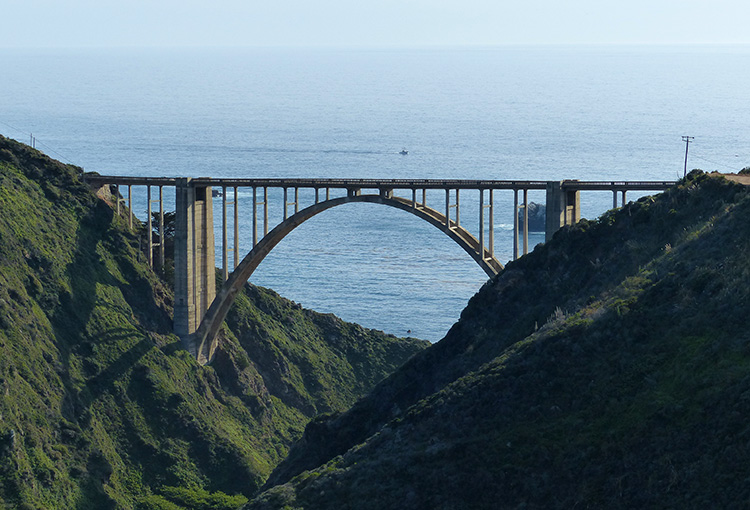
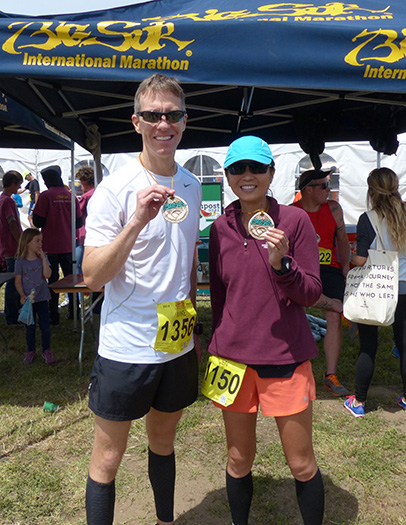
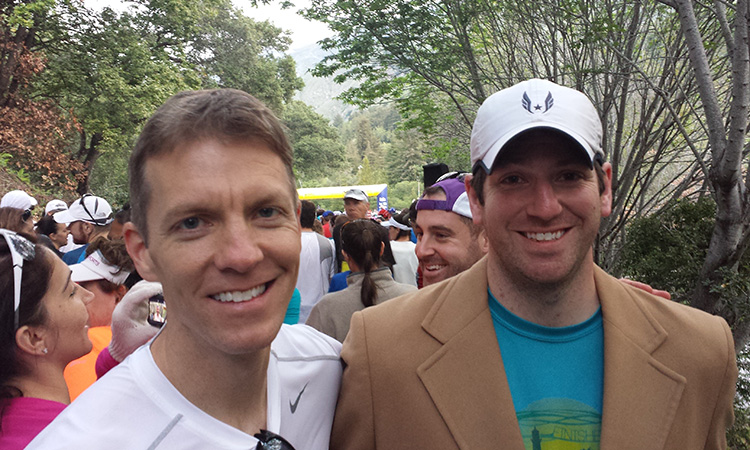
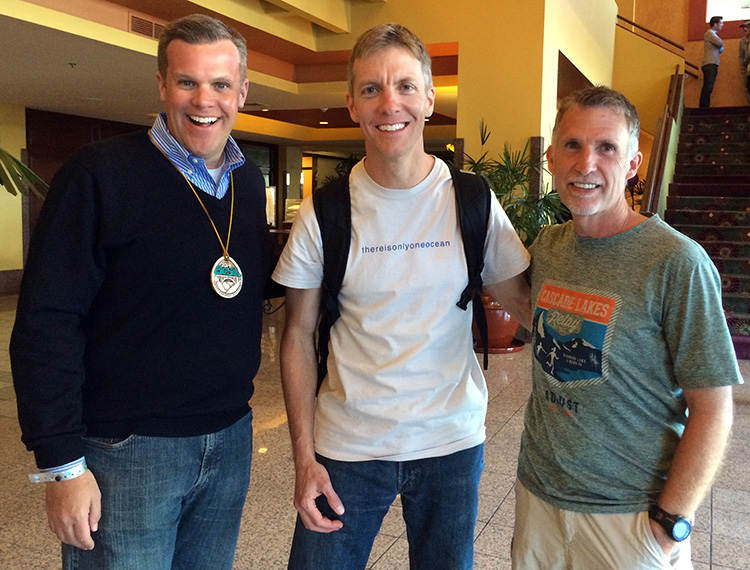
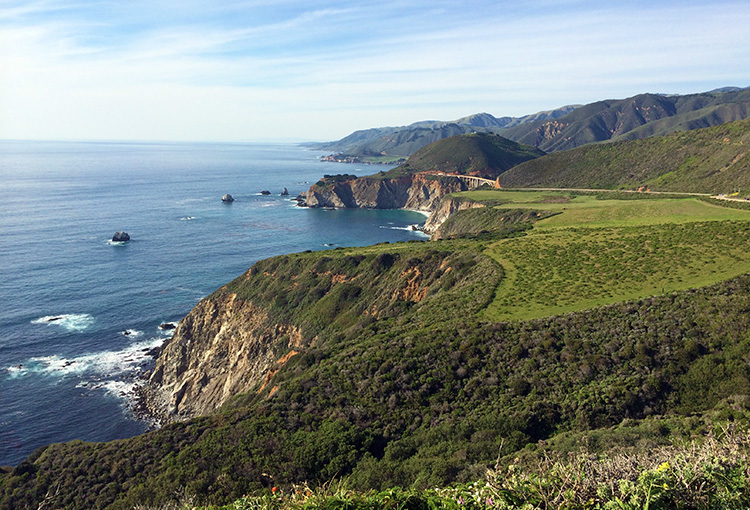
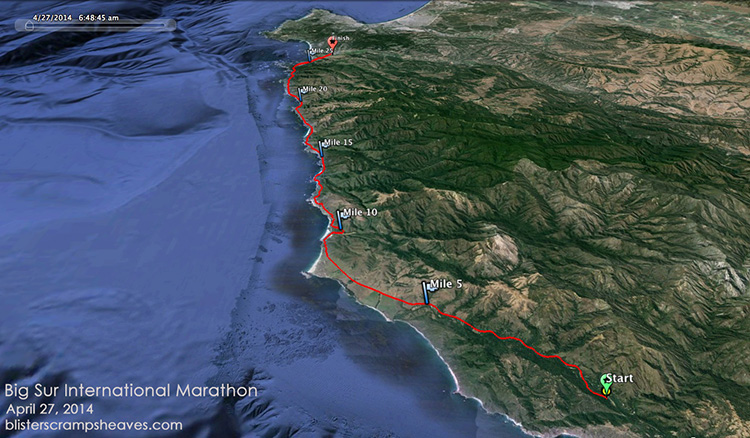
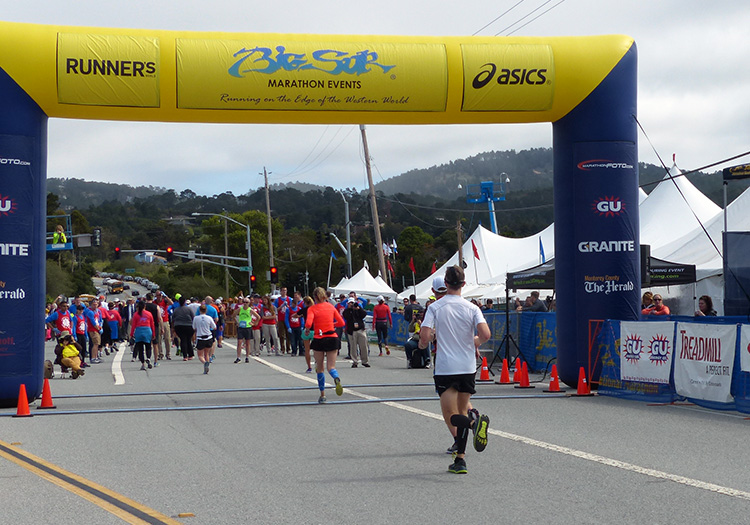
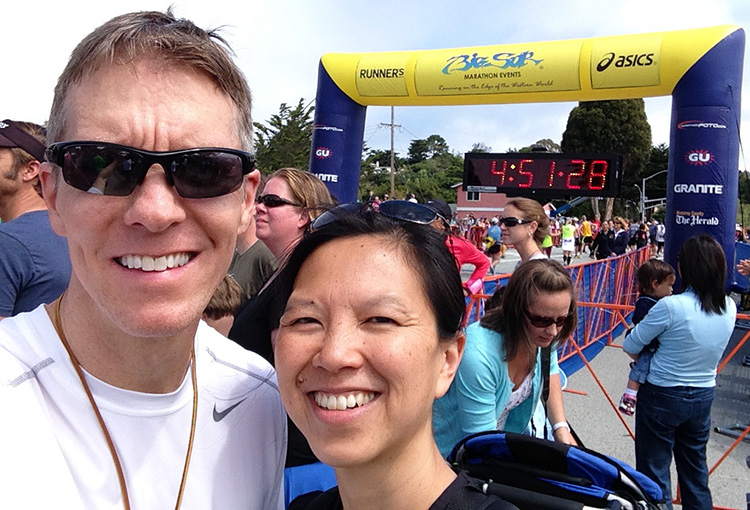
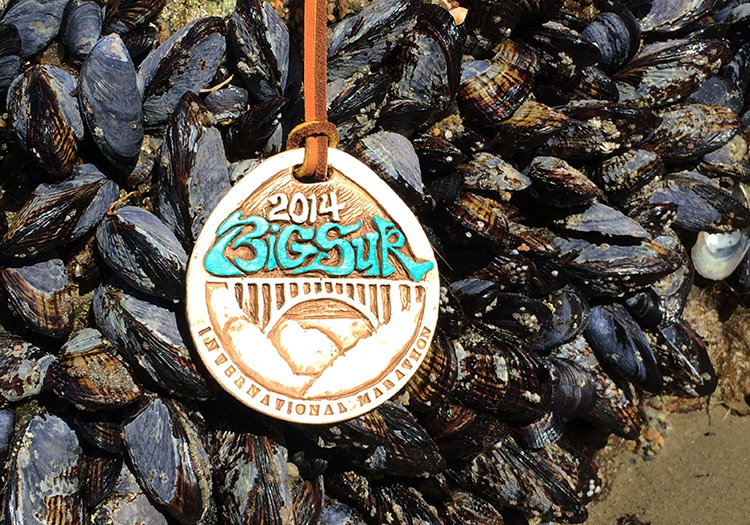
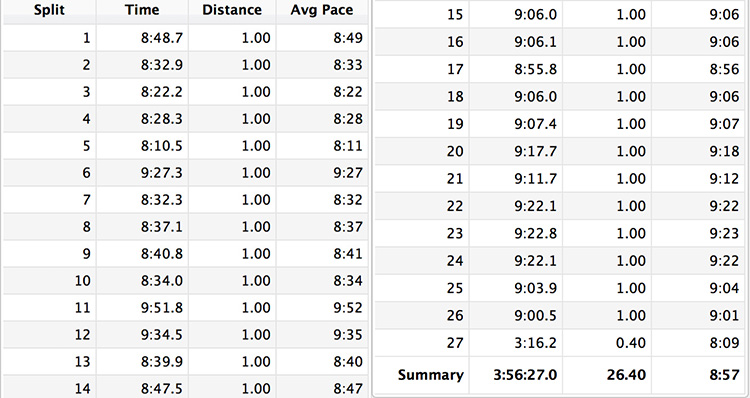

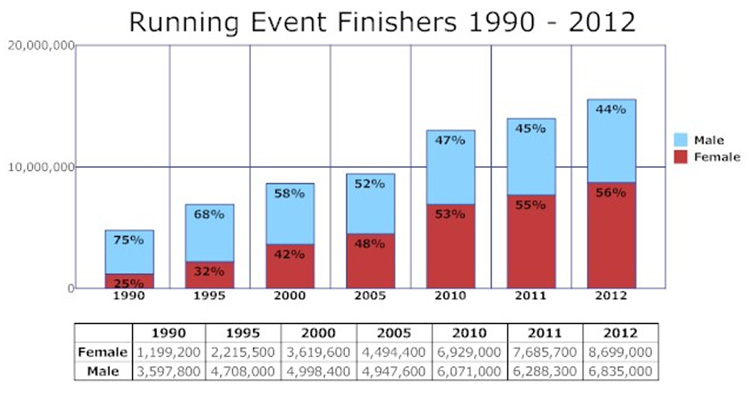


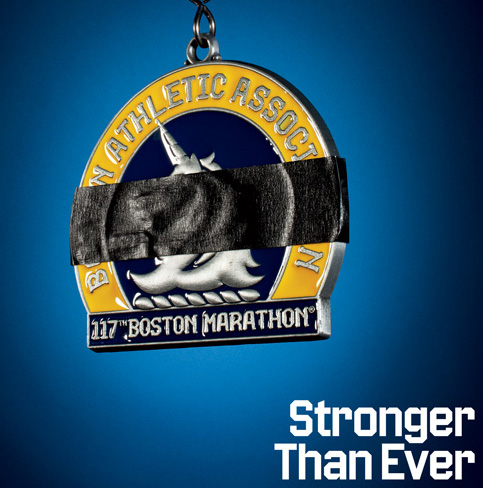

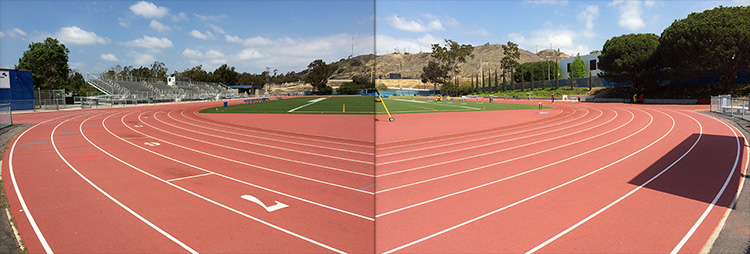
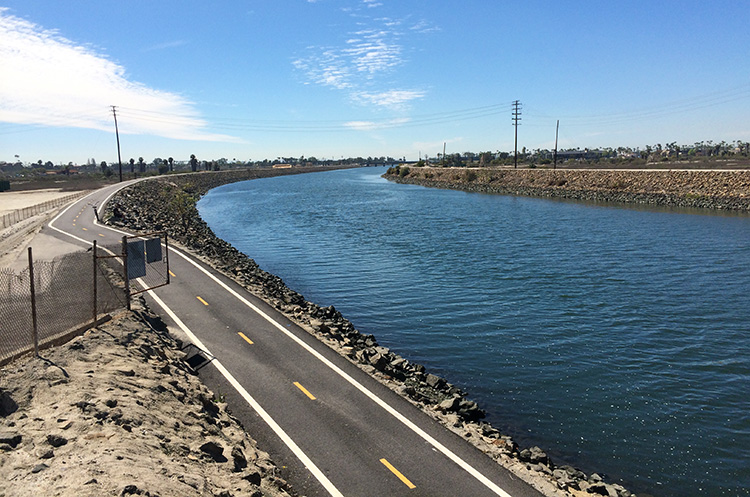

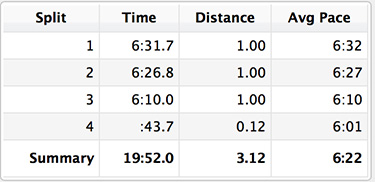


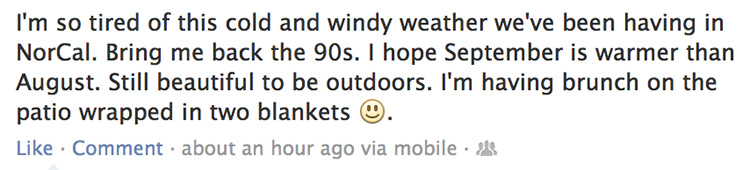

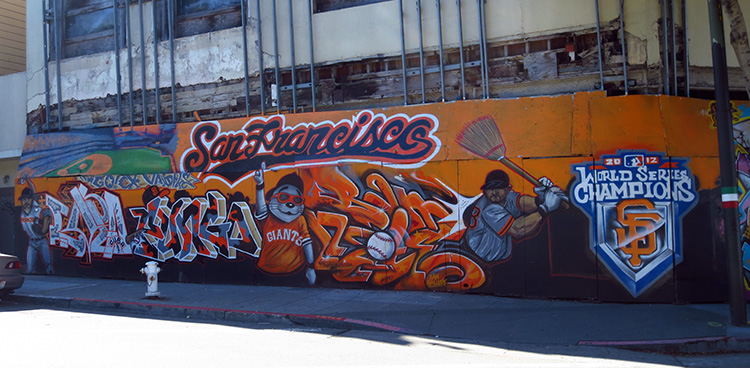


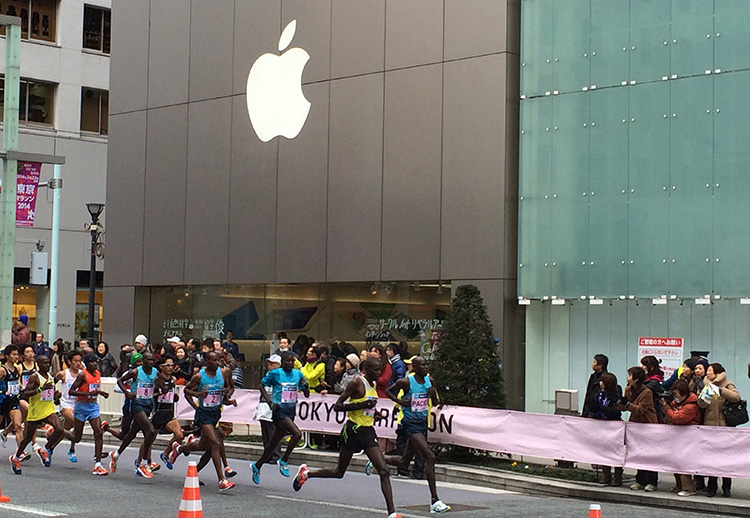


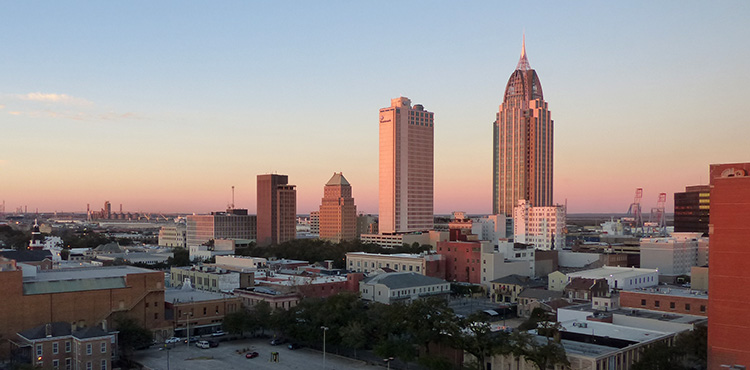
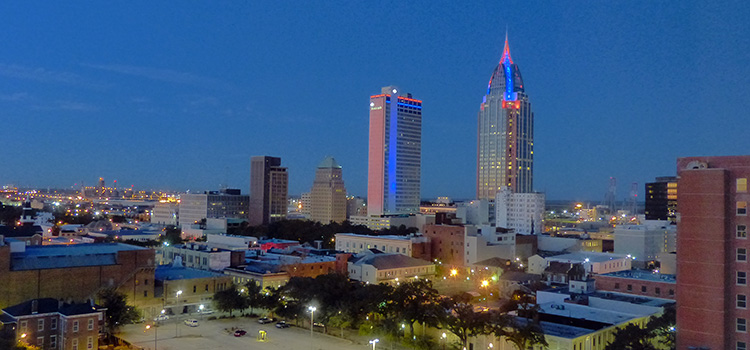
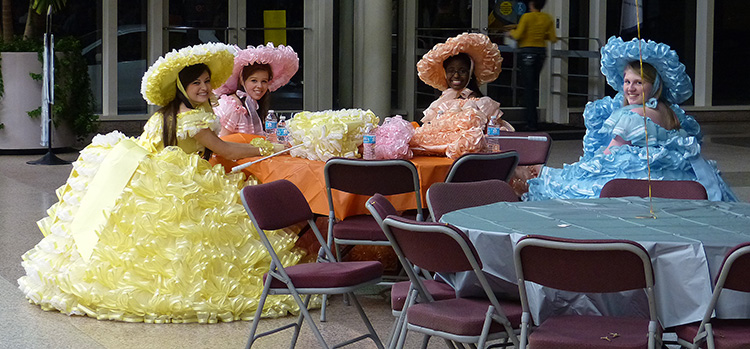
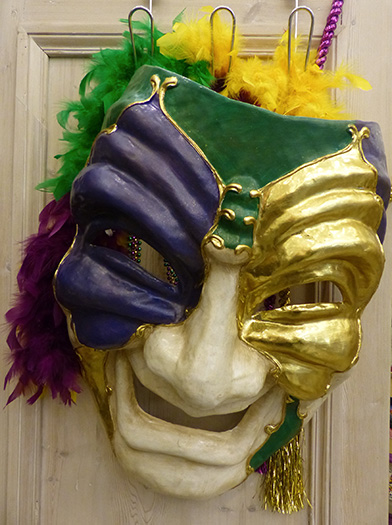
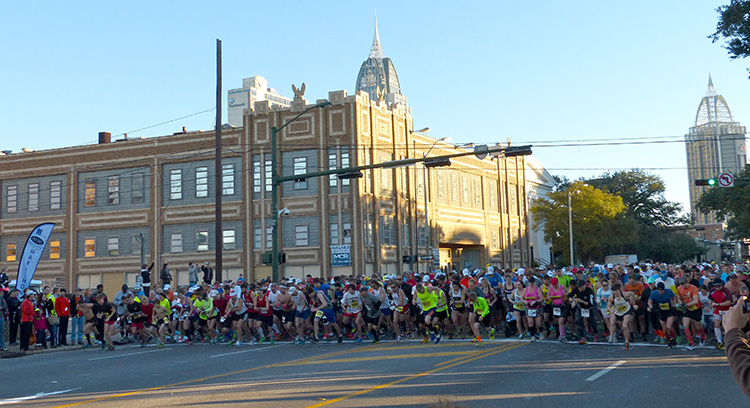
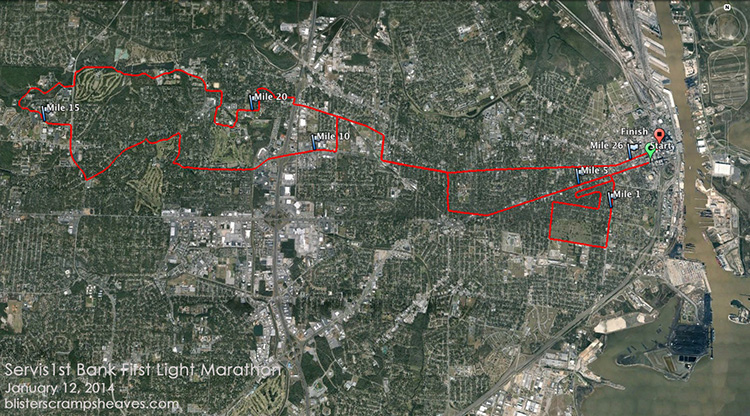
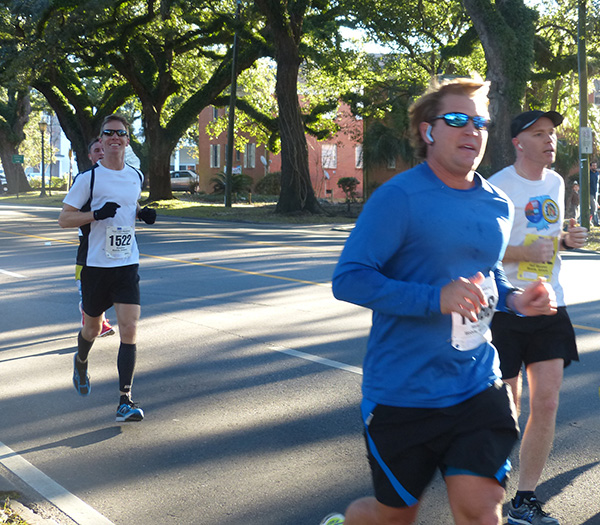
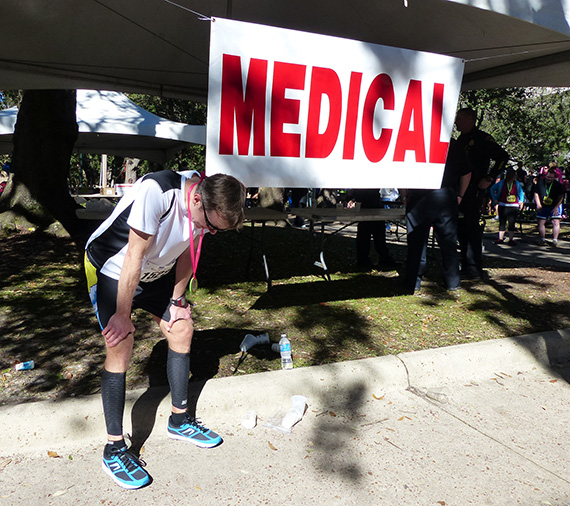
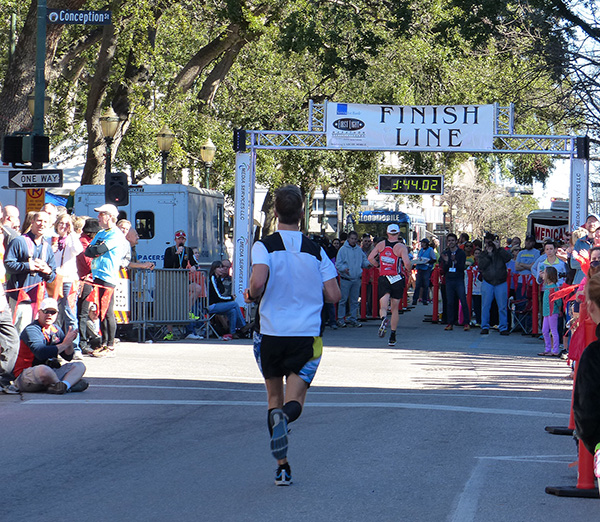
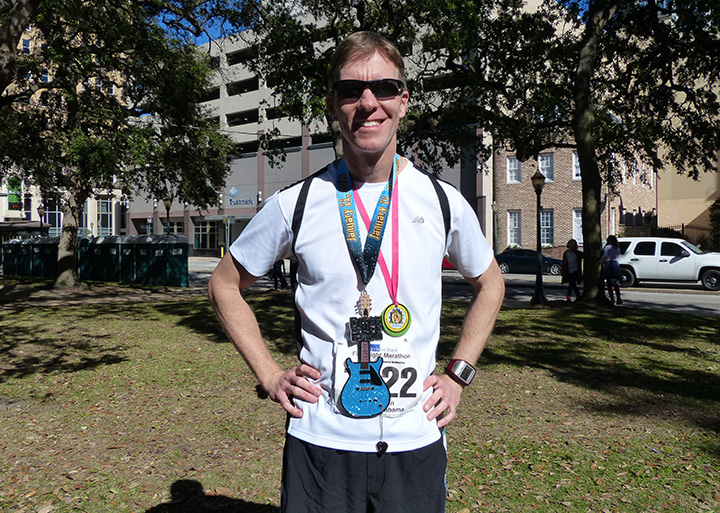
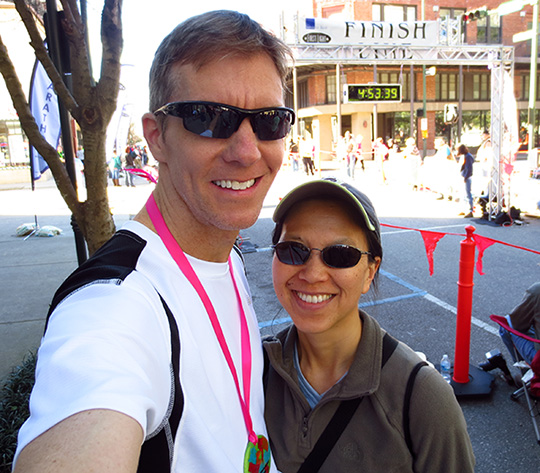
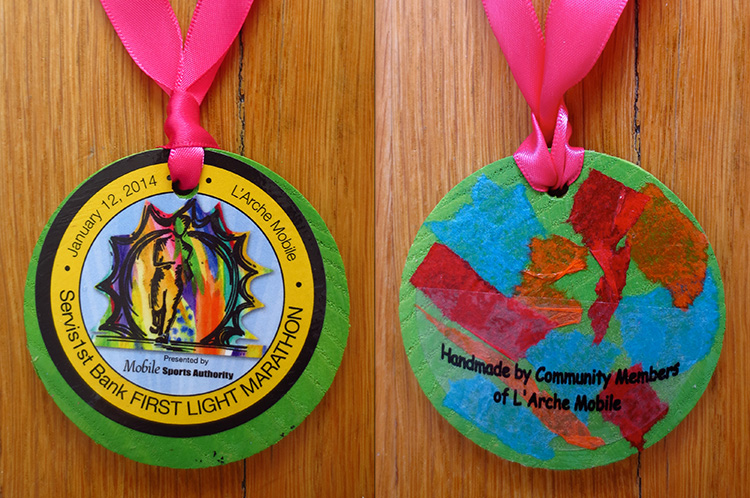
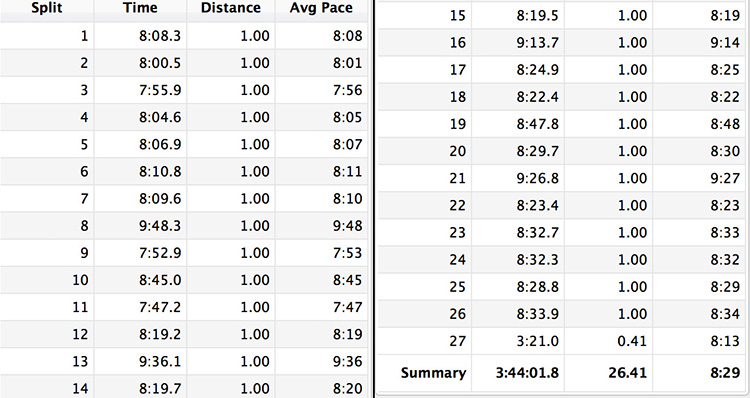


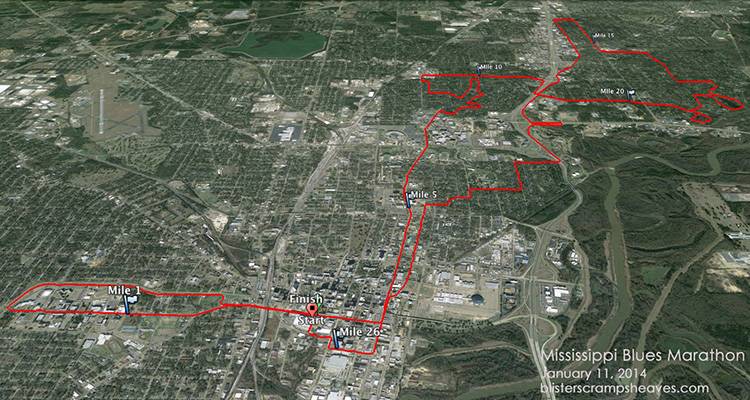
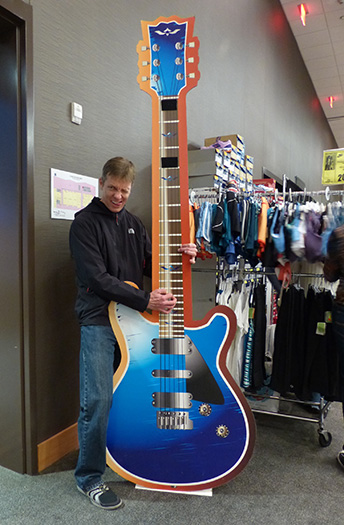


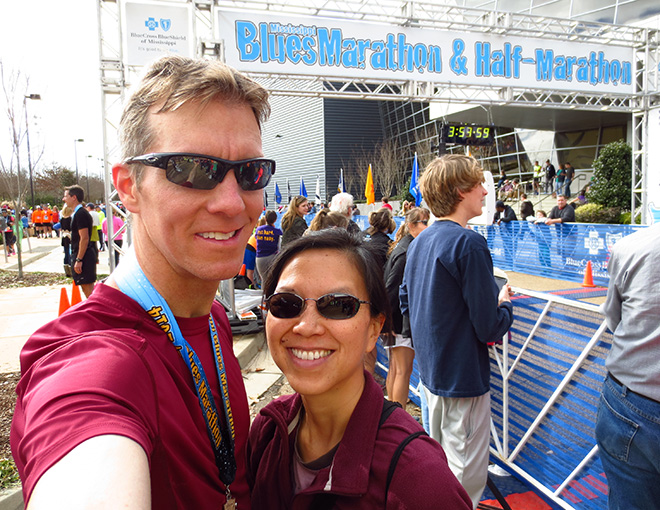
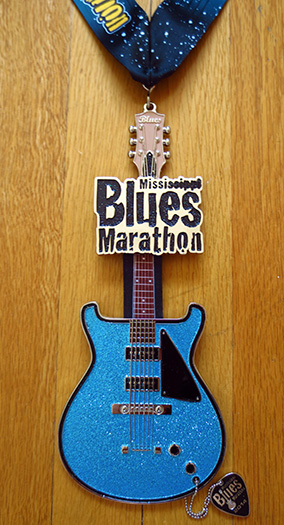


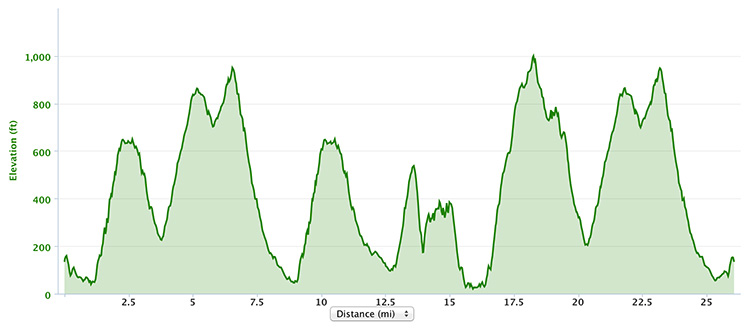


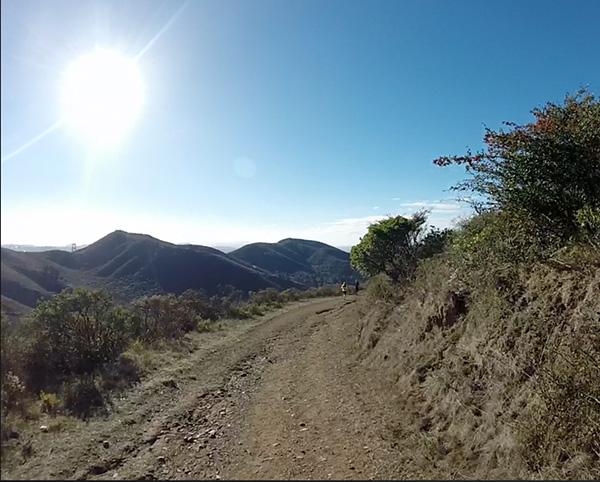


 Blisters, Cramps & Heaves