The reason we race isn’t so much to beat each other… but to be with each other.
– Christopher McDougall, Born To Run
The iconic Bixby Bridge, midway point of the Big Sur International Marathon
There’s a lot to be said for running on the ragged edge of the Western world.
I could happily fill this post with my usual edge-of-your-seat, 4,000-word race report. After all, there’s a reason the Big Sur International Marathon (BSIM) appears on so many “must-run” lists, including the Men’s Health bucket list of “11 Races to Run Before You Die”. There’s a reason (aside from his likeness appearing on the mile 24 course marker) Bart Yasso of Runner’s World says, “If we were told we could only run one marathon in our lifetime, Big Sur would have to be it.” And there’s a reason this year’s race sold out in a record 59 minutes (after the 2013 edition had taken, appropriately enough, 26.2 hours to fill).
I could easily fill this post with shameless shout-outs to all the friends who reminded me that the benefits of running extend far beyond the cardiovascular:
Bay Area buddies Jen and Tim, who enjoyed what may have been Jen’s strongest marathon to date. Whether you’re planning to run Big Sur yourself or prefer to race vicariously, I’d recommend her meticulously detailed race report.
Otter, who I’d first met in Portland last year and who showed serious fortitude with a sub-4:15 finish at Big Sur, despite a nagging knee injury that had prevented him from running anything longer than ten miles since November. An awful lot of life stuff can happen when you commit to a race nine months in advance.
And a remarkable contingent of fellow Antarctica 2013 travelers in Donn and Rod, Wally and Larissa, Melissa and Wayne, Drew, Gerard, Karen, Liz, Louann and Mike. Amazingly, of the 100 passengers who boarded the Akademik Sergey Vavilov last March, 13 of us (plus one crew member in Liz) were reunited in Monterey. And my loudest shout-out would go to Mike, who in support of his sister Mindy’s battle against breast cancer left nothing in the tank, running a 3:22:49 on what may be the toughest road marathon course in the country.
Me and Jen got it, so we gonna flaunt it!
Sporting a tan camel’s hair blazer over teal race shirt, Otter was an easy find at the start line (photo credit the nice lady holding Otter’s cell phone)
Great to catch up with Antarctica travel mates including Drew (left, celebrating his 24th state and 28th marathon) and Donn (right), without the ground swaying beneath us
If I were to reference old friends, I’d be remiss in not acknowledging new ones – particularly Big Sur Marathon veteran Bala from Sunnyvale, who has the questionable distinction of being the first person to officially recognize and approach me based on having read the blog. Thanks for introducing yourself Bala, it was a pleasure to meet you despite the ribbing I took afterward as “famous blogging guy”. Hopefully your own weekend in Big Sur was a resounding success… and hopefully you’re still reading!
Turning away from the sunbeams and rainbows, I could try (unsuccessfully) to share my angst from the week leading up to the race, an angst I owed to a stubborn case of plantar fasciitis (PF) that had taken hold of my left heel in mid-March, causing both foot and training regimen to suffer. A 26 x 200m track workout ten days before Big Sur – which ironically felt good and seemed like a good idea at the time – reduced me to a zombie-like limp for two days afterward.
But it wasn’t so much the idea of running the Big Sur Marathon with PF that stressed me out – it was the idea of not running the Big Sur Marathon with PF. Big Sur was unequivocally not a race I wanted to DNS. And if I started the race, then I would finish the race, even if it meant awkwardly limp, step, limp, step-ping my way through 26.2 miles. For this reason, I set my “A” goal for race day at a don’t-do-anything-stupid four hours, with my “B” goal being simply to cross the finish line under my own power. I figured if I could complete a hilly midnight marathon at altitude on a sprained ankle in less than four hours, then four hours should be a reasonable goal for Big Sur. All in all, a very scientific appraisal.
View from Hurricane Point, three days after the race (the Bixby Bridge is just visible in the distance)
As for the race itself, I could fill paragraphs reflecting on the easily navigated pre-race expo, the flawlessly executed pre-dawn (4:00am) shuttle ride to Pfeiffer Big Sur State Park, the start-line sendoff from American marathon record-holder Deena Kastor, the finish-line massage tent, and every vivid detail in between. I could recount the most memorable snippets of conversation overheard during my 3:56:19 journey (“A raisin or pistachio out the window in a big city is not littering – fact.”).
And normally I would.
But at the Big Sur International Marathon, the point-to-point course – beginning in Big Sur and running north to Carmel – is the star of the show. With its seemingly infinite blue-on-blue oceanscapes of swirling whitecaps pounding rocky outcroppings, the ragged coastline is quintessential California. And it’s a key reason so many Californians will tell you that the relatively high cost of living here is negligible compared to the higher cost of not living here.
(Google Earth; click on the image for a larger version)
The BSIM course speaks for itself. And so for once – with the help of the GoPro camera I wore (with variable success) during the race – I’ll let it. Apologies for the oft-shaky video… but then again I am running, and despite our proximity this ain’t Hollywood. So turn up the volume, and keep an eye out for:
the soaring, awe-inspiring redwoods of Big Sur (~0:17)
Ultramarathon Man Dean Karnazes, seen at several points wearing a white-and-orange singlet. Dean was running his own Karnazesque version of the BSIM, having already run 32 miles from Monterey to the start line in Pfeiffer Big Sur State Park earlier that morning. I even seized the opportunity to strike up a brief conversation (not shown in the video) – after all, what better time than during a marathon to talk shop with a man who once ran 50 marathons in 50 states in 50 days?
the Watsonville Taiko Drummers, just before the climb up to Hurricane Point (~1:30)
the iconic Bixby Bridge at mile 13 (~2:25)
pianist Michael Martinez on a Yamaha Grand Piano, just past the Bixby Bridge (~3:20)
a fleeting glimpse of a cheering Katie leaning over the Barnyard sign at the finish (~5:15)
as well as crazy ocean views and quirky-cool mile markers (unfortunately I didn’t catch the best of the day’s markers at mile 14, which showed Kenyan marathoner Stephen Muange “motivating” oncoming runners with taunts of “In my country, we call that walking”).
Thanks for watching!
BOTTOM LINE: Not to disagree with the fellow singing plaintively in the above video, but I’d go back to Big Sur in a heartbeat. Nearly as impressive as the course itself is that the BSIM boasts an impressive field of national and international runners (from 50 states and 30 countries) while maintaining a decidedly low-key vibe. Yes, the BSIM will be among the toughest road marathons you’ll ever run, and if you’re looking for a Boston Qualifier then keep looking. But if you’re the type of runner who prefers to run with your head up regardless of pacing, you’ll be richly rewarded with stunning views on even the cloudiest day. And if I were to recommend just one road marathon in California, I have to agree with Bart Yasso that this would be it.
Unfortunately, change for the not-better may be imminent, as rumors swirling around race weekend hinted that registration for next year’s race could move to a {shudder} lottery system. We’ll know for sure come May 15, when new registration procedures are announced. Don’t do it, BSIM organizers!
If you’ll be running the BSIM as a destination race (smart choice!), your most convenient option will likely be to fly into the San José International Airport, then either drive or catch the Monterey Airbus down to the Monterey Peninsula. Alternatively, the Monterey Airport – with direct flights to Denver, Las Vegas, Los Angeles, Phoenix, San Francisco and San Diego – is located only minutes away from downtown, site of both host hotels as well as the race expo. Leave yourself time for a leisurely self-guided tour of this quaint seaside town including its premier destination, the Monterey Bay Aquarium.
Homeward bound!
PRODUCTION: Not to be outdone by the course itself, race production was almost picture-perfect. The Goldilocks-style expo (not too big, not too small, but just right), conveniently located adjacent to both host hotels, was easy to navigate. The pre-race pasta dinner, though a bit pricey at $25, hit the spot without poisoning any runners. The 4:00am shuttles assigned to carry marathoners the 30+ miles to the start were dispatched efficiently and ran on time – and if I’m not mistaken, I thought I heard Race Director Doug Thurston say they mobilized 185 buses (!) on race day. Where they found 185 buses in Monterey and Carmel, I have no idea.
The most consistent element of every race I run seems to be the fantastic volunteers, and the BSIM was no exception. The selfless folks in maroon shirts worked tirelessly to ensure that every runner’s race experience was as positive and as worry-free as possible. Special thanks to Cheryl for my first-ever post-race massage, which refreshed my tired legs despite its inability to appease my overworked plantar fascia.
On a more somber note, my condolences go out to the family and loved ones of the volunteer bike marshal who died after collapsing near the 21-mile mark during the race.
Aside from the prominent Michelob Ultra tent in the post-race Marathon Village (all the appealing local microbrews to pick from, and we end up with Michelob?), my only legitimate gripe from the weekend would be the disappointing performance of the runner tracking app, which after the 13.1-mile mark became increasingly unreliable. I’m not exactly sure why runner tracking is such a difficult technology to implement correctly, but its erratic behavior in this case wreaked havoc on my ability to catch friends at the finish.
At the finish line, “PF” stood for “Pretty F@#&ing happy to be done”
Big Sur is a road marathon with some serious mussels muscle
FINAL STATS:
April 27, 2014
26.4 miles from Big Sur to Carmel, CA
Finish time & pace: 3:56:19 (first time running the Big Sur International Marathon), 9:01/mile (moving time 3:55:15, including one pit stop in mile 6)
Finish place: 630/3,338 overall, 74/264 in M(40-44) age group
Number of finishers: 3,338 (marathon), 631 (21 miler), 1,225 (10.6 miler), 755 (9 miler), 571 (5K)
Race weather: cloudy and cool (starting temp 54°F), with minimal wind
Elevation change (Garmin Connect): 2,235ft ascent, 2,521ft descent
Official first-half split = 1:57:01; second-half split = 1:59:18
Winning isn’t about finishing in first place. It isn’t about beating the others. It is about overcoming yourself. Overcoming your body, your limitations, and your fears. Winning means surpassing yourself and turning your dreams into reality.
– Kílian Jornet, Run or Die
This is where the magic happens… welcome to the West L.A. College track
Bullshit!
It was an impulsive yet reasonable reaction. Decelerating from top speed, I glared suspiciously at the face staring impassively up at me. No Helen of Troy that face, but nonetheless one that had launched a thousand runs. That face cared nothing for my thoughts or feelings, or shortness of breath, or heaviness of legs… how could it? Nor did it give a damn whether I believed what it was telling me… why should it? It was simply playing the role of messenger, just as it had for the past five years – without passion or prejudice, and with near-flawless precision. And at that moment, like it or not, its message was unequivocal: 6:02.
Given its proven consistency, the burden of proof fell squarely on my shoulders legs to prove that face wrong. And so I tried again. And again. And again. And each time, as my fatigue mounted, the numbers awaiting me at the end hardly wavered: 6:02, 6:04, 6:02.
I’m embarrassed to admit this, but I don’t recall ever using my Garmin Forerunner 305 to clock mile repeats on the track before. I understand that for many type-A runners this is a cardinal sin – grounds for immediate excommunica-tion from the church of fartlek-ology.
Sure, I’ll strap on the Forerunner for speed workouts and tempo runs along the beach, where counting laps around the track isn’t an option. And I always rely on my Garmin for longer runs of 15 miles or more, since pacing at these distances matters when you’re training for a marathon or ultramarathon. But normally I’ll either leave the Forerunner at home and just run (after mapping out a prescribed route), or on track days I’ll strap on my old-school Timex Ironman watch and time my workouts according to the maxim that four laps = one mile.
Except it doesn’t – at least not always. Riddle me this: when is a mile not a mile?
Four laps around a regulation, International Association of Athletics Federations (IAAF)-certified track equals one mile (1600m) – if you’re running in lane one, the inner-most lane. As you move outward on the track the distance per lap gradually increases, until a runner completing four laps in lane eight (typically the outer-most lane) will run almost 215 meters farther than they would in lane one. For those who haven’t stepped on a track since high school, 215 meters is over a tenth of a mile and roughly halfway around the oval. But it feels like much more when your stride is breaking down and you’re running on fumes at the end of a fast mile.
I’m not a short-distance runner, and though I’ve always been acutely aware of this discrepancy in lane distances, I’ve never given it much thought. I’m not fast – so I’ve always told myself. Once my mile time fell below seven minutes, I never cared to see how low it could go. Besides, I’d rather run hilly trails than flat paved roads. I’ve never run an organized 5K of any kind, nor a 10K with speed in mind (both my 10Ks were effectively turkey trots, the most recent in Golden Gate Park in 2004).
In August of 2010, in preparation for the Pikes Peak Ascent later that month, I did run the shorter Squaw Valley Mountain Run, a fun but decidedly unspeedy race that covers the first 3.6 miles of the Western States 100-Mile Endurance Run course, and which gains 2,000 feet in elevation (from 6,200 feet to 8,200 feet) along the way. That result, at 11:56/mile, qualifies as my 6K PR. Impressive stuff.
So my mindset for speed workouts has always been that four complete laps around the track (usually in lane three or four) = more or less a mile, and as long as I can keep my “mile” times between 6:30 and 6:50, it’s all good. Very scientific, I admit… but then again, running most of my speed workouts on loose dirt surfaces hardly qualifies as scientific either. As long as I a) complete the workout and b) feel this close to losing control of important bodily functions on my last repeat, I consider the workout a success. No matter what the watch face says.
And so on this day, when my Garmin’s mile alarm chimed 100 meters short of my customary finish line, I was caught off-guard. And after three more miles – all run in lane four to avoid legitimate athletes in lanes 1-3, and the hurdles set up in lanes 6-8 – my Garmin was telling me what had to be a blatant lie, a tall tale too good to be true. Four sub-6:05 miles? With a stiff headwind on one side of the track and me swerving periodically to avoid oblivious others wandering into my lane? I was calling my Garmin’s bluff – clearly the incredible g-forces generated by running it in circles were taking their toll.
At the same time, though skeptical and bewildered, I had to consider the alternative – that maybe I’d just run the four fastest timed miles of my life. Maybe thanks were owed to my lightweight Saucony Virratas, which weigh next to nothing and which I’d recommend to anyone looking for a zero drop shoe with moderate cushioning (Saucony reps, you can reach me through the Comments section below). Maybe I’d been inspired by Jen, who’d just run a speedy timed mile of her own the week before. Or maybe I’d captured the mojo of my surroundings there on the all-weather West L.A. College track, where notable runners such as three-time Olympic medalist and “world’s fastest woman” Carmelita Jeter train (though I’ve yet to see her). Or maybe, just maybe, the thousands of miles of training and racing were actually {dramatic pause} paying off.
The next afternoon, like the good scientist I am, I ran my Garmin two miles along the beach to verify its accuracy. Sure enough, its mile alarm twice chimed within steps of the mile markers painted on the bike path. Apparently I really had run the four fastest timed miles of my life the day before, and I emailed my brother to let him know. Chuck is a big fan of speed work or self-inflicted pain or both, and so his own email response was fraternally predictable: “Obviously there is a sub 20 minute 5K in your near future.”
View south toward the turnaround point along the San Gabriel River Bike Trail
Pain and pleasure in the near future
Not surprisingly, Chuck wasn’t speaking in hypotheticals – by “near future” he was referencing the Boeing-sponsored 5K I’d heard so much about, held the second Monday lunch hour of every month at the Seal Beach Boeing Facility. Living in adjacent Long Beach, Chuck had been a regular at the race for many years, and had been urging me to run it even before we’d moved to SoCal. Having never given much thought to running a 5K (even a free one), I’d so far turned up my nose at his dangling of that “sub-20” carrot. At an average pace of 6:27/mile for 3.1 miles, I figured I could do it on a good day – but for whatever reason (maybe because I knew it would hurt), I’d never cared enough to find out.
Now, though, I was curious. If I could run four sub-6:05 miles with a recovery lap between, then surely I could run three 6:27 miles without stopping? Especially with other runners to chase? And if not now, when?
So it was that the week before the March edition of the Boeing lunch hour 5K, I began to lay out my race-day strategy: arrive half an hour early to allow myself ample time to stretch thoroughly, warm up the muscles and get the blood flowing. That way I wouldn’t waste the first mile trying to loosen up and chase my second wind. A solid, well-conceived plan… in theory.
Unfortunately, reality wanted no part of it. Instead, Monday morning found Katie and me hopping in the car later than planned and gunning it down Interstate 405 toward Seal Beach, where after getting lost (and found) in the vast Boeing complex, we pulled up to the staging area three minutes before the scheduled start. Which left me just enough time to slip in the back door of the gym adjacent to the start line to access the men’s room.
Two minutes later I was jogging feverishly in place like an overcaffeinated ROTC cadet, trying desperately to condense 30 minutes of warmup into 30 seconds as nearly four dozen runners gathered around the start line. Apparently each runner was supposed to check in and predict his/her own finish time before the race, though I didn’t realize this, and in any case it would have required another 30 seconds I didn’t have.
As the crowd edged its way up to the imaginary start line not painted on the sidewalk, Chuck offered me his last-second expertise on what to expect from a course I knew nothing about. “It’s an out and back along the river, you may see blue cups at the turnaround, sometimes there are painted rocks along the trail” – without pausing for breath, he pointed at the tallest runner of the bunch, a tanned and athletic-looking fellow wearing a red-and-white cap and singlet – “that’s Tim.”
“Who’s Tim?” I asked, the relevance of this introduction escaping me as the lead runners (Tim included) poised in their “Ready, Set” positions at the start line.
“You’ll be running near him,” Chuck replied, leaving me to wonder how the buddy system figured into this. My wondering was cut short when the starter’s cry of “GO!” ended our exchange (which in its seamless cadence would have made Aaron Sorkin proud), signaling the frazzled start to my first-ever semi-official 5K race.
Tim quickly bore down and sprinted (or so it seemed) ahead of the pack as we exited the Boeing parking lot and veered left on to the shoulder of Westminster Blvd. He wasted no time in building an early lead, as I worked to extricate myself from the tightly packed mass of runners in his wake. I’m supposed to run with him? I was seriously doubting Chuck’s prognostic powers. Tim’s lead mounted as we (or at least he) sped along Westminster, the sun now directly overhead on what was fast becoming a very warm day. A modest but steady headwind wasn’t helping matters, and I could feel another runner on my right shoulder, drafting off me as I waited for my second wind to kick in… any second now…
At last, nearing the left turn that would lead us along the river, my body snapped out of its initial shock. Cardiovascular, musculoskeletal and neuromuscular systems – working both independently and in collaboration – recognized and adapted to the sudden physiological stress as they had so many times before. Fight-or-flight hormones spiked. Heart rate accelerated. Muscle contractions quickened. Neurons fired electrical impulses between mind and body at a feverish pace. At that moment I was little more than an instinctual fast-moving puppet, and with so many biological masters pulling the strings, my stride relaxed and slowly I edged forward ahead of the pack, until only 50 yards of atmosphere separated me and Tim.
Leaving the main road, a quick descent spilled us on to the San Gabriel River Bike Trail. Gradually the gap between leader and pursuer continued to shrink, until Tim reached the turnaround point (marked, as Chuck had presaged, by a blue Dixie up on either side of the path) no more than five seconds ahead of me. The game was on!
Post-race posing with Steve and Chuck… one of these days Chuck will learn to recognize a camera (photo credit Laura)
The finishing touch
With 1½ miles down and the remainder of the course now known to me, I could focus entirely on getting back to home base before the next guy. But I was admittedly in uncharted waters here, running as hard as I could for as long as I could, with no racing strategy other than to just run, and with no idea how long I could continue at this pace (whatever this pace was) before I bonked.
As I cruised along the river several strides behind Tim, familiar faces passed in my peripheral vision: Chuck, with long gray hair held in check by his customary bandana, was looking strong at a sub-8:00/mile pace, much faster than I’d expected for someone still rehabbing a hamstring injury; Laura, having already completed a marathon earlier that morning on her way to seven marathons in seven days, followed more leisurely behind him chatting with local celebrity-of-sorts Barefoot Ken Bob; while Emmett, fresh off his 65th ultramarathon at that weekend’s Way Too Cool 50K, power-walked near the back of the pack with one of the more purposefully propulsive strides I’ve ever seen.
During this stretch I pulled alongside and ahead of Tim, my Garmin chortling its support. Two miles down, 1.1 to go. With our roles reversed and the predator now the prey, the question became how long I’d be able to hold the lead.
Charging up the concrete embankment and back on to Westminster Blvd, I found myself a stranger in a very strange land – running alone in the lead, a tailwind at my back and just over half a mile of very straight, rolling asphalt between me and… and what exactly? As I struggled to maintain or even increase my pace, an acute case of “race brain” left me devoid of deep thoughts.
With just over ¼ mile to go and the Boeing entrance taunting me from afar, I glanced up to see the traffic light at the intersection just ahead of me – the only potential obstacle on the entire course – turn red, and a car begin to creep slowly forward into the cross walk. My cross walk. The cross walk I was about to enter. Never mind bouncing off the hood of a car, that was the least of my worries – I was much more horrified at the thought of losing all momentum to this solitary driver on an otherwise empty street. If that happened and I was forced to obey the red light, I may very hitchhike my way back to Boeing.
Thankfully, as I entered the intersection at full speed the car inched forward just enough that I was able to swerve behind it without any significant loss of momentum. Reaching the far side of the intersection, with my brain now screaming “home stretch!” and my stride deteriorating with every step, I locked in on the traffic light dead ahead of me, the one that doubled as the mile 3 marker. My stomach too had begun its predictable protest – as a runner it’s my canary in the coal mine, my (usually) silent partner that warns me when I’m approaching the end of my physiological rope. And I could feel that rope starting to fray.
I tried not to slow as I banked right into the Boeing parking lot, fearful that Tim or another runner would go Roadrunner to my Wile E. Coyote and streak past me as an anvil landed on my head. More importantly, letting up on the gas might cost me a sub-20 finish… and if that happened, let’s be honest, the past 20+ minutes would have been for naught. Curiosity may have ignited this fire, but fear of failure now kept it ablaze.
Careening toward the finish line feeling like a rickety old jalopy, I was momentarily unnerved to see not a soul in sight – until timekeeper Jill and clipboard keeper Berckly hopped up from their seat on the curb to announce and record my winning finish time of 19:53. Tim crossed nine seconds later, letting loose a low exclamation of disgust upon realizing he’d overshot the 20-minute barrier by three seconds. As the top five took shape and the finish area began to hum with activity, I shook hands with and congratulated Tim, whose fast start was accounted for when he admitted to being an 800m runner.
Chuck joined me soon after, and I sarcastically thanked him for warning me in advance about the early headwind. He shrugged: “I figured you’d find that out for yourself.”
During the post-race cooldown I also had the opportunity to meet Steve, an avid runner and retired VA colleague of Chuck’s who, after reading my previous post, benignly waved off my comparison of the NorCal/SoCal race scene and suggested several road and trail races in the area. Clearly I have plenty of research ahead of me before I revisit that comparison. Appreciate the recommendations, Steve.
According to long-time race organizer Nelson, “the 45 runners today tied the most runners for a March race since 2005 when 53 participated.” Even more amazing to me was Chuck’s post-race admission that, despite being a significantly faster runner than me (my words, not his), he’s never won the Boeing 5K. So apparently I timed my debut well, since a winning time of 19:53 – the only sub-20 finish of the day – hardly screams “Olympic Trials”.
Bottom line, I enjoyed my first-ever 5K (for obvious reasons) and my time among the Boeing lunch-time running crew. And I’ll look forward to running this race again – in part because it’s a fun one, but also because I’m confident that under the right conditions (cooler temps, >30 sec warmup) I can still run faster.
I celebrated my second-ever race victory – the 14.8-mile Limantour Odyssey Half Marathon back in 2009 was the first – later that afternoon with an 8-mile recovery run from Manhattan Beach to Marina del Rey under a stunning blue sky. Setting a leisurely pace past fearless seagulls and glistening whitecaps while trying to guess which beachside townhouse might be Phil Jackson’s, it occurred to me that this was my most relaxing run in recent memory.
So again, as with Chicago in 2012, Chuck had been spot-on in predicting a personal best finish time for me. Admittedly, his prediction was in large part self-fulfilling, and I was happy to prove him right. But then I shouldn’t have been surprised by the text I received from him later in the week – one I’ve yet to follow up on, since I’m afraid he may not be joking:
“You know the Boeing 10K is the third Monday of the month.”
FINAL STATS:
March 10, 2014
3.12 miles in Seal Beach, CA
Finish time & pace (official): 19:53 (first time running the Boeing Seal Beach 5K), 6:22/mile average pace
Finish place: 1/45 overall
Race weather: sunny and warm (starting temp 72°F)
Elevation change (Garmin Connect): 73ft ascent, 73ft descent
If you can’t fly then run, if you can’t run then walk, if you can’t walk then crawl, but whatever you do you have to keep moving forward.
― Martin Luther King Jr.
Upwardly Mobile: The RSA Trustmark Building and Battle House Tower stand tall at sunset…
… and at dusk, in electric red-and-blue evening wear
The irony struck me immediately. After hearing “Sweet Home Alabama” no fewer than three times during our first six hours in Mississippi, what greeted me now as I strolled through the lobby of the Holiday Inn in Mobile, Alabama was the equally classic guitar riff from “Hotel California”.
Certainly Mobile felt more like California than had Jackson, if for no other reason than its proximity to Mobile Bay and the Gulf of Mexico. And the distinctively patriotic red and blue illumination of the three buildings that dominate its downtown landscape (including the 35-story RSA Battle House Tower, the tallest building in Alabama) does lend Mobile, by night at least, a more metropolitan vibe than anything we’d encountered in Jackson.
We’d arrived in Mobile under cover of darkness after a 200-mile drive from Jackson, where that Saturday morning I’d run the Mississippi Blues Marathon. After a quick check-in to unload our bags, we vamoosed across the street to catch the pre-race expo and pasta carbo-load for the weekend’s second marathon – the Servis1st Bank First Light Marathon.
Several months earlier, I’d seen an article on either Active.com or Competitor.com (probably both) with tips on how to beat the “post-marathon blues,” that emotionally lethargic period following intense exercise when jacked-up levels of adrenaline, dopamine, serotonin and other neurotransmitters return to baseline. On this weekend, my own solution to the post-marathon blues would be to avoid the post-race period altogether – by running another marathon the next day. Race, rest, repeat. I have a doctorate in biology, so clearly this was brilliant scientific problem-solving on my part.
In the high-ceilinged atrium of the Mobile Government Plaza building, the First Light Marathon expo was smaller and even more low-key than the Mississippi Blues expo had been. Included with my race registration was a “BACK 2 BACK” long-sleeve tech t-shirt (in addition to the normal race t-shirt) and a colorful handmade plaque designed exclusively for runners who would be running both races. Each plaque was painted by a member of the Mobile chapter of L’Arche, an “international federation of communities in which people with intellectual disabilities and those who help them can live, work, and share their lives together.” The race itself would benefit L’Arche Mobile, and as a long-time supporter of Special Olympics, I’m partial to any organization whose mission is to empower special-needs individuals.
A colorful reminder that y’all are in the Heart of Dixie, now!
Although I’d known there’d be other back-to-backers here (Marathon Maniacs are, after all, omnipresent runneroids), I was floored by the numbers posted at the expo: out of 1,310 total marathoners and half marathoners, a whopping 28% (372) would be running their second race of the weekend. Unfortunately I don’t know how many of those 372 were full marathoners… but never let it be said that running is an addiction.
Sidling up to the well-stocked pasta buffet before it closed, I fell in line across from another back-to-backer who immediately shared the fact that he’d twisted his ankle that morning on Mississippi’s uneven streets (which weren’t nearly as uneven as I’d expected), and that as a vegan he hadn’t eaten pasta in months – though what not eating pasta had to do with being vegan was unclear (maybe he’d grown up on Chef Boyardee Lard-a-roni?). If within ten seconds of meeting you I know your dietary habits, and your name’s not Scott Jurek, you could probably be making a better first impression.
But even better was his second impression. Moving on to the drink table with no hint of a limp, he pointed to a cup filled with what looked to be iced tea and asked the older gentleman manning the table, “What is this?” “Sweet tea,” the man replied in a measured Southern lilt. “What’s it sweetened with?” volleyed his guest. “Um… sugar,” was the matter-of-fact response. “So, like, REAL sugar, not that high-fructose stuff?” pressed the younger man. At that point our host apparently decided it was time to finalize this exchange: “Son, you’re in Alabama… it’s sugar.” Stifling a laugh, I grabbed a cup of water with my free hand to keep from high-fiving the older man. If the real world came with a floating “Like” button, I would’ve punched it at that moment.
The next 30 minutes I spent restocking my diminished carbohydrate stores (that’s runner–speak for “stuffing my face”). Satiated, we retired to our room to resume my painful play date with the sadistic Orb, and to catch up on lost sleep from the night before. Gazing up at the ceiling, just visible in the soft electric glow outside our window, I anticipated the next morning’s zombie-like stiffness, and pondered the potentially cruel irony of running my second marathon of the weekend in a town called Mobile.
Mobile’s true claim to fame may be as the birthplace of Mardi Gras (Mobile Carnival Museum)
The calm before the storm (start – mile 8)
It’s Sunday 6:00am, and my brain knows full well for whom the alarm bell tolls. After 7+ hours of solid sleep (which in pre-race equivalents might as well be 20), it awakens ready to hit the ground running and ensure my body does the same. Sympathetic signals fire along neural projections and hurdle busy synapses, poking and prodding my still-sleeping legs to assess their status for the 26.2-mile day ahead. Sensing a minor muscular mutiny in progress, my brain sends another signal instructing both hands to attack the right iliotibial band with passion and prejudice. Lazily I pass the directive along to Katie, whose own hands painfully (and a bit sadistically, I note) quell the mutiny before its message of dissension can spread to other impressionable muscle groups.
And with that, I’m ready to race. Sliding out of bed, I felt surprisingly as though Saturday had never happened. Legs? Strong. Feet? Rested. Even the residual abdominal soreness from an ill-advised workout earlier in the week had faded. Outside sunny skies beckoned, and on the street below randomly diffusing individuals were beginning to coalesce into something more deliberate. So after a breakfast indistinguishable from (though slightly less frozen than) the day before, we descended 15 stories to join the start line festivities on the street corner outside our hotel. Nothing beats lodging within easy walking distance of the start line, I highly recommend it. And smaller races enable it.
Donning light gloves, I fist-bumped Katie and positioned myself among the brightly colored throngs as the singing of “The Star-Spangled Banner” was ending. A minister stepped forward to bless the race (a distinctly Southern touch), thereby ensuring that nothing could possibly go wrong for the next eight hours. As runners of all shapes and sizes stood restlessly waiting… waiting… waiting… I wondered whether my imperceptible shivering was due to the early morning chill (owing to a start temperature of 37ºF) or to the butterflies in my stomach at the prospect of chasing down a second consecutive sub-3:45 finish. Then the {CRACK} of the starter pistol sliced through my thoughts, the crowd pressed forward, and marathon #11 in state #7 was underway.
The no-frills, stay-in-that-crosswalk-until-the-gun-goes-off start line
As the third largest town in Alabama, Mobile is slightly more populated than Jackson, where I’d been running 24 hours earlier. But I could tell immediately that today’s race, like the previous night’s expo, would have a more small-town feel. For one thing, there were no conspicuous pace groups. And crossing a start line devoid of the usual blue and red timing mat, it hit me that I’d seen no evidence of a timing chip on either my bib or in my goodie bag.
Timing chips are worn to track a runner’s progress and assign an exact finish time based on when he/she crosses the start and finish lines. Without a timing chip, every runner’s finish time is based solely on “gun time,” that is, how long it takes them to cross the finish line from the moment the starter pistol fires, no matter how long it takes them to cross the start line. In that situation, all else being equal, those who line up nearer the start line have an inherent advantage over those who start farther back. Timing chips eliminate the anxiety caused by the inevitable hurry-up-and-wait of the start line bottleneck. But today in Mobile – sans timing chip – that anxiety was in full bloom, and by starting back in the pack I’d already relinquished a minute or so before I’d even crossed the start line.
Not that I was legitimately concerned… after all, I‘d just run a comfortable 3:43:36 in Jackson the day before. And today’s cool weather was even more race-friendly. But again, I was in uncharted territory here with my second marathon of the weekend, and it was still unclear how my body would respond to the challenge. I’ve seen how quickly the wheels can fall off on race day for even the most prepared runners.
And I planned to be among the most prepared runners in Mobile. In the past two months I’d logged two 70-mile weeks and two more 60-mile weeks. November had been a 278-mile training month. Over the holidays I’d run cold 19-milers on consecutive days through the mind-numbing monotony of suburban Dallas – a decidedly unappealing place to be a pedestrian, much less a runner.
Bottom line: my goal here in Mobile was to reach the finish line in less than 3 hours, 45 minutes. And if, three hours from now, I found myself balled up in the fetal position beside the mile 20 aid station, gently cajoling my precious legs in my best Gollum voice, then so be it.
That dirt-brown swath to the far right is the Mobile-Tensaw River emptying into Mobile Bay (Google Earth; click on the image for a larger version)
It took only a hundred yards or so to convince myself that all muscle groups were not only present and accounted for, but were in fact feeling good, with no hint of fatigue. And so I maintained a comfortably fast pace (8:00-8:10/mile) for the first few miles over uneven residential streets. Although the organizers of the Mississippi Blues Marathon had warned us in advance about the iffy condition of their streets (“they’ve got some blues of their own”), I actually found the streets in Mobile to be more shady – in part because they were more shady. Sparsely clad tree limbs filtered the morning sunlight, bathing the street in irregular patterns of light and shadow that made it tough to track my footing. And so my attention early in the race focused on doing just that.
Nearby church bells resonated loudly, heralding the start of Sunday mass. My own thoughts turned momentarily to my dad as we passed the Mobile National Cemetery late in mile 2. He and I had actually stayed overnight in Mobile (my only previous visit to Alabama) in the early 80s, on an epic father-son road trip to Disney World.
In the context of Alabama vs. Mississippi, Mobile struck me as more glossy than Jackson, with fewer rough edges. Then again, Katie and I hadn’t had a chance to show ourselves around before the race as we had in Jackson, so I was only privy to what the race organizers wanted us to see – namely middle- to upper-class neighborhoods, commercial stretches of small businesses and strip malls, highway overpasses, two universities (University of South Alabama and Springhill College), and the Azalea City Golf Course.
As the home of baseball greats Hank Aaron, Satchel Paige and Willey McCovey, Mobile also struck me as much whiter than I’d expected. Although 2010 census numbers estimated the African-American population at just over 50% (compared to 79% in Jackson), the Mobile I saw presented a more homogenous ethnic profile. Again, though, I tend to think that reflects the neighborhoods in which we ran and stayed. In any case, the field of runners was definitely more monochromatic than it had been the day before in Mississippi.
In early pursuit of my blue-shirted friend at mile 5
Carbo-unloading (mile 8 – mile 21)
Approaching mile 8 at an 8:05/mile clip, my stomach began to feel like a bounce house hosting a birthday party. Curious, I thought. Only once before – during my first marathon, in Long Beach back in 2010 – had I ever made an in-race pitstop. But today my gut left me no choice, and so I pulled up to two aid station porta-potties alongside another runner in a long-sleeve blue shirt. As he and I waited, I stared impatiently at the red dots on the doors signaling both stand-alone plastic closets were in use. Good thing I’m in no hurry today, I mused as 15, then 30, then 45 seconds ticked away.
After nearly a minute of wait time, I finally gained access and quickly rejoined the race with a more settled stomach, ramping up my pace to make up for lost time. Soon I passed my companion in the blue long-sleeve shirt, and normalcy looked to have been restored.
But denial, to quote SNL’s Stuart Smalley, isn’t just a river in Egypt. And apparently the other body parts had appointed the stomach their spokes-organ for the day, because whereas my muscles, tendons and ligaments all felt strong and responsive, my stomach would end up filing several more urgent grievances:
At mile 10.
And mile 12.
And mile 16.
And mile 21.
Thankfully this was only a marathon and not a long race.
“Enjoy the runs! 🙂 ” a friend on Facebook had exhorted me upon learning I’d be racing in Mississippi and Alabama on consecutive days. I’m pretty sure this wasn’t what he’d had in mind.
Amazingly, despite three stops in the first twelve miles, I reached the halfway point at an 8:20/mile pace, well ahead of my 3:45 finish goal (8:35/mile) and nearly identical to my first-half split in Jackson. If not for my gut’s capriciousness, I would actually have been enjoying my second marathon in 24 hours, and might even have entertained the thought of chasing a 3:35 finish.
No doubt the medical tent’s proximity to the food tent was purely coincidental
After each unscheduled stop, I hurried to catch up to the imaginary Back-to-the-Future me who wasn’t having GI issues. My stomach may be captaining this ship, but damned if I was going to let it steer me on to the rocks. And each time I’d pull up alongside my blue-shirted buddy (who quickly became my de facto pacer after each pitstop), he’d have a few light-hearted words for me:
At mile 10: “You have to stop again, brother?” I explained that I’d raced in Mississippi the day before, and that my stomach was apparently confused at having to repeat the process today.
At mile 12: “Wow, how fast did you run that race yesterday?”, probably thinking I must’ve run like my hair was on fire to warrant such persistent complications.
At mile 16: “I’d hate to see how fast you’d run this thing without stopping!” You and me both, friend-o. At that point he told me he was shooting for a 3:40-3:45 finish, so I felt good about my chances as long as I stayed ahead of him. And whenever I’d pull ahead of him, I was able to chart his progress and proximity by the timbre of the “War Eagle!” with which he enthusiastically greeted any spectator sporting Auburn University apparel.
By mile 21, though, I was sadly on my own, having pulled far enough ahead that not even one last carbo-unloading session on my part would allow my affable 3:45 pacer to overtake me. Now if I could just maintain my pace for five more miles.
Five long miles. Five very long miles. Five of the most joyless miles I’d ever run.
Based on that street sign in the upper left, euphoria begins at the moment of Conception
Finishing strong not weak (mile 21 – finish)
The realization dawned on me that with each successive pitstop, it wasn’t time I was losing so much as it was more and more of my race-day hydration and nutrition. The cumulative effect being that by mile 17, traversing the Azalea City Golf Course with the sun now shining down from a cloudless sky, I felt exhaustion setting in. Unfortunately, I couldn’t simply refuel with the Clif Shot Bloks I carried in my pocket, because any attempt to either eat or drink – even water – sent my stomach careening into another downward spiral. With a sense of admirvation (admiration + aggravation), I marveled at how the marathon can morph into a beast of so many different heads.
The first 11 and last five miles of the course were flat enough to make a spirit level proud. The intervening ten miles through the Country Club of Mobile, the University of South Alabama, the Azalea City Golf Course and Municipal (Langan) Park offered a series of wicked uphill jags, several of which were short-lived but deceptively steep.
More apropos than the side-by-side medals may be the side-by-side porta-potties in the background
Luckily the final four miles or so were a straight shot down Dauphin Street, so I was able to keep my head down and focus all remaining energy on maintaining my ~8:30/mile pace. Just run. I reassured both mind and body I wasn’t tired, although a momentary energy lull swept over me at mile 24, with the realization that I’d just logged my 50th mile of the weekend. And any vocal spectator I passed (even Katie) in the last eight miles or so received little more than a thumbs-up and a weak smile for their support.
Through it all my mercurial stomach lay dormant, like a restless volcano primed to erupt. One more eruption and my goal of a sub-3:45 finish would be up in smoke. Though with little to no control over my gut’s comings and goings, I tried not to dwell on this fact. Now, I considered, would be a pretty good time to have back that first minute wasted behind the start line.
Was the feeling that flooded my synapses more joy or relief at seeing the finish line straight ahead of me on Dauphin Street? I honestly can’t recall. But in the end, aside from the near-constant discomfort, my five pitstops mattered not a whit as I crossed the finish line in a gun time of 3:44:12. Gratefully accepting my handmade finisher’s medallion from a smiling member of L’Arche Mobile, I embraced Katie and hobbled out of the finish chute as two blisters – apparently indignant at all the attention afforded my stomach – staged vehement protests of their own.
Reunited and it feels so good
The First Light of understanding
Based on Garmin data, my total elapsed time was 7 minutes, 13 seconds longer than my total moving time, meaning that – since I hadn’t stopped to eat or drink – I’d squandered over seven minutes just babysitting my stomach. Not to mention the time spent trying to talk it down between pitstops. Perhaps more telling, my average pace (including stops) of 8:29/mile contrasted sharply with my average moving pace of 8:13/mile. So at least I was running when my innards weren’t.
And Katie, upbeat ever-supportive Katie… every time she saw me (at miles 5, 10, 15 and 20), I felt like I was in an awkward hurry to get past her and to the next aid station. As usual she seemed to teleport around the course, covering more ground than some of the city’s cracked streets. She was a one-woman spectating army in both Jackson and Mobile (and the reason all my blog images don’t have “PROOF” splashed across them), and I’m lucky she enjoys the process as much as she does – even when it takes us to the Heart of Dixie.
Tentatively, I joined the festive post-race party already in progress in sun-dappled Bienville Square. In the center of the grassy plaza, under a white tent surrounded by live oak trees and a multi-tiered cast iron fountain, friendly volunteers served BBQ sandwiches with red beans and rice. Solid food at that moment sounded as appealing as a Chris Christie foot massage, so I was content to sip at the chocolate milk generously provided in a large drink dispenser. Meanwhile my stomach, starved only for more attention, refused to relinquish its moment in the sun just yet. Fortunately, we were able to stick around the post-race festivities long enough to enjoy Mobile’s own Excelsior Band:
I assumed, throughout the race and in its immediate aftermath, that my “runner’s trots” had been my body’s exaggerated response to running two hard marathons in two days. And maybe that was true – after all, stranger things have happened. In any case, I was ready to file the incident under “Lessons learned” and “Just one of those things”… until I received this email from the race organizers three days later:
We have learned that a number of runners who participated in the Marathon had complaints of stomach problems. We have been in touch with the Mobile County Board of Health about this and we want to assist them in investigating this issue.
Please respond to the survey [from the Alabama Department of Public Health] that can be reached through the link below.
Then followed a series of questions about my symptoms, and what I had and had not eaten at the pre-race pasta buffer. So in retrospect, maybe the race organizers should have commissioned an exorcist rather than a minister for the start line blessing.
On Monday I awoke with a stable stomach and greater-than-expected elasticity in my quads and IT bands. With a steady rain falling outside, we elected to spend our remaining time in the Deep South at the Mobile Carnival Museum, a small but impressively stocked attraction that chronicles Mobile’s history as “the true birthplace of Mardi Gras” dating back to 1703. The museum’s extensive collection of robes, costumes, masks, relics, photographs and a gently rocking parade float capture much of the pomp and pageantry (and Moon Pies) of Mardi Gras, all for the bargain admission price of $5 per person. Plus, the sweet and attentive older lady working the front desk sounded like a female Jimmy Carter with her soft Southern drawl. Rain or shine, the MCM is a highly recommended way to spend a couple of hours getting to know Mobile.
In the final analysis, I’d rate our whirlwind weekend in Mississippabama (Alabamassippi?) an unqualified success, having accomplished my goal of running two sub-3:45 marathons, while gaining a glimmer of appreciation for two states whose self-inflicted legacies do them no favors. Boarding our return flight from L.A. (Lower Alabama) to L.A. (Los Angeles), I had to smile as the instrumental piano version of Imagine Dragons’ “Radioactive” softly filled the cabin, just as it had four days earlier to begin our journey.
And with that, our weekend in the Deep South had come full circle… and not a moment too soon. Two marathons in two states in two days – particularly given the singular circumstances of round two – had taken a lot out of me.
Truth be told, I was pooped.
The finisher’s medallion from the front (left) and back (right)
BOTTOM LINE: Maybe this is the endorphins talking – but allowing for the fact that the organizers may have inadvertently poisoned their customers, I appreciated my 26.2-mile tour of Mobile. I always welcome the chance to support smaller races, particularly when they benefit as worthwhile a cause as L’Arche Mobile, whose members played a significant role in both the preparation and execution of the race. And as the second half of a geographically convenient back-to-back, the First Light Marathon will always hold a special place in the hearts and pocketbooks of Marathon Maniacs, Half Fanatics and 50 States runners.
PRODUCTION: First Light is a low-frills yet well-organized race. The course profile is unusual for a road marathon, in having a surprisingly hilly middle section (miles 12-21) flanked by perfectly flat stretches at the start and finish. Most important on this day was the abundance of aid stations along the course. Normally 19 aid stations would be about 18 more than I’d need, but on Sunday I found myself wishing – in the uneasy gap between stations – that there were actually more. On the bright side, I feel qualified to vouch for the cleanliness (if not the godliness) of the First Light porta-potties.
Potential dysentery notwithstanding, the pre-race pasta buffet hit the spot and was included with race registration (additional tickets were $10). And if I were running First Light next year, I’d feel confident the organizers would be extra-diligent in ensuring the Alabama Dept. of Public Health doesn’t get involved.
The First Light race shirt is a highly wearable long-sleeve black tech shirt with “MARATHON” printed along the sleeve. And as referenced above, back-to-back (Mississippi Blues Marathon/First Light Marathon) runners received their own long-sleeve white tech shirt with both race logos on the front and a “BACK 2 BACK” design on the back, as well as a commemorative plaque hand-painted by a community member of L’Arche Mobile. Nothing notable to report from the race goodie bag except the bag itself, which was both reusable and neon orange.
On-course entertainment was limited to the running commentary and frequent cries of “War Eagle!” from my blue-hued colleague. Spectators were sparse but supportive, though not as supportive as in Jackson, where everyone happily thanked us for coming. The enthusiastic orange-clad sentries stationed along the course in Jackson were replaced in Mobile by purposeful police officers whose job it was to keep both foot and motor traffic flowing smoothly.
FINAL STATS:
January 12, 2014
26.41 miles in Mobile, AL (state 7 of 50)
Finish time & pace (Official): 3:44:12 (first time running the Servis1st Bank First Light Marathon), 8:34/mile average pace
Finish time & pace (Unofficial, moving): 3:36:59, 8:13/mile moving pace
Finish place: 69/533 overall, 16/52 in M(40-44) age group
Race weather: sunny and cool (starting temp 39°F)
Elevation change (Garmin Connect): 650ft ascent, 649ft descent
Don’t bother just to be better than your contemporaries or predecessors. Try to be better than yourself.
– William Faulkner
“The world needs more Kardashians.”
“Kale or fries? Kale, please.”
“Fanny packs are so sexy.”
“Oh boy, another Geico ad!”
“I’ve gotta get to Mississippi.”
There are certain five-word combinations most Americans will never hear or say. And yet last Thursday, seated aboard our flight awaiting takeoff while an unapologetically Muzak version of “Radioactive” by Imagine Dragons wafted through the cabin, I reflected on that evening’s destination, one I’d chosen of sound mind and which Katie had failed to veto: Jackson, Mississippi.
But why – I’d coaxed her – why stop in the Deep South when we could venture into the even Deeper South? Either she’d misunderstood the question or the sheer idiocy of it had caught her off-guard, because our ultimate (meaning last, not best) weekend destination, after a two-day stopover in Jackson, would be the God-fearing town of Mobile in Alabama, Mississippi’s next-door neighbor to the east.
If you’re thinking “Alabamassippi? Mississippabama?”, you’re not alone. I’d guess most Americans, particularly those who don’t follow college football, treat the two interchangeably and with a level of apathy normally reserved for Kansas and Nebraska. And yes, I was treated to my share of raised eyebrows and “Wait, you’re serious?” double-takes from friends and family upon divulging my travel plans. One non-runner buddy put it best when he texted, “You are checking off two states I plan on never setting foot in.”
But I’m not a stamp collector, I’m a runner, and therein lies the method to my madness. Because overpowering any sense of Mississip-pathy was a new challenge I couldn’t resist to start my 2014 running season: the Mississippi Blues Marathon, held in Jackson on Saturday, and the Servis1st Bank First Light Marathon, held in Mobile the next day, would be my first opportunity to race marathons on consecutive days. Two marathons, two states, two days. Luckily, at this point in my running fetish, even Mom’s protests of “That can’t be good for you” come much fewer and farther between.
And yes, this trip would strategically allow me to “check off” two more states on my list of marathoning destinations. Because as much as I look forward to eventually running in every state, I couldn’t easily rationalize – financially or psychologically – separate trips to Mississippi and Alabama. And the race organizers must sense this sentiment among runners, because both registration forms touted the commemorative “back-to-back” t-shirt and award that awaited runners of both races. So this struck me as the ideal time to kill two birds with one stone… just as long as I didn’t kill one boy with two races.
And so several hours later, as our plane made its moth-like descent into the industrial electric flame of Jackson, Mississippi, I reflected on what little I knew about the two states we’d be visiting. I knew from glancing at a U.S. map that the two states were virtual mirror images of each other, as if born from the same Confederate womb some 200 years ago. I knew we wouldn’t be lacking for vowels during our stay, since Alabama has more a’s and Mississippi more i’s than any other state in the Union. And as a child growing up in Texas, much of what I’d learned about the Deep South had come from watching Yosemite Sam zealously defend the “Masee-Dixee” Line against Bugs Bunny’s Yankee intrusion.
Unfortunately, most of the content in my mental Wiki wasn’t particularly flattering, as both states have a long and sordid history of racial inequality that remains evident to this day. For instance, Mississippi’s flag remains the only state flag to display the Confederate battle flag’s saltire. And Alabama may be best known for its antagonist role in the Civil Rights Movement of the 1960s. So I was eager to experience two states that tend to share not the nebbish reputation of a Kansas or Nebraska, but the less forgiveable reputation earned by actively crusading on the wrong side of history.
The Standard Life Building dominates the night landscape in Jackson
Shallow impressions of the Deep South
On Friday, under gray skies and with storm clouds on the horizon, we got out and about in Jackson. My first impression of Mississippi, based on its capital and largest city, was of a state in disrepair. Like concrete chameleons in the gloomy weather, the drab coloration of the downtown architectural landscape – dominated by the 18-story Standard Life Building – suggested an indelible layer (or layers) of age-old soot.
Around downtown Jackson near our hotel, much of what I observed on my morning run and afternoon drive could only be described as urban blight: vacant lots filled with piles of dirt and construction debris, rusted-out dumpsters and freight train cars, collapsed chain link fences, low-slung cinder block walls, and ribbons of yellow “Caution” tape snaking along badly neglected streets lined with accumulated trash. On the front lawn of one rickety wooden house, a disinterested dog lay with brow furrowed alongside a pile of discarded aluminum cans. And on many overgrown lots stood burned-out structures at drunken angles, presumably homes at one time but now gutted wooden skeletons looking poised to collapse at the slightest provocation.
As it turned out, this was the Jackson we wouldn’t be seeing during Saturday’s race.
This may be an extreme example, but dilapidated homes are common around downtown Jackson
Luckily beauty is only skin deep, and what Jackson lacks in aesthetics it makes up for in amiability. Readers of Condé Nast Traveler recently voted Jackson the 7th most friendly city in the country, and coming from self-satisfied California it’s easy to see why. When even airport workers greet you with a smile and “Have a nice day!”, you know you’ve hit the friendliness jackpot.
Case in point Rob, our healthily bearded and tattooed waiter at the High Noon Café, an excellent vegetarian lunch spot in the local (and only) organic grocery store. Rob welcomed us, shared a bit of the city’s history – did you know Jackson is the only capital city in the world built on a volcano? – and told us very matter-of-factly that Jackson is “one of those places you get stuck”. He also admitted he likes to “Robsess” (“Cuz my name’s Rob”) about life path numbers and sacred numerology. Very warm and genuine guy, and in that sense Rob fits in well in Jackson.
After lunch we visited the home of former NAACP Field Officer and Civil Rights activist Medgar Evers, who in June 1963 was assassinated in his driveway by a member of the White Citizens’ Council (in true Mississippi tradition, his assassin lived as a free man before being convicted of the murder 31 years later, in 1994). We then stopped by the Medgar Evers Statue to pay our respects, before heading over to the marathon expo.
Held in the Jackson Convention Center, the expo was small and easily navigated, though I think running icon Bill Rodgers may be stalking me because there he was again, sitting at a table signing autographs just like in Portland. The highlight of my expo-rience was that for once, when a helpful volunteer urged me to “Have a great race tomorrow!”, I managed to catch myself before blurting out a reflexive “You too!” Then it was time for the pre-race pasta gorge at a local Italian restaurant, before our West Coast circadian rhythms settled in for an extended nap ahead of a 5:30am (3:30am PDT) wakeup call.
Action, Jackson! (start – mile 13.1) Saturday morning greeted us unexpectedly with crunchy yogurt and frozen smoothies, courtesy of an overzealous hotel room fridge. Fortunately that would be the only frosty surprise of this rain-washed morning, as stepping outside we were treated to sparsely cloudy skies and temperatures in the low 60s. Strolling the four blocks from our hotel to the start line, we arrived with five whole minutes to spare.
Although a first for me, by hardcore running standards my “double” would be nothing newsworthy. Ultramarathons routinely require their victims participants to cover 50 or 100 miles or more, often over brutally hilly terrain and with minimal support. Nor would my own back-to-back effort elevate me much above couch-potato status compared to running automaton Dean Karnazes, whose 2008 national tour saw him run 50 marathons in 50 states in 50 days, with his final marathon in New York City being his fastest. And more recently, I’d met up with Chicago running hetero-lifemates Dan and Otter in Portland, where they successfully completed their own back-to-back marathons after running in Washington state the day before. So although a cut above standard weekend warrior fare, doubling up on marathons wouldn’t exactly get me on the cover of Sports Illustrated.
But my objective here in the Deep South wouldn’t just be to finish two marathons, but to do so in less than 3 hours, 45 minutes each. This ambition – which seemed reasonable given my PR of 3:28:45 – I deliberately kept to myself, while assuring Katie that I’d only push myself hard enough to break four hours. And so, excusing and pardoning my way in among the start line crowd, I settled in next to the 3:45:00 pacer in time to hear a bluesy rendition of the Star-Spangled Banner performed with much vibrato on a surf-green Fender Stratocaster. Then, as the last well-held note dispersed on the warm morning breeze, the 7th annual Mississippi Blues Marathon was underway.
For many of the nearly 2,500 runners (1/3 marathoners, 2/3 half marathoners) thundering down Pascagoula St., a rusted old freight train on a nearby overpass provided a stark first impression of Jackson. Glancing to my left I saw Bill Rodgers cruising along the sidewalk by himself, and with measured acceleration I sped up to pass him as though the 1978 Boston Marathon were on the line.
I’m a sucker for a good college campus, and this course featured several, including Jackson State University (JSU), Mississippi College and Belhaven University. The JSU band and pep squad greeted us loudly as we passed through their campus and circled back toward downtown in the direction we’d come. And just as my legs were warming up, I was pleasantly surprised by my first Katie sighting of the day at mile 3. Three more would follow at miles 10, 15 and 20.
Hangin’ steady with Pacer Bob and the 3:45 group at mile 3
Around mile 7, past the University of Mississippi Medical Center, we entered our first residential neighborhood featuring nicely kept ranch-style homes, a clear step up the socioeconomic ladder from what we’d seen on our self-guided tour the day before. Tree-lined streets offered plenty of shade, a welcome motif that would repeat itself throughout the day as direct sunlight rarely became an issue. The remainder of the course would alternate among residential neighborhoods, small strip malls and highway frontage roads.
Though I seldom ran with the chatty pack of five to ten 3:45 runners, I stayed within striking distance throughout. Wary of another Portland-style pacing fiasco, I kept a close eye on my Garmin and was pleased when our group hit the halfway point at 8:20/mile, which I quickly estimated as a projected finish time of under 3:40. Sure this was faster than I’d planned to run, but I also knew that “banking” time in the first half would leave us more wiggle room (which we’d undoubtedly use) in the second half. So it was all good.
Come on Google Earth, I’m counting on you to make this course look compelling! (Click to enlarge)
This IS my race pace (mile 13.1 – finish)
On occasion I’d run close enough to the 3:45 pack to hear Pacer Bob entertaining and encouraging his charges with his running commentary, e.g. “This isn’t a hill, it’s a side incline,” or on one extended uphill, “These reverse downhills are tiring.” At other times I’d zone out and lose myself in my own thoughts, as I enjoyed the simple pleasure of running a relatively leisurely marathon at a comfortable pace. Thanks to the rolling course profile (it’s a slightly hillier course than Portland), my legs were always engaged and never bored.
Usually I do my darnedest to avoid aid stations, but though I never grabbed more than a couple of sips of water at any one station, I must have slowed at no fewer than eight aid stations in Jackson. It was a novel experience, and I kept expecting someone to call me out or a sour-faced volunteer to pull back a cup of water and ask, “Haven’t you had enough?”
Not that there was a single sour-faced volunteer on the entire course, because the Mississippi Blues Marathon featured some of the nicest volunteers and spectators you’ll ever encounter. Although sparse (which I never mind, I’m always flattered when people show up to cheer on runners), spectators along the course were unfailingly supportive. Both the spectators and the familiar orange-clad volunteers cheered us along the course with cries of “Thanks for coming!” Wait a minute, I thought, shouldn’t that be my line? The only stolid faces I saw along the entire course belonged to two police officers directing traffic early in the race. And here I’d like to apologize profusely to the poor volunteer fellow picking up discarded cups, to whom I tossed my half-full water cup. I’m such an idiot, I thought as the cup hit his open palm and splashed everywhere.
Playing the blues is all about the right facial expressions
Passing the mile 17 marker we entered Jackson’s land of milk and honey. Here home and lot size increased dramatically, with opulent multi-level homes showcasing ornately sculpted columns, fenced-in porches and painstakingly manicured lawns that resembled golf course fairways. Whereas “home security” around downtown Jackson had meant a sleepy-looking dog tethered to a tree and a fear of tetanus, several homes in this neighborhood were set back from the street behind wrought-iron security gates. “All the kids here go to Hogwarts,” joked Pacer Bob.
Like many American urban centers, Jackson poses a striking dichotomy in terms of socioeconomic and racial stratification. As a white guy coming from California, I can’t claim to fathom – after 36 hours in Jackson – the depth of racial tension that outsiders identify with Mississippi. Hopefully, though, as Rob from the High Noon Café had told us the day before, the city continues to push forward in an earnest attempt to rise above its segregationist history.
Although we’d been told there’d be various musical acts along the course, music didn’t figure prominently in my race experience. I noticed only one performer before mile 10, and then every five miles or so after that, though none were particularly loud. The most memorable performer was the fellow at mile 20 (Scott Albert Johnson, according to the race guide) – I passed his riser just in time to catch a lyric about how we’d all be “partying until the Second Comin’ ”. Katie’s own recollection of the Scott Albert Johnson experience was the partial lyric “and all it got him was nailed to the cross.” SAJ was well placed at mile 20, where runners typically begin to hit The Wall, and where any pick-me-up that distracts from the mounting fatigue is much appreciated.
Still smiling with Scott Albert Johnson behind me, Katie ahead of me, and a mile 20 zombie in hot pursuit
To supplement my frequent water intake and because I had them unwrapped in my pocket, I started popping Clif Shot Bloks at mile 19. With roughly the caloric equivalent of one gel, three Bloks are less messy and much easier to deal with during a race. Plus again, they’re a great way to distract the mind during those final few miles.
Sometime after mile 20 and my fourth (!) Katie sighting of the day, Pacer Bob made his second brief porta-potty stop and took his handheld pace sign with him. Amazingly, without their leader his close-knit group of five to ten runners – who had been clustered around him for most of the race – quickly dispersed, like ducklings who had lost their mama. Once he returned to reestablish his position, and with the other 3:45ers fighting to push through The Wall, he and I alone made up the 3:45 pace group. “Does this happen much at the end when you’re pacing?” I asked. “It’s happened a few times,” was his reply.
Mile 25 saw us pass the small-scale Belhaven University spirit zone, as well as the house where Pulitzer Prize-winning author Eudora Welty lived and wrote for 76 years, until her death in 2001. It’s too bad the marathon course didn’t also pass by Medgar Evers’ home, though admittedly that would require significant re-routing of the course.
One final right turn brought the finish line into view. With a thumbs-up to Katie, I ended my morning run along a stretch of Lamar St. lined with the flags of all 50 states, an appropriate and well conceived touch on this day when all 50 states were represented at a Mississippi sporting event for the first time ever. Very cool to count myself as part of an historic sports moment.
All thumbs are up on the flag-lined homestretch of Lamar Street
Race, recover, repeat
I heard my name and hometown announced over the PA as I crossed the finish line, thereby dotting all the i’s in Mississippi in a time of 3:43:36. After accepting my medal I shook hands with Pacer Bob and congratulated a tired-but-beaming runner who’d bested her PR after sticking right with the 3:45 pace group until the last couple of miles. Pacer Bob did a terrific job throughout the race, and hopefully he and all the pacers realize how much their efforts are appreciated. Thanks, Bob!
A few words about the medal (see photo below): with roughly 60 race medals in my collection now, the Mississippi Blues Marathon medal is easily a top-fiver. Not only does it exemplify race bling in its size, heft and glittery blueness, but it’s forged in the shape of a guitar – a classic B.B. King Lucille-style model with a metal body and headstock and a ribbon fretboard. And the coup de grâce is the dangling guitar pick inscribed with race logo and year that was included only with the marathon medal (sorry, halfers!). Testifying to the medal’s imposing size, the TSA agent at the airport had to remove the medal from my backpack for separate security screening after it attracted attention as a large, indistinct blob on the X-ray scanner. It took me a minute to realize what it was he was searching for.
Sure there are Chinese people in Mississippi, but I much prefer to bring my own
The post-race spread consisted primarily of bananas, pizza, cookies, chocolate milk and soft drinks. Immediately upon exiting the finishers chute I began my post-race recovery and pre-race Alabama prep, following in part the recent suggestions of Marathon Running magazine. These included:
1) drinking water, chocolate milk (for the protein) and Dr. Pepper (for the sugar), before munching on some trail mix we’d brought and grabbing lunch a short time later;
2) getting off my feet, which I did by settling into a chair in the Mississippi Museum of Art’s Art Garden. There I monitored the post-race festivities and watched enviously as the male and female marathon winners each accepted their prize of a Cort guitar;
3) soaking my legs and feet for 12 minutes in our do-it-yourself hotel ice bath – start with the coldest water possible, then after acclimating to the temperature add a bucket of ice;
4) taking two Advil… normally a bad idea since inflammation is key to repairing post-race muscle damage; unfortunately, it’s also key to increasing post-race soreness. I’d have plenty of time after noon on Sunday for my frazzled muscles to repair themselves;
5) treated an angry blister and, with the help of Katie and my sadistic Orb, massaged hamstrings, IT bands and quads before hitting the road for Alabama.
Then, to quote another Southern gentleman, we were on the road again, headed 200 scenery-free highway miles southeast to Mobile, with a brief stop to stretch in Hattiesburg. After my first marathon of the weekend, the scorecard stood at one blister, zero cramps and zero heaves. I’d accomplished my low-stress goal of a sub-3:45 finish, and in the process had discovered a laid-back marathon with all the fixins, in a place most people would never bother to look.
But as much as I’d enjoyed day one of my Southern Fried running experiment, day two – and the real challenge of the weekend – lay ahead. And if I knew then what awaited me in Alabama, you can bet I would’ve been singin’ the blues.
BOTTOM LINE: If you’re a 50 States runner or are simply looking for a low-key, well organized road marathon that appreciates its runners, then you’ve gotta get to the Magnolia State for the Mississippi Blues Marathon. With its frequent turns and rolling profile the course isn’t necessarily PR-friendly, but it does offer an unrivaled opportunity to see Mississippi’s capital city up close and personal. Climate-wise, the state is tough to beat as a winter running destination. And if you’re a musician, the medal alone is almost worth the trip.
PRODUCTION: Aside from eating crunchy yogurt for breakfast on Saturday (through no fault of the organizers), my race weekend in Jackson went off without a hitch. Communication leading up to race weekend was minimal but sufficient, and the pre-race expo was small with just a handful of vendors. The post-race party in the Art Garden was similarly low-key; food choices could have been more diverse, but I was perfectly happy snacking on bananas and chocolate milk to supplement the trail mix we’d brought with us.
Race volunteers are typically among the most patient and friendly people you’ll meet anywhere. But the volunteers in Mississippi were a cut above in terms of friendliness, seemingly always smiling and taking every chance to thank the runners for coming to Jackson.
Other than the people, thoughtful race swag set this race apart. In addition to the eye-catching, core-strengthening finishers medal, each race goodie bag contained a Hohner harmonica and a “Made in Mississippi” CD featuring music of the Mississippi Blues Marathon (including the appropriately titled track, “Done Got Tired of Tryin’ ”). And rather than a race t-shirt, all runners received a long-sleeve black microfleece with the race logo emblazoned on the left lapel, and with a zipper that quickly broke. [UPDATE (Jan. 31): A huge thumbs-up for Race Director John Noblin – all Mississippi Blues runners today received an email saying he’d heard our feedback and would be replacing “all of the shirts that have bad zippers”. As a runner, you can’t ask for a more committed and responsive RD than that… thanks, John!]
One suggestion for next year’s race would be to have MUCH larger labels for each handheld pace group sign. Pacer Bob did a great job, but whenever he got more than about fifteen feet ahead of me, I needed binoculars to read the time on his pace group sign.
FINAL STATS:
January 11, 2014
26.34 miles in Jackson, MS (state 6 of 50)
Finish time & pace: 3:43:36 (first time running the Mississippi Blues Marathon), 8:30/mile
Finish place: 107/830 overall, 17/82 in M(40-44) age group
Number of finishers: 830 marathon, 1606 half marathon
Race weather: sunny and warm (starting temp 61°F), with an intermittent breeze
Elevation change (Garmin Connect): 832ft ascent, 840ft descent
I like this place and could willingly waste my time in it.
― William Shakespeare
A BC&H shout-out to Ironman husband-and-wife team Jimmy and Catherine Nam of Novato, who both muscled up and nailed down new PRs and their first Boston qualifiers at the California International Marathon this month. Nice job, Nams! Who would’ve thought all those 5:00am track workouts would actually pay off?
San Francisco viewed from the Marin Headlands… Sutro Tower is visible in the distance to the right
Minnesota may have its 10,000 lakes, but California is the land of 10,000 races. Or at least it seems that way. According to the website Running in the USA, the state boasts (coincidentally) 2,013 races of all distances for this calendar year alone. And the best of them all may well be The North Face’s appropriately named Endurance Challenge.
The North Face Endurance Challenge Championship (TNFECC) is staged each chilly December in the Marin Headlands of the Golden Gate National Recreation Area (GGNRA), quite literally a stone’s throw from the Pacific Ocean. The folks at The North Face stage five Endurance Challenge events annually – New York in May, Washington D.C. in June, Wisconsin and Georgia in September, and Missouri in November – culminating in this, their year-end championship event. And they don’t throw around the term “Championship” loosely, the way a mom-and-pop burger joint might wishfully tout its “world famous” chili cheese fries. The crown jewel of the TNFECC docket, the 50-mile race, really is the Kentucky Derby of trail running with its $30,000 prize purse, including $10,000 each to the male and female winners.
During my years of living and running in the Bay Area, I gained an intimate familiarity with the GGNRA. That familiarity had evolved into an almost Stockholm Syndrome-like relationship: the more miles I logged (or legged) up and down and down and up its relentlessly grueling trails, the more I tried to win their respect and show I belonged, and the more I grew to admire their equally relentless splendor. Trails come in all shapes and sizes, and trail running means different things to different people… but to me the Marin Headlands empower a runner like nowhere else I’ve run. With a tip of the cap to Boulder (CO), Flagstaff (AZ) and Bend (OR), the Bay Area – thanks in large part to the GGNRA’s 117 square miles – deserves its reputation as one of the country’s trail-running meccas.
So it was that I returned to my old plodding grounds for this year’s TNFECC. I’d run the half marathon distance twice before, in 2008 and 2009, and in fact the 2008 edition had first opened my eyes to trail racing. This time around I’d be stepping up to the marathon distance – I’d originally intended to run the 50K, but had found it sold out by the time I’d registered in August. In any case, I was pretty sure 26.2 miles in the Marin Headlands would be enough to score a solid runner’s high.
If I even made it to the start line, that is.
Google Earth rendering of The North Face Endurance Challenge Championship Marathon course (the Golden Gate Bridge can be seen at lower right)
Stressing out
The weather forecast in the days leading up to the race was bleak, as the Bay Area was hit by an atypical cold front that dropped temperatures all the way down into the – brace yourself, non-California reader – low 30s. Certainly nothing to rival the wintry conditions that had forced cancellation of that weekend’s Dallas Marathon and St. Jude Memphis Marathon, but nonetheless harsh by West Coast standards. And like the postal service, neither snow nor rain nor heat nor gloom of night would keep us from the not-so-swift completion of our appointed rounds in the Marin Headlands.
And that was the problem. Because the real issue wasn’t the inevitable cold – it was the rain which on Friday, less than 24 hours before the race, began to fall as temperatures rose above freezing just enough to presage a truly miserable race experience. Though I hadn’t run it, still fresh in my mind was the memory of last year’s TNFECC, when a “sky is falling”-type deluge had forced race organizers to reroute the course, and had created a race-day experience replete with DNFs that would leave its psychological mark on even those of us who hadn’t been there. Such conditions would be miserable enough on a flat course, but on this one… I tried to allay my angst by reminding myself that we’d packed pretty much every item of clothing I’d worn to run in Antarctica. And in the comfort of our heated motel room, with the rain-soaked wind working its intimidation tactics outside, I nestled deeper into my state of denial before falling asleep.
As it turned out, on this Saturday at least, the running gods would be benevolent deities. Maybe, like the rest of us, they wanted to see trail-running phenoms like Rob Krar, Emelie Forsberg and Max King tackle the technically demanding course in ideal conditions. Whatever the reason, the new day dawned on a world unrecognizable from the one we’d left hours earlier. Bright blue skies, near-windless conditions and temperatures in the low 40s coalesced into a dazzling morning deserving of several deep breaths. As we navigated the Presidio en route to the Golden Gate Bridge, the sight of a high-spirited running club out for their morning workout confirmed that today would be a very good day for a run.
We arrived at the overflow parking lot on Bunker Road in 15 minutes and, flagging down some volunteers, hitched a ride to the start line near Fort Berry half a mile away. The circular staging area had widened since my last visit here four years earlier, an indication of the race’s increased popularity. But on the perimeter of the grassy, sun-dappled field ringed with sponsor tents, the sight of that familiar red start (and finish) arch started my adrenaline flowing. Which helped to combat the numbness seeping into my toes through the thin uppers of my Merrell Road Gloves.
I gathered around the start line with the other marathoners, where The North Face’s pride and joy Dean Karnazes was waiting to send us on our way. He informed us that the current temperature was actually ten degrees colder than it had been for the 50-mile race start at 5:00am (the 50K had followed at 7:00am). And asking if this would be anyone’s first marathon, he responded to the smattering of hands with the promise that “I can almost guarantee your second marathon will be easier.” That’s what I like to hear.
I’d become an acknowledged Deanophile in 2008, after reading his inspiring Ultramarathon Man: Confessions of an All-Night Runner. And I’d met him at this same race in 2009. According to the disembodied announcer voice now addressing us over the PA, The North Face Endurance Challenge was originally Dean’s brainchild, so there again I found reason to skew my sentiment in his favor.
I’ve heard nearly all the arguments against Dean as the (very visible) public face of the running community, and to my mind the vast majority smack of jealous petulance or taking sides, as though there were a fixed amount of media coverage to go around. Certainly he isn’t perfect – but let’s face it, neither is Scott Jurek or any of the other athletes who have taken potshots at Dean as a self-promotion machine. And any coverage that brings positive press to the sport of running (including Scott’s own now-ubiquitous self-promotion campaign) can’t be a bad thing.
It struck me that the red-and-black TNF jacket Dean was wearing looked very similar to the one he’d worn four years earlier. And as the exuberant emcee on the PA system counted down the seconds to start, I amusingly envisioned race organizers, after each TNFECC event, packing Dean in bubble wrap like a fragile vase to preserve and protect their prized athlete, then carefully loading him on a climate-controlled truck before shipping him off to the next TNFECC event. My mind cut to a TNF employee in Missouri receiving the bubble-wrapped package marked “FRAGILE” and proclaiming – à la Darren McGavin in the 1983 classic “A Christmas Story” – “Frag-ee-lay… he must be Italian!”
My reverie was interrupted as the animated emcee’s countdown reached zero and the small crowd (the second of two waves of marathoners, nearly 200 runners in all) surged across the start line. The North Face Endurance Challenge Championship Marathon – on this day the distance equivalent of a kid’s fun run – was underway.
Dean lives near the GGNRA, though his pre-race pep talk didn’t include a “Get off my lawn!”
Settling in (miles 1-13)
After an initial ¾-mile descent on asphalt to awaken legs and lungs, we crossed Bunker Road and left-turned onto the forgiving dirt trails that lay stretched out ahead, like a rock-strewn orange carpet, for most of the next 25.5 miles. A quick right turn led on to the popular Miwok Trail, where our eager caravan faced its first physical and psychological test, an ascent of 600 vertical feet over 1¼ miles. The smooth, well-groomed dirt slid by underfoot as I passed a number of runners on my way to the top. Per my usual trail-running M.O., however, many of those same runners flew by me on the corresponding downhill stretch of Old Springs Trail to Tennessee Valley, as I cautiously picked my way over the rocky singletrack and acclimated my legs to the uneven terrain. As tempting as it can be to rock that start line adrenaline and chase the herd, I’ve learned the hard way not to let anyone else dictate my early pace. There would be plenty of time for downhill heroics later, and I had no doubt I’d be seeing most of these folks again soon.
Sure enough, as I breezed past the first water stop at Tennessee Valley and turned up the Marincello Trail, I passed many familiar faces along the 680-foot, 1½-mile climb. The Marincello Trail and Coastal Trail, which together comprise four of the six major hills on the marathon course, are two of my favorite Bay Area hill workouts. Throw in two climbs up the Miwok Trail, and you have six major hills accounting for most of the course’s 4,757ft of elevation gain. From this perspective, the course breaks down as follows:
Nearing its summit, the Marincello Trail opens out onto panoramic views of Marin City, which like a newly painted small-scale model lies neatly laid-out below at the foot of Richardson Bay. From there the trail transitioned on to the still-wider and more rock-littered Bobcat Trail, which after a brief downhill respite jagged sharply up the Alta Trail for ¾-mile before beginning a protracted descent down the Rodeo Valley Trail. This descent circled back to the base of the Miwok Trail, where with a few words of silent encouragement, I began my second (less inspired) ascent.
A few more marathoners were walking the trail’s uphill grade this time around, and I managed to pass several of them while maintaining my own slow-but-steady jog to the top. And amazingly, I felt great doing it. I couldn’t recall the last time I’d run serious hills with such modest effort, especially considering the frequent shifting of gears required to transition from uphill to downhill mode and back again on this course. True, no mountain goats would be seen flirting with me, but relatively speaking I was in a zone.
Another descent of the Old Springs Trail followed, this one more fluid and well-paced than the first. Passing the Miwok Livery Stables and reaching Tennessee Valley for the second time, I paused to thank the friendly volunteers and throw back a shot of CLIF Juice before continuing through the parking lot to begin the marathon’s equally demanding but even more scenic second half.
Welcome to life at the western edge of the world (Coastal Trail, mile 15)
Zoning out (miles 14–26.2)
After morphing into a paved walking path for just over half a mile, the course again transitioned onto joint-friendly dirt to begin major ascent #4 (440 vertical feet in just under a mile), this time up the Coastal Trail. And if the idea of running along the western edge of the continent overlooking the Pacific Ocean doesn’t entice you, then you’d probably be better served reading a blog about dust balls or corrugated cardboard.
With the sight of sheer coastline and the sound of crashing waves to keep me company, the next 2+ miles over rocky single track passed quickly, until the trail turned east away from the ocean and began its downhill trajectory toward Muir Beach. Here I got an unenviable glimpse into the future, as faster marathoners and slower 50Kers trudged back up the steep trail in my direction, none of them looking like they’d just won the lottery. I tried to encourage many of them with a “great job!” though that’s admittedly little solace coming from a guy who’s letting gravity do most of the work for him.
The Coastal Trail bottomed out at the Muir Beach aid station and turnaround point, where I chugged another shot of CLIF Juice and turned back the way I’d come. As at all aid stations, a small but vocal group of spectators cheered my arrival and hasty departure.
And then it was time to climb again. So back up the Coastal Trail I labored, determined to maintain a jogging pace on the most ughhhhh ascent of the day, 980 vertical feet in just under two miles. This, the fifth major ascent of the morning, seemed to grind down many runners, and I passed several more on my way to the top, again determined not to heed my own brain’s suggestion to go ahead, walk a spell, just a few steps, you’ll feel soooo much better. Suddenly, despite my still-swinging arms, I realized my lower body had called it quits. Traitor! So I power-hiked a few yards until my sluggish legs were able to renew a jog and crest what was now the Coyote Ridge Trail, the zenith of the course at (so says my Garmin) 999 feet above sea level.
And that may be the ultimate testament to this course’s bad-assedness: its singular ability to flex its muscle while topping out at 1,000 feet elevation. It’s not the most punishing non-ultra race in the Bay Area – I still reserve that distinction for Brazen Racing’s Rocky Ridge Half Marathon, with its 3,600 feet of climbing over 13.1 miles – but neither will you go home feeling cheated.
Position your photographer near an aid station, and you’re bound to capture “eat & run” moments like this
What went up (me) then came down the Miwok Trail toward a third and final date with Tennessee Valley. The wide black cracks snaking through the firmly packed dirt told no tales of the previous day’s rain. Brittle coastal chapparal swept by on each side, and with the surrounding hills blending into near-cloudless blue skies all around me, I was pleasantly surprised when my Garmin chirped to indicate 20 miles down and one 10K to go.
Third time was indeed a charm at Tennessee Valley, as I was heartened by my first Katie sighting of the day – she’d apparently underestimated my pace and missed me on my first two passes. She quickly updated me on the score of the Conference USA championship game (“Rice is up, 34-10!”), and with that extra motivation I turned up the Marincello Trail one last time. “Only one hill left!” offered a well-meaning volunteer, conveniently glossing over the fact that the one hill was a mile and a half long. But for once, the two words that looped through my mind were well trained. Sure, the earth’s gravitational pull had increased noticeably since my first climb up the Marincello 2½ hours earlier… but with my “pass the slower kids” mindset still intact, I looked forward to finishing strong.
Cruising along the Alta Trail, I was greeted by another race-day first – hunger. Regardless of distance, my stomach normally shuts down at the starter’s pistol and doesn’t re-open for business until after the race. So the sensation of mild hunger pangs was curious, since my stomach seemed not to care that we were at mile 22 of a marathon. Sadly my feet were decidedly less zen, owing to the combination of sharp rocks and my Road Gloves’ lack of underfoot cushioning.
One final tree-lined stretch signaled the end of mile 23 and the Alta Trail. At the aid station I gratefully chugged two more shots of CLIF Juice, popped two CLIF Shot Bloks in my mouth and rolled down the Rodeo Valley Trail toward home. Peeking over the hilltops to my left, both Sutro Tower and the Golden Gate Bridge slyly monitored my progress from afar. The next three downhill miles flew by blissfully as the sugary gels dissolved on my tongue.
Re-emerging onto Bunker Road, one short pavement climb was all that remained between me and done. Runners in dark orange bib numbers (marathon relayers?) inexplicably passed me running the other way. A stiff but short-lived headwind hit me squarely in the face (not done yet my pretty, it seemed to say) as I rounded the final curve, rolled down the grassy slope and returned to Fort Barry under the tomato-red finish arch.
And here’s my immediate post-race reaction:
Cashing in (post-race afterglow)
A wave of euphoria washed over me as I crossed the blue-and-red finish line mat, and glancing down at my Garmin I realized why: 4:17:38.
As unpleasantly surprised as I’d been by my Portland Marathon finish time, I was that pleasantly surprised by this one. Mentally I’d set my best-case scenario finish time at 4:30:00 (10:18/mile). Not only had I bested that, but I’d done so at a 9:53/mile pace. Sub-10:00 miles on this course! Talk about a runner’s high.
Adding to that high was the discovery I’d earned third place in my age group. Which in turn earned me a nice pair of TNF arm warmers, assorted CLIF products, a Road ID coupon and – check your excitement – a SmartWool product brochure and stickers. Luckily we’d be celebrating my nephew’s sixth birthday later that day, so thanks to SmartWool I now had a present for him.
Ecstatic as I was, I doubt my euphoria compared to that of overall 50-mile winner Rob Krar, who finished a close second at the Western States 100-Mile Endurance Run earlier this year, and women’s winner Michele Yates. Each earned $10,000 for their efforts. And though I’d like to feel special, I’m betting they probably got some SmartWool stickers, too.
Cruising down the Rodeo Valley Trail, mile 7 (and 24)… the Golden Gate Bridge is just visible to the left
After several minutes spent floating around the finish line festival, I eagerly set upon the post-race buffet, which offered a selection of very decent options for meat-eaters and vegetarians alike. Half of the grassy field now enjoyed the warmth of full sunlight, whereas the other half found itself trapped in bitterly cold shade. I hope the sponsors in those shady booths negotiated a reduced fee, as runners/potential customers looking to chill after their race flocked ironically toward the sunny side.
Recovery-wise, what surprised me the most over the next few days wasn’t my soreness, but rather my soreless. As in, I had none. My body felt like I’d spent the weekend on the couch – no aches, no pains, and even the soles of my feet had short-term memory. Neither did stairs present their usual stiff-legged challenge. Maybe I’ve reached the point where my body now considers 26.2 miles a solid starting point. Maybe my legs were so excited to be back on trails that they forgave me the distance. Or maybe it was the infectious mojo of a man (Dean) who once ran 50 marathons in 50 states in 50 days, with the final marathon being his fastest. In any case, I don’t expect this to be the new norm. I just hope it’s not the calm before the storm.
So am I a road runner? Or a trail runner? The answer is yes – and no. I’m a runner. I think of myself as an all-terrain vehicle, and I hope I always will. But for whatever reason – whether it’s lack of speed, or love of hills, or evolutionary affinity – I feel an acute sense of belonging on the trails. After a four-year hiatus, my return to The North Face Endurance Challenge felt like a homecoming of sorts and an uplifting reminder of why I keep coming back to the Marin Headlands – because there’s so much there out there. And running within sight of the Golden Gate Bridge never sucks.
But man, I’m glad to be back in SoCal… it’s freaking cold up there.
Based on the lighting, my post-race afterglow spilled over to the pictures
BOTTOM LINE: Unless you’re allergic to dirt or ocean breezes, I’d strongly recommend the North Face Endurance Challenge at any distance. If you’re looking for a challenging trail race or just a memorable way to round out the year’s race schedule, this is it. The course is stunningly scenic, the weather’s been beautiful all three years I’ve run it, and Ultramarathon Man mojo hangs in the air. What’s not to like?
PRODUCTION: The North Face organizers do a great job staging a race they’re obviously proud of. During race bib pickup at the SF store, I had animated conversations about the race with two employees, one of whom would be running it as his first 50-miler. On race day the course was well marked, and strategically positioned aid stations were well stocked and manned by terrific volunteers who, despite having to stand out in the cold, were unfailingly supportive.
Other than the venue, one of the main reasons to recommend this race is the always impressive swag. This year’s goodies included a pair of SmartWool socks and a nice royal blue TNF tech t-shirt, with the TNFECC insignia on the sleeve plus the option of having your race distance and “California Championship” screen printed on the front. And the virtual goody bag included a gem I’ve never seen before – a free magazine subscription from Rodale that allowed you to opt for a $20 refund rather than the free subscription. All this for a $95 registration fee (not including a $5.75 processing fee from Raceit)… so even without the sweet offer from Rodale, the marathon is reasonably priced for a high-profile trail race.
My only (minor) grievance would be the 50-question post-race survey sent out by the folks at TNF. Unfortunately I didn’t realize its scope until I was already committed (I’m sure that’s their intent), and though I did complete it, I was definitely losing patience by the midway point. I mean, imagine if you started reading something and it just went on and on and on and never seemed to know when to end, I mean how obnoxious would THAT be?
And some friendly feedback for whoever brainstormed the survey question, “Would it effect [sic] your decision to participate in this event if it was held in another trail network of the San Francisco Bay Area (i.e. East Bay, South Bay, etc.)?” My answer is a definitive “YES!” The GGNRA is the perfect venue… so if it ain’t broke, don’t break it.
FINAL STATS:
December 7, 2013
26.07 miles in the Marin Headlands of the Golden Gate National Recreation Area (CA)
Finish time & pace: 4:17:38 (first time running The North Face Endurance Challenge Championship Marathon), 9:53/mile
Finish place: 29/198 overall, 3/13 in M(40-44) age group
Race weather: sunny and cool (starting temp 45°F), with light winds
Elevation change (Garmin Connect software): 4,757ft ascent, 4,743ft descent
A very great vision is needed, and the man who has it must follow it as the eagle seeks the deepest blue of the sky.
– Crazy Horse
The devil, we’re told, is in the details. In which case some readers may deem me a practicing Satanist. In an effort to document the races I run for myself and like-minded runners, I prefer to err on the side of ample detail. Creating and writing this blog hasn’t necessarily changed how I observe and absorb the world around me, but it has given my brain a more compelling reason to do so. I now appreciate the importance not just of seeing but of noticing – noteworthy facts, amusing details, poignant behaviors. The stuff that makes every race – and even the most ho-hum training run – unique from every other.
BC&H was born after my near-literal meltdown on Mt. Diablo in April 2012. More recently, though, in considering the 44 races of varying distances (including four marathons) that I logged prior to Diablo, it struck me that I really should have begun the blog six months earlier. I should have begun with a race that still ranks among my favorite running experiences, and whose blow-by-blow details remain remarkably vivid in my mind two years later. I should have begun with the 2011 Run Crazy Horse Marathon.
And so, with the help of Garmin, Google Maps and Katie’s own memory and record-keeping, I’ve decided to put my pre-blog perspicacity to the test, and right this wrong before it gets any wronger. Besides, I’d hate to look back years from now, once I’ve hopefully medaled in all 50 states and on all 7 continents, and end up kicking myself because I’m left with only vague, surreal memories of an extraordinary weekend in the Black Hills of South Dakota.
Here then is the truth, the whole truth and nothing but the truth (as I remember it) about marathon #2 in state #2 – inspired by a single-minded sculptor who was every bit as crazy as the legend he sought to immortalize.
The Motive
I live in a scenic warm-weather state full of amazing races. Why, then, for my second marathon would I travel to the middle of the country to run in a state that most Americans think of (if they think of it at all) as Flyover Land? A state that too often gets grouped with its northern counterpart under the collective heading of “The Dakotas”?
I’d visited South Dakota nearly a decade earlier, with buddies Pete and Matt on a road trip through several of the less populated states. Realizing Katie would get a similar charge out of its natural beauty and majestic monuments, I resolved to bring her back with me on a future visit. Nine years later, while training for the 2011 California International Marathon, I remembered hearing of an October marathon in South Dakota that allowed runners to start from either of the state’s two deftly chiseled mountains, the Mount Rushmore National Memorial or the Crazy Horse Memorial. That was all I needed to know, to know I’d found my next race.
My interwebs research quickly revealed that the “Monument Challenge” Marathon had been discontinued two years earlier, in 2009. Fortunately, it had been reborn the following year as the inaugural Run Crazy Horse Marathon. More importantly, what hadn’t changed was that the two memorials still sat nestled in the Black Hills, only 16 miles apart.
The difference between these two is like night and day
So it was that Katie and I found ourselves on Friday flying into South Dakota over the dark, tree-covered terrain that earned the region its Lakota designation – Paha Sapa, or “hills that are black”. Our flight touched down in Rapid City, which lies in the southwest corner of the state and is its second most populous city after Sioux Falls. Luckily for us, the timing of race weekend happened to coincide with the final evening lighting ceremony of the year at Mount Rushmore, which was scheduled to start 90 minutes after our plane landed. So we hit the ground renting (a car, that is) and made the 45-minute drive in time for Katie to witness Mount Rushmore as few visitors do their first time – with the faces of Washington, Jefferson, Roosevelt and Lincoln slowly emerging out of the Black Hills darkness and into (artificial) light.
Mount Rushmore is one of the few national icons that every American recognizes. In fact, its façade is so ubiquitous in American culture that you could be forgiven for assuming, as I did, that the real thing couldn’t possibly live up to the hype. But you’d be wrong. Seeing those four intricately carved faces gazing like silent sentries from atop the mountain is breathtaking even in broad daylight, against the typical backdrop of visitor traffic and vocal toddlers. But at night, under dramatic lighting and with life’s usual exhortations muted, the majesty of Mount Rushmore speaks softly and carries a very big stick.
Rapid City’s “City of Presidents” includes (clockwise from upper left) Franklin Pierce, James Buchanan, Abraham Lincoln and Theodore Roosevelt (It’s unclear whether the real Buchanan had a rhino-like horn on his head)
After bidding Mount Rushmore goodbye, we headed back to Rapid City, where we enjoyed a late dinner at Wine Cellar, a local restaurant with the look and feel (if not quite the food) of a Napa Valley bistro. Our waiter welcomed us with the news that we’d arrived in the midst of an unseasonal heat wave (my 8th grade English teacher would call this foreshadowing). He also shared his story of how, the previous summer, Guns N’ Roses had dropped by the restaurant for dinner prior to playing the nearby Sturgis Monkey Rock USA Festival, their first U.S. show in four years – and how, in typical Axl Rose fashion, their time to hit the stage had come and gone while the band’s members sat in the restaurant. I had to smile at the comforting thought that – nearly 20 years after I’d twice experienced that same G N’ R volatility as a college kid in Houston – the more Axl changed, the more he stayed the same.
Saturday began with a short morning run along the Mickelson Trail near our hotel in Hill City (my 8th grade English teacher might point to the town’s name as a second example of foreshadowing). We then grabbed lunch on Main Street, site of the next day’s finish line. I would say Hill City looks like a land that time forgot, except I’m not sure the town cares to be remembered. With business names like the Bumpin Buffalo Bar & Grill, the Mangy Moose Saloon and Broken Arrow Trading Company, Hill City gives the impression of a dusty one- or two-horse town that embraces its Wild West ethos. Amidst the quaint local shops that line Main Street, the town’s Harley-Davidson dealership offers a nod to the pervasive and freewheeling biker (i.e. motorcycle) culture that puts this region on the national map for one week a year in August.
After lunch we made the quarter-mile walk across town to the Boys & Girls Clubs of the Black Hills, where the low-key race expo was housed in one modestly sized room. We quickly negotiated the 5-10 sponsor booths, with the exception of one booth where a chatty older woman selling alkalinized water bent our ear for several minutes, seemingly delighted to have someone to talk to.
The elevation profile agrees: the high point of the course was the monument at mile 2
Katie studied the posted list of registered runners and commented on how few out-of-towners would be running the marathon. Meanwhile, glancing at the course map, I was taken aback to discover a key variable I’d completely overlooked in my twitterpated zeal to revisit the Black Hills: elevation. Turns out the marathon would begin at 5,919 ft of elevation before reaching its zenith at 6,083 ft (foreshadowing hat trick complete). But at just over a mile high, I tried to reassure myself, how much of an impact could altitude really have? After all, I’d gained 7,815 vertical feet to finish the Pikes Peak Ascent at 14,115ft the previous summer – a ludicrous comparison that did absolutely nothing for my confidence.
With race bib and newfound trepidation in hand, we made the 30-minute drive back to Rapid City, where we strolled its impressive downtown “City of Presidents” display of life-size bronze statues honoring all 43 former U.S. Presidents (with Barack Obama in the works). Collectively, the statues elevate Rapid City from “sleepy town near Mount Rushmore” to “sleepy town with cool historical diversion near Mount Rushmore”.
Feeling like participants in a South Dakota scavenger hunt, we hopped back in the car and returned to Mount Rushmore, where we were able to appreciate the monument in full daylight and from all possible ground angles, via a walking path that leads around the base of the mountain. At last, the time came to bid Rushmore adieu for the second and final time – Crazy Horse beckoned, and who were we to keep a legend waiting?
Mount Rushmore as framed through a one-lane tunnel on U.S. Route 16A
The Monument
The sprawling horizon was reeling in a rose-hued sun as we pulled into the parking lot of the Crazy Horse Memorial. Despite being the final listing under the heading of “National Parks and Monuments” on South Dakota’s Wiki page, Crazy Horse is an astonishing testament to one man’s vision, tireless resolve and get-‘er-done-itude. Except that sadly, it isn’t done… and in fact it’s nowhere close.
The Memorial began life as the passion project of Korczak Ziolkowski, a Boston-born sculptor of Polish descent. After assisting fellow sculptor Gutzon Borglum in the creation of Mount Rushmore, Korczak returned to the Black Hills in 1947 at age 38 at the invitation of Lakota Chief Henry Standing Bear, who shared his idea for a similar mountain tribute to honor Native Americans. “My fellow chiefs and I would like the white man to know the red man has great heroes, too,” wrote Standing Bear. Work began and the Crazy Horse Memorial was dedicated on June 3, 1948.
The sheer size and scope of Korczak’s project is mind-boggling. The sculptor designed his carving of Lakota war leader Crazy Horse, pointing with outstretched arm astride his steed, to be the largest sculpture in the world: upon completion, it would measure 563ft high by 641ft long. All four heads of Mount Rushmore would easily fit inside Crazy Horse’s own 87½-foot-high head.
Sculptor Korczak’s 1/34-size scale model of the finished monument (with the real thing in the background)
Unfortunately, due to Korczak’s insistence that the project subsist entirely on charitable donations and private funding, work on the monument has proceeded at a lugubrious pace, and only the Lakota Chief’s face has so far been completed. According to the Crazy Horse Memorial Foundation, Korczak twice refused federal grants of ten million dollars because he wanted his Memorial to be a “humanitarian project built by the interested public and not the taxpayer.”
Korczak’s master plan extends beyond the monument itself, envisioning an entire campus that includes an Indian Museum of North America and the American Indian University and Medical Training Center. After his death in 1982, Korczak’s wife Ruth along with seven of their ten children took up the mantle and continue to oversee work on the project to this day. If and when the Memorial might be completed, however, remains anyone’s guess.
So I was happy to support Korczak’s grand vision, and my support began with a pre-race pasta dinner at the Memorial’s Laughing Water Restaurant, followed by a laser light show projected on the monument itself. Whereas the meal was excellent in its simplicity, the light show was well-meaning but surreal, thanks in part to its ’70s musical choreography. In particular, “Music Box Dancer” is a discomforting instrumental that would – as bad music is wont to do – spend the rest of the weekend pirouetting its way through my impressionable brain. Ouch.
The laser light show was projected on the monument itself
The Marathon
On Sunday morning we made the return drive from Hill City to Crazy Horse for the 8:00a.m. marathon start. With the awakening sun stretching out over the Black Hills and the start area still swathed in shade, the already warm weather brought to mind our waiter’s words from two nights earlier: unseasonal heat wave. I was wearing the most lightweight tech shirt I owned, carrying a bottle of my usual Cytomax/GU concoction, and hoping most of the course would be adequately shaded. I might just as well have hoped for Pegasus to swoop down and carry me across the finish line.
I have vague recollections of Native American drum beats playing to start the race and send 700 eager runners on our way toward Hill City. Beginning from the Memorial Visitors Center, the first 3.5 miles of the course would be run on Memorial grounds. After initially leading runners away from the monument, the course looped back past the “BLASTING AREA CLOSED TO PUBLIC” sign and to a turnaround point just below the mountain. Glancing upward yielded an awesome view of Crazy Horse’s meticulously chiseled face. Then the monument was behind us once again, and the paved course headed downhill and out of the complex to meet up with the region’s famed George S. Mickelson Trail.
If the mountain won’t run to Muhammad…
The next ten miles, cruising along the crushed limestone and gravel surface of the Mickelson Trail adjacent to U.S. Route 16, infused me with a Bob Marley-like confidence that Every little thing, gonna be all right! Verdant pines and golden autumn foliage threw wispy shadows across the sun-dappled trail, which periodically traversed a converted railroad bridge. Adding to my confidence was the trail’s persistent downward trajectory, which enabled me to pass several runners and string together ten relatively easy 8-minute miles. I resolved to bank time by running comfortably fast on this first-half descent, though not so fast that I risked flaming out before the more demanding second half.
As we approached the midway point of the race, the course transitioned from the comfy packed gravel of the Mickelson Trail onto the asphalt Main Street of downtown Hill City. Here, across from the Bumpin Buffalo, the inflatable black-and-blue (coincidence?) finisher’s arch greeted joyful half marathoners while spurning the rest of us. This struck me as the ultimate mind game, forcing the 26.2ers to pass within inches of the finish line while watching our fellow 13.1ers collect their medal and revel in their accomplishment. The race organizers clearly have a sadistic streak, and even at the time I had to nod my approval.
Nearing mile 19 on the Mickelson Trail (left), where shetland ponies look on in bemusement (right)
If the first half of the race was the charming Dr. Jekyll, the second half morphed gruesomely into Mr. Hyde. A hilly 13-mile out-and-back awaited, and the sun’s onslaught intensified as if seizing its opportunity to do some damage along this shade-free stretch. Katie was waiting as always with a smile and encouragement as the course left Main Street, circled Major Lake and began its punishing ascent toward a reunion with the Mickelson Trail.
Returning to the smooth dirt surface of the Mickelson Trail, my pace gradually slowed. I was already fighting the twin trials of escalating 80-degree heat and mile-high elevation, and strike three would come in the form of a steady uphill out to the turnaround point at mile 19.6. The blunt-force reality of the situation hit me along that out-and-back stretch, when I looked up to see the leader and eventual winner – who was headed back in the opposite direction – stopped in his tracks and standing bent over with hands on knees. That’s not something you want to see at any point in a race, much less before you’ve even reached the turnaround.
Katie had driven to the aid station where Deerfield Rd intersected with the Mickelson Trail, and was waiting to cheer me on just after mile 18. We traded a few words as I walked through the aid station in an attempt to cool down and rehydrate. Unfortunately the aid station doubled as a transfer point for the marathon relay – and as annoyances go, there’s little to rival the bouncy, fresh-faced relay runner who starts their race at mile 20 and clearly expects your dragging ass to yield the right-of-way to them as they fly by.
Katie would be front and center on the Mount Rushmore of support crews
By the time I returned to that same aid station 3½ miles later, I was feeling light-headed from the combination of elevation and sun exposure, and also embarrassed that Katie was still there to see me slowly shuffle by like an overheated mule. Four painfully long miles lay ahead, and as Katie cheered me on with promises to meet at the finish, I reflected bitterly on the FAQ section of the race website:
Will I be affected by the altitude, especially if I am flying from a place at or near sea level?
The short answer is “no,” you won’t be affected. The slightly longer answer is that any minimal affect from the altitude is offset by the perfect running conditions, cool and dry.
All I want, I told myself more than once, is to finish this race… Crazy Horse ain’t got nothin’ on this insanity. Suddenly, the Bumpin Buffalo and Mangy Moose felt very far away. And I couldn’t imagine how the few runners I’d passed must be feeling. I walked my oxygen-deprived muscles through yet another aid station, dousing myself with water in a futile attempt to revive myself. By this time my pace had crept up into consistent 10-minute/mile territory (mile 24 even crawled above 11 minutes), and I entered the runner-populated town of Bonk City – a city devoid of homes, offices or even roads, but with only one impassably high Wall encircling the entire city. And struggle as I might, there was no way I’d be scaling The Wall in my overheated state.
The shortest distance between two points is NOT this convoluted path to the finish (Google Earth)
I had heat-induced visions of the race organizers surreptitiously extending what now seemed a never-ending stretch of trail. Damn thing has to end eventually. And at long long last it did, transitioning back on to now-blessed asphalt. Wearily I took a few deep breaths as I shuffled my way down that final incline, not daring to look at my Garmin for fear I’d already blown past the four-hour mark. I reached Main Street and approached the finisher’s arch from the opposite direction. And whether I was thinking of myself or the finish line, the only two words my sun-addled brain could register were dead ahead. This time the finish line couldn’t turn me away…
Except it did. Roughly 50 yards from the finish, we were unexpectedly detoured by a right turn, followed by a quick left that led us down one last 0.1-mile stretch of alleyway parallel to Main Street. And I’d thought the race organizers were sadistic at mile 13.1. With that final blow to my psyche, I honestly felt I might collapse in that alleyway, propped up against a fence and unable to stand after running 26.1 miles. I felt none of the home-stretch euphoria that’s typified every other marathon I’ve run – only a grinding, full-body exhaustion. But stay upright I did, long enough to make two more quick left turns that led me back to Main Street and across the finish line in a surprisingly triumphant time of 3:55:22. Turns out my strong first half had more than covered for my shaky second half.
Desperado may be Lakota for “desperate to finish this race before it kills me”
The Aftermath
Crossing that finish line might have elicited more emotion if my equilibrium hadn’t been in such turmoil. Gratefully I accepted my ceramic finisher’s medal from a smiling volunteer and, after eschewing (because there’d be no chewing) solid food in favor of a few sips of Powerade, I sprawled out awkwardly on my back on a knee-high brick wall. The rough brick was only slightly more forgiving than lying on stairs, but at that moment I needed to lie down somewhere I wouldn’t be underfoot.
Fortunately I was able to avoid making any gastric sacrifices to the running gods, but suffice it to say I’ll always have naus-talgic memories of Crazy Horse.
As I lay there trying to regain some sense of normalcy, Katie checked the results and discovered that my sub-four finish had earned me third place in my age group. For my effort I received a very cool dreamcatcher, which remains the most distinctive award (age group or otherwise) I’ve received to date.
Although my pose – flat on my back with sunglasses shielding my eyes – couldn’t have looked too inviting, another fellow stopped alongside me to ask “Hey how do you like those compression socks do you wear them for all your marathons I tried to wear mine for a 50K a while back but they really messed up my Achilles so now I can’t wear them anymore but I was just wondering how you like ‘em I mean do they give you any problems ‘cuz like I said mine rub my Achilles and…” Still queasy and getting queasier by the word, I croaked out a weak “They’ve been great.” This seemed to either satisfy his curiosity or clue him into my plight, because he continued on his way without another word.
Devils Tower was our first national monument (1906), and still is one of many good reasons to visit Wyoming
Eventually I stumbled to my feet and we returned to our nearby hotel, where I collapsed on the bed for another few minutes before dragging myself into the shower. After checking out we settled on Subway as a safe and familiar lunch option to appease my disgruntled GI tract. Then it was time to put South Dakota in our rearview mirror, and we were able to admire the not-quite-autumnal textures of the Black Hills one last time as we crossed the border on Interstate 90 into rugged Wyoming. That evening and the next morning we hiked around Devils Tower, the nation’s first national monument and another awe-inspiring testament to the power and beauty of Flyover Land.
The American philospher George Santayana warned us that “Those who cannot remember the past are condemned to repeat it.” Hopefully one day, in the case of one memorable weekend in the Black Hills, those who can remember it will have that same chance.
BOTTOM LINE: The race’s official name says it all – Run Crazy Horse. The Marathon offers a wicked combination of picturesque beauty, historical context and a challenging course you’ll both love and hate in a span of five miles. As such, Crazy Horse is a no-brainer for any runner looking to get out, explore a less ballyhooed region of the country and spice up their race catalog. I appreciate the argument against desecrating nature, but at the same time if you’re going to vandalize a mountain, you’d better have a Mount Rushmore or Crazy Horse to show for it.
PRODUCTION: Sadistic though they may be, the organizers of the Run Crazy Horse weekend did a terrific job from start (expo and pre-race dinner) to finish (medals). The Marathon had the comforting feel of a low-key trail race, yet without any wrong turns or logistical glitches. Though I carried my own bottle and the details of the aid stations escape me, I recall them being there when I needed water to dump on my head. As swag goes, the race shirt was a serviceable red short-sleeve tech tee. But the stars of the show, other than the Memorial itself, were the ceramic finisher’s medal and age-group dreamcatcher, both of which will always evoke the spirit of Crazy Horse and the dedication of those who have toiled to keep his memory alive.
FINAL STATS:
October 2, 2011
26.19 miles from the Crazy Horse Memorial to Hill City, SD (State 2 of 50)
Finish time & pace: 3:55:22 (first time running the Run Crazy Horse Marathon), 8:59/mile
Finish place: 21/119 overall, 3/9 in M(40-44) age group
Race weather: Sunny and unseasonally hot (temperatures reached the low 80s)
Elevation: 5,919ft at the start, 6083ft max
First and most important things first… HAPPY 40th BIRTHDAY, KRISTINA! Please consider this blog post my present to you, in the form of another fun place to take the family. Though with today being particularly busy, you should feel free to wait to read it until, say, 12:01am tomorrow…
∞
Admittedly I‘m no connoisseur of marathon training programs, but I’d imagine very few recommend the following regimen for weeks 10-12 of a 16-week training cycle:
(From Bart Yasso’s race-tested intermediate marathon-training program, Runner’s World July ’09)
Unfortunately, thanks to a nasty ankle sprain at the E.T. Midnight Marathon in August, this is exactly what my training Franken-program would look like leading up to the Portland Marathon last Sunday. Yes, I was acutely aware that cramming in 50-mile weeks was a risky remedy for two weeks on the couch. But I was equally determined not to go first-time marathoner, fizzling out at mile 20 and death-marching my way across the finish line.
After my first four races this year alternated among rain, snow, ice, extreme heat and darkness – along with a healthy dose of hillage – I was looking forward to my first legitimate opportunity of 2013 to get out and run. And Portland would be just what this doctor ordered: a largely – though as I’d soon learn, not entirely – flat course under cool, sunny skies. In fact, Portland would be the coolest running weather I’d experienced since moving to L.A. from the Bay Area in April. So I was hoping that a summer’s worth of heat training would give me a literal leg up toward a new PR in the Pacific Northwest. Turns out I really should pay attention to course maps before the race.
I chose Portland as my autumn road marathon for two reasons: 1) Katie and I hadn’t visited the Rose City in over a decade and were eager to return; and 2) Fellow running blogger (runnogger?) Dan, whose goal is to run a half marathon or farther in all 50 states, had chosen this year’s Portland Marathon as his Oregon race. Dan and I first met after he found my Chicago Marathon post last October, and his blog quickly became a must-read thanks to its fluid style and narrative knack for making the reader feel like a strategic third eye in the middle of his forehead. Though our physical paths had never crossed (not counting the 2011 Austin Half Marathon, where we apparently finished 72 seconds apart), over the past year I’d watched him morph from 3:30:00 wannabe into hardcore ultrarunner whose no-joke marathon PR of 3:23:12 I now find myself chasing from a distance.
Dan and his buddy Otter (whose self-deprecating blog chronicles his own entertaining path to ultrarunning enlightenment) would be tackling Portland as the back end of their own personal gut check: back-to-back marathons. On consecutive days. In neighboring states. After running the Leavenworth Oktoberfest Marathon in Washington on Saturday, they would be driving five hours to knock out another 26.2 in Portland on Sunday. Like me, Dan’s most recent race had been truncated by injury, so I was psyched when he texted me shortly after noon on Saturday to say “3:57 for the first one. Tomorrow should be… interesting.” How prophetic he was.
Hotel-room view of the Hawthorne Bridge over the Willamette River, with snow-capped Mt. Hood beyond
We arrived in Portland on Friday afternoon. As we settled back for the 38-minute light rail ride from the airport to our downtown hotel, what struck me was the number of trees and the sheer amount of greenery (and autumn orangery, pinkery, and goldery) that lined our route. Not your typical urban train ride. A short time later, wheeling our luggage along city blocks that looked like they’d been washed down with a fire hose, my lungs filled with the crisp, newly scrubbed air that follows a good cry from Mother Nature.
Although Portlanders and Seattleites will argue over whose city gets more rain, Portland’s reputation as one of the soggier cities in the country is well-earned. Case in point, the week before our arrival saw the city buffeted by the tail end of a Pacific Typhoon that led more than one local to tell us how lucky we were “not to be here last week”. Portland is a very green city, and a beautiful place when the sun shines (as it would for us all weekend)… but with great greenery comes great precipitation. Such is life in the Pacific Northwest.
Even if I’d had no race the next day, Saturday alone would almost have justified our trip. The day began with a relaxed 3-mile run north along the western banks of the Willamette River (a friend now living in Portland reminded us that when in doubt of the river’s pronunciation, it’s the Willamette, damn it!). As I passed the Portland Saturday Market, the spirited sounds of weekend gaiety and the smoky smells of char-grilling billowed from an eclectic collection of white tents. The law of conservation of energy was on clear display in the sun-dappled park, with restless children chasing and giving chase while drowsy adults lay sprawled out on the grass in full repose.
After lunch we hit the bustling race expo, held in the basement of the Portland Hilton. With its red velvet stanchions and awkwardly slanted floors, the venue felt like a low-budget amusement park ride. Sponsor booths, which were confusedly distributed among two rooms and a hallway, featured the usual combination of high-profile brands and less established companies. But the hands-down highlight was the opportunity to meet running legend Bill Rodgers. The line at Rodgers’ table was surprisingly short, and we chatted for a couple of minutes before he signed my copy of his new memoir, Marathon Man: My 26.2-Mile Journey from Unknown Grad Student to the Top of the Running World (based on the title, I’m halfway there!). He also recommended former teammate Alberto Salazar’s own autobiography.
With running legend Bill Rodgers… between us we’ve won 4 Boston Marathons, 4 New York City Marathons and 1 Limantour Half Marathon in Point Reyes, CA
The second highlight of the day would come that evening, as fellow Antarctica travelers Donn and Rod hosted us and several other guests at their beautiful floating home on the Willamette River. Rod’s veggie lasagne was carbo-perfect, the camaraderie was excellent, and we spent much of the evening admiring the view of the river from their gently swaying deck. Donn recounted their first morning in the house, when he’d glanced out the window to see a seal feasting on a salmon, followed by two bald eagles swooping in to scavenge the leftovers. By the time he dropped us off at our hotel, I felt rested and ready to leave my non-carbon footprints all over this city.
Sunday morning’s alarm rudely interrupted our sixth hour of sleep. Pulling back the curtains on a still-darkened and slumbering city, I dressed and prepared my standard pre-race meal, an easily digestible mush of granola, peanut butter and almond milk yogurt. Contrary to conventional wisdom, my rapid metabolism compels me to eat no earlier than an hour before the starting gun, so I don’t burn through my glycogen stores by mile 10. Legs feel good, feet feel good… race day adrenaline gradually kicked in as we made our way through the nascent twilight toward Lownsdale Square, where the start line awaited.
On this day Portland would be honoring those affected by the Boston Marathon bombings. I was relieved, then, to see no overt indicators of beefed-up security as we made our way through the throngs toward corral A. Kudos to the organizers for recognizing that you can’t police random acts of hatred without sacrificing a whole lot else.
It struck me how long it had been since I’d seen race-day weather like this: clear skies and a starting temperature in the low 40s. I was pretty sure I wouldn’t need to reference the warning signs of heat exhaustion and heat stroke listed on the back of my oversized race bib.
Who let the slow guy so close to the start line?
Finally 7:00a.m. arrived. After a moment of silence in remembrance of Boston, the assembled runners joined together in an a capella singing of the national anthem, followed over the PA system by a few bars of “Sweet Caroline,” again in tribute to Boston (I’d be sporting my own “I Run For Boston” shirt). Then my good buddy Bill Rodgers counted us down to zero, the crowd surged forward, and the streets of Portland beckoned.
Taking care not to fire out of the gate too quickly, I fell in with the 3:25:00 pace group and reached the mile 1 marker in a disappointing 8:16, already 33 seconds behind last year’s Chicago PR pace (an eventual 3:28:45 finish). I resolved to stick with the 3:25 group for as long as possible – if I could stay between the 3:25 and 3:30 pacers (and preferably closer to 3:25) from start to finish, I’d be a happy running man. This would be the first time I’d chosen to fall in with a pace group so early in a race.
Within the first mile, a female punk band supported on a platform over the street provided our first musical entertainment. The next few miles along the waterfront then featured, in rapid succession, an amusingly diverse collection of incongruent acts: a female singer/guitarist, solo harpist, honky-tonk bluegrass band, pan flutist and some sort of wind chimes which I thought might segue into “Silver Bells”. Apparently unimpressed by this latter selection, the fellow next to me shouted “Play ‘Eye of the Tiger’!” Ah, what highly trained creatures of habit we are.
Inspirational or not, the music in the first three miles distracted from the course’s steady uphill trajectory between miles 1 and 3. I retreated into my own head for the early stages of the race, mentally ticking off each muscle group in turn to ensure we were all on the same page. After that I focused on a game of “Name That Shoe,” as I tested my knowledge by guessing the brand – and in some cases the model – of shoe being worn by those around me: So those are the Brooks PureProject line, but PureFlow or PureCadence? I think that color scheme is only offered for the PureFlow… and the Brooks logo on top of the upper tells me PureFlow 2, second generation. The early “get-through-em” miles of a marathon can be kinda boring.
That inexplicably sharp dip at mile 17 is, somehow, the St. John’s Bridge
After a 4-mile out-and-back hairpin loop through a typically urban mix of residential and commercial neighborhoods, we hugged the downtown waterfront for another mile before entering the least inspiring section of the course, another out-and-back through the train yards and industrial wasteland along Front Avenue. But for me, Front Avenue turned out to be the most eventful section of the course.
First, it was along this stretch that Dan and I met, offering quick words of recognition and encouragement as we headed in opposite directions. This was more challenging than it sounds, since the southeast-facing “back” segment I was running faced directly into a blinding sun. As seen through sunglasses, runners approaching from the other direction were nebulous silhouettes, leading me to run with sunglasses in hand as I squinted into the steady stream of oncoming runners. Fortunately Dan and I spotted each other around mile 10, as he looked to be well on his way to his second sub-4:00 marathon in 24 hours. Nothing seemed more appropriate at that moment than two marathoners meeting for the first time mid-race and in mid-stride.
I kept an eye out for Otter as well, but not knowing his pace or what he was wearing, I’d have to wait to meet him at the finish. Shortly after seeing Dan, we passed a loudspeaker blasting REM’s “Losing My Religion,” which despite being a catchy song did little for my motivation with its plaintive refrain of “Trying to keep, up, with you… and I don’t know if I can do it….”
But my gold star for “Worst Premeditated Idea” goes to the idiots in the pirate costumes, who apparently decided – with Boston still fresh on everyone’s mind – that firing off a cannon was a totally awesome way to show their support for the runners. As the blast exploded, runners around me momentarily broke stride before seeing the setup ahead and angrily realizing what had happened. Too bad we had no plank handy for those pirates to walk.
“HEY EVERYBODY, WHAT’S THE HURRY?”
Thanks to the train tracks that regularly cross the course along Front Avenue, I found myself flashing back to my recent ankle sprain at the E.T. Midnight Marathon and monitoring my footing closely. On the bright side, any distraction (other than warring pirates) along this stretch of industrial nothingness was much appreciated.
Just before the mile 11 turnoff on to NW 17th Avenue, we passed one of Portland’s many (or so I hear) gentlemen’s clubs. Some useful trivia for those looking to plan a bachelor party for a hippie buddy: With its “live and let live” attitude and sketchy past, Portland boasts more strip clubs per capita than Las Vegas. And if I hadn’t been glancing around trying to distract myself at that moment, I probably would’ve missed the amusing sign advertising “hardwood” on the building next door to the strip club. If we weren’t all adults here, I’d compliment Portland on its sly sense of humor.
Still feeling strong and with the Front Avenue out-and-back now thankfully out of the way, I scored a momentary burst of adrenaline upon seeing Katie for (already) the third time at mile 11.5. We passed the midway point at mile 13.1 without fanfare and transitioned on to the spectator-free shoulder of busy NW St. Helens Road, where Smart cars, hybrids and a smattering of fossil fuel guzzlers zoomed by on our right. Three miles later I paused at the mile 15.5 aid station to spill a cup of Ultima Replenisher on myself (about half made it into my mouth) before setting off again in pursuit of the 3:25 pace group, which was slowly creeping ahead.
All smiles at mile 12 – clearly we are having an awful lot of fun
The course then veered left past a “Checkpoint Charlie” overseen by marines in uniform. Here began the toughest and most noticeable ascent of the day, a slow ½-mile burn up to the St. John’s Bridge. Pushing uphill as hard as I dared without risking a flame-out, I reached the roadbed of the St. John’s Bridge with the 3:25 pacers still in my sights about 25 yards ahead. The bridge provided a much-needed respite as my hill-addled legs tried to recover from the brief but taxing climb. And there I was able to appreciate the highlight of the course, a stunning panoramic view of Mt. Hood in the distance.
Unfortunately, the damage had been done. Although I wouldn’t realize it until after the race, the hills had taken enough out of my legs that mile 16 (at 7:52/mile) would be my final sub-8:00 mile of the day. Not coincidentally, as we reached the eastern (opposite) side of the St. John’s Bridge, I glanced up to see the 3:25 pace group gradually… pulling… away. In that moment, I felt strong enough to convince myself that as long as I maintained my current pace, I might still be able to gain back some ground in mile 23 or 24. And even if I didn’t catch them (a more likely scenario), I’d still set myself up for a 3:27-ish finish, which would send me home from Portland with a nice PR.
As we descended from the bridge on to Willamette Blvd, we re-entered the spectator zone where onlookers were once again vocalizing their much-appreciated support. And though I paid little attention to the signage along the course, the crowds at Portland left a lasting impression for one reason: their unfailing ability to pronounce my last name correctly. With my last name printed on my bib, I heard it included in shouts of support at least a half-dozen times. It really is easy to pronounce – So-has-key – but newcomers almost always insist on throwing a “z” or “j” into the mix. Yet with just a fleeting glance at my bib, the Portland literati nailed it time and time again. At one point I trailed a runner with “Mike” printed on his bib, so I’d hear frequent cries of “Yeah, Mike!”, “Go Mike!” and “Looking good, Mike!” along with the sporadic cheer of “Go Sohaskey!” These people love me! I hallucinated. It was like I’d brought my own cheering section… which I had, except she was now waiting at the finish line.
On the St. John’s Bridge (image and clouds courtesy of Google Maps)
The 6.5 miles after the bridge began with more tree-lined neighborhoods and led us down the eastern side of the Willamette, with occasional glimpses of the Portland skyline (unobscured by clouds!) visible across the river.
Throughout the race I kept reminding myself to smile, stay positive and do whatever I could to reduce my all-important perceived effort. And I kept returning to one simple mantra: Just run. Time to tackle another uphill? Just run. Hit an energy lull at mile 15? Just run. 3:25 pacer fading in the distance? Just run. Boneheads in pirate gear firing off a cannon in my ear? Freak out momentarily… then just run. This mantra proved particularly helpful in the last six miles, as the world around me began to look more and more like a casting call for The Walking Dead. Runners in front of me suddenly stopped running and started walking. Several more pulled over to the side of the road to nurse cramps. And still others trudged along wearily at a non-quite-running/not-quite-walking pace, eyes cast downward as though burdened with a lead brick around their neck.
Just run rhymes with Just fun.
Sometime around mile 20, when I could have used a raucous blast of three-chord distorted guitar, what I got instead was a lounge-style smooth jazz ensemble that made me want to curl up and take a nap. I half-expected a cocktail waitress in Sauconys to pull up alongside me and offer me a martini. As much as I appreciate a good saxophone solo in the right place and at the right time, this was neither. Nearly three hours after I’d scoffed at the same request, this was “Eye of the Tiger” time.
Although my nutritional reserves weren’t noticeably dwindling, I paused at the mile 21 aid station to force down some Ultima and an Accel Gel, my first solid fuel of the race. As my legs and hips slowly ossified, I wanted to ensure I’d have enough energy to maintain – if not increase – my pace over the last five miles.
And the last five miles felt surprisingly good. Like a trip down memory lane, miles 23 and 24 led us through one last industrial stretch alongside one last series of train tracks. We then looped around and crossed back over the Willamette River on the Broadway Bridge, which looked to have been constructed from a Paul Bunyan-sized Erector Set. Returning the way we’d come along the waterfront, I barely registered the final aid station as I turned away from the river, waved to Katie one last time and fired down those final 385 yards to the finish line. My stride still felt stable, and despite not having seen the 3:25 pacer in nearly 8 miles, I felt confident a PR was within reach…
… until I made one final left turn on to 3rd Avenue. “3:30:17” read the finish line clock matter-of-factly as I entered the home stretch. Crossing the blue and red finish line mat, I heard my name announced over the PA system (another perfect pronunciation!) and glanced down at my Garmin for the first time. 3:30:28. Dumbly accepting my medal from one of the day’s many fantastic volunteers, my mind was already grinding away in search of answers. How had I finished more than five minutes behind the 3:25 pace group? And more stupefying than that, how had I finished behind a 3:30 pace group which I was almost certain had never passed me??
Officer, that speedy man just ran a red light!
Absent-mindedly I accepted a white rose and mylar heat sheet from two cheerful volunteers, before turning back toward the finish in search of the 3:30 pace group. Sure enough, moments later I saw the “3:30” red lizard sign (all pace groups carried red lizard placards showing their target finish times) enter the finish chute.
Son of a @%*$#!
True, I had no way of knowing how far ahead the 3:25 pacer had finished. But I’m accustomed to pacers finishing a minute or two ahead of their projected time, to ensure that all runners in their group meet their individual time goals. And based on where I positioned myself in corral A, I don’t see how I could have crossed the start line that far ahead of Team 3:30.
So as I chugged a pint of chocolate milk and gnawed away at an orange slice, I was a bit dazed and a lot disap-pointed. Not only hadn’t I scored a PR, I hadn’t broken 3:30. Apparently I should revise my mantra to Just run faster.
But life – and more to the point, traffic in the finish chute – goes on, and riding the wave of triumphantly exhausted runners, I turned my attention to finding Katie. Before I could reach her though, volunteers handed me 1) two small velvet pouches containing a finisher’s coin and mini-me pendant version of the finisher’s medal; 2) an eye-catching long sleeve baby blue and gold finisher’s shirt; and 3) a tree seedling I politely declined, having left my third hand back in the hotel room. I wondered how much of Portland’s verdure had been planted by zealous marathon finishers.
I know, kinda rude of me to jump in front of Katie’s selfie
As I hobbled through the finish chute, one of the friendly volunteer florists obliged my request for a red rose, which I shared with my all-in-one support crew/cheering section/race photographer. As always, Katie the Ubiquitous had seen me off at the start, beaten me to the finish and cheered me on at several points in between…. all while capturing some pretty sweet shots of the action. In fact, she took several impressive photos of Dan at mile 11.5… before she’d ever met him. And as I wearily admired the deep red petals perched atop a long supple stem, it occurred to me that not every rose has its thorn.
After reuniting with Katie, we circled back to watch Dan complete his second sub-4:00 marathon of the weekend and check off Oregon as state 34 on his 50-states running tour (compared to the fifth state on my own less strategic tour). With Otter still en route, the three of us convened at Portland Brewery’s “26.3 Mile Gathering Place,” a grassy street corner nearby. There we relaxed on the grass, the late-morning sun warming us as we happily sipped local brews and compared notes.
With so many people now wearing their blue and gold finisher’s shirt, the area looked like a convention of Boston Marathon wannabes, myself included. Otter was all smiles when he joined us, and though his second marathon of the weekend had hit a few more rough patches than Dan’s, he’d earned his medal like everyone else. And his ills were nothing an IPA or two couldn’t smooth over.
Otter, Dan and me… nobody told me to bring my own box to stand on
After following Dan’s Marathon for the past year and Otter’s I Drank For Miles in recent months, and after seeing so many photos from so many places, I got a kick out of finally matching voices to faces and personalities to blog posts. And at 6’0”, it was one of the few times I’ve ever felt legitimately short. Congrats to both of them on an amazing athletic feat… on amazing athletic feet. I do relish the mind games of running, and theirs is an accomplishment that’s just crazy enough to have set my own mental gears in motion.
That evening we continued the celebration over a satisfying dinner at Deschutes Brewery & Public House in the Pearl District of Portland. Both conversation and drinks flowed easily, as though among old friends who simply hadn’t seen each other in a while. The discussion centered around all things running, but it didn’t stop there, and I was reminded that runners are some of the most genuine and sociable people you’d ever want to meet. My head hit the pillow that night wishing I’d had more time to get to know these guys. Hopefully I’ll have that chance – and in the meantime, I’ll keep reading to see what crazy shit they talk each other into next.
Once I’d had a chance to ice my legs and clear my mind, I had to admit – the weekend had come up roses. Portland lived up to its reputation as a clean, green progressive machine. The city had admirably hosted a marathon that, while not exactly scenic, provided a solid urban challenge. And despite a two-week training hiatus, I’d run my second-fastest marathon on a relatively hilly course, and learned a valuable lesson about relying on pacers (i.e. don’t do it).
When I wasn’t running, we’d reunited with old friends and rendezvoused with new ones. I’d met a bigger-than-life yet decidedly down-to-earth icon whose name is synonymous with American distance running. And in a town maybe best known for its persistent precipitation, we hadn’t once opened our umbrella.
All told, I’d call it a pretty successful weekend along the Willamette, damn it.
Powell’s Books is the de facto center of Portland’s cultural universe
BOTTOM LINE: Portland is a beautiful city when the sun is shining. And while October isn’t the driest month in the Pacific Northwest, Les Smith claimed in his October Newsletter and Pre-Event Instructions that only once in his 33 years as Race Director had it rained on race day. So chances are good you’ll get as lucky as we did. I’d like to run every race Oregon has to offer, since much of the state is a trail runner’s paradise… but if road running is more your forte, I’d recommend Portland as a worthwhile urban footrace. And I’d recommend you not underestimate those harmless-looking hills on the course map.
PRODUCTION: Overall, the Portland Marathon was well organized and well executed. For the most part, I enjoyed marathon weekend and my 3 hour 30 minute tour of the city. The race medal is stylish (see below) in a “military service medal” sort of way, and the inclusion of two race shirts – one for registrants and another for finishers, both attractive, high-quality offerings from Leslie Jordan – was a very nice touch. That said, I’d suggest a few changes to make the weekend even better:
First, the out-and-back through the train yards along NW Front Avenue is an uninspiring eyesore, a reaction I heard from several runners after the race. In a city as green and picturesque as Portland, it’s unclear (aside from convenience) why the organizers settled on this 4½-mile stretch of industrial badlands.
Second, the aid stations in Portland featured gummy bears as their primary source of carbs. Yes, gummy bears – a great choice if my 5-year-old nephew is running your race. Unfortunately, it’s not like you can pop a gummy bear in your mouth and let it dissolve over the next ½ mile. It’s hard enough for many runners to stomach energy gels, let alone a tiny pencil eraser. And the last thing anyone needs at mile 20 of a marathon is a snack food that fights back. So please Portland, talk to the folks at Gu, or Clif, or PowerBar, or Accel Gel, or Stinger, or any of a hundred honey companies before next year’s race.
One last on-course item: this isn’t a big deal for me since I always judge mileage by the twitter (not Twitter) of my Garmin, but the mileage markers were consistently short for most of the course. One surprised runner asked, as we passed the mile 1 marker, “How far is this marathon?” Only in the last five miles or so did the markers more or less sync with my Garmin.
Swag-wise, the two t-shirts and finisher’s medal are nice keepsakes, but I’m less sold on the finisher’s coin and mini-me medal. While I appreciate the sentiment, I certainly don’t need more stuff, and I’m quite sure I’ll never again open those velvet pouches.
And finally the expo, held in the basement of the Portland Hilton, was organized (or disorganized, as it were) in a convoluted maze of rooms that made the whole thing difficult to negotiate. I was never quite sure which aisles I’d already strolled and which booths I’d already passed. In the end though (or was it the beginning?), the circuitous route was worth navigating for the chance to meet Bill Rodgers.
FINAL STATS:
October 6, 2013
26.3 miles in Portland, OR (State 5 of 50)
Finish time & pace: 3:30:27 (first time running the Portland Marathon), 8:02/mile
Finish place: 610/6958 overall, 77/524 in M(40-44) age group
Race weather: sunny and cool (starting temp 39°F), with an intermittent breeze
Elevation change (Garmin Connect): 728ft ascent, 742ft descent (compared to 121ft, 119ft at Chicago)
With the marathon, even if you’re hurting, it’s like, ‘Well, I’ve come all this way. Unless there’s a bone poking out, I might as well finish.’
– Al Roker, cohost of The Today Show
Clearly they see it too, because the voices now are impossible to ignore. Once a barely perceptible pinpoint in the distance, the dazzling and ever-expanding glow that beckons on the horizon now threatens – no, promises – to vanquish the seemingly infinite darkness of the Nevada desert. And the voices heed its call, compelling me onward like a single-minded moth toward a seductive flame. Move forward, into the Light, the all-knowing all-seeing all-caring Light… release your tension, confront your pain, let Its radiance guide you, yes that’s it! feel Its warmth sustain you, Its compassion embrace you, Its omnipotence protect you…. I cross the threshold from dark into light, wholly surrendering both mind and body to the indescribable relief that floods every synapse. Squinting into the soft resplendence, my gaze is met by an unblinking pair of impassive black eyes set in a featureless green, unside-down teardrop of a face. Certainly the face isn’t human, nor had I expected it to be. Yet fear, like darkness, has no place here. The wide, expressionless eyes gaze silently up at me while the soothing voices in my head continue to reassure me – Welcome home, your long journey’s over, it’s time to heal. My outstretched hand gently caresses the other-worldly face in an awkward mix of exhaustion and wonderment. I step forward unsteadily, into the light and beyond.
∞
Little green men in the Silver State
I’m no fan of Las Vegas, but I understand its allure… who isn’t instinctively attracted to bright and shiny? And if bright and shiny appeals to you, then no place rivals the neon-powered spectacle of The Strip at night. If tackled with the right group of friends, Vegas can be a genuinely fun place… but then, even the DMV can be a fun place with the right group of friends. With each successive visit, Sin City feels more and more like a high-mileage, weather-beaten Volvo that’s spent the past 20 years parked along the curb, collecting layer upon gradual layer of dirt, pollen and neglect. Throw in some spinning rims and purple neon undercarriage lighting, and that’s how I view Vegas. Or in snacking terms, Las Vegas to me is that second donut, with the electric thrill of anticipation quickly mutating into the sickening aftershock of reality.
Behold! the spectacle of Seizure City (photo credit TakeTours)
Hey brainiac, here’s a novel concept: stay away. And gladly I would, but where gambling outsiders like me hit the jackpot is in the city’s proximity – to Hoover Dam, to Red Rocks Canyon, to several National Parks, and to the barely-there town of Rachel, NV, site of last weekend’s E.T. Full Moon Midnight Marathon, organized by the folks at Calico Racing.
Why the E.T. Marathon? And why now? For two reasons: first, Chuck and Laura had run the race back in 2008 and highly recommended it. And second, given that my 2013 racing schedule had already morphed somehow into my own personal X Games – sub-freezing temperatures and icy conditions in my first two races, record-high temperatures in my next – I figured what better place to continue the “extreme” theme than in the midnight darkness of the Nevada desert. With one slight caveat: since the race each year is scheduled to coincide with the full moon (hence the name), we wouldn’t be running in total blackness.
I’ve never been what I’d call an alien aficionado. I find the subject of little green men more amusing than anything, although the presumption that we’re alone in the universe strikes me as naïve hubris. During graduate school, I discovered and watched every episode from the first seven seasons of The X-Files, with its spooky (at the time) taglines of “Trust No One” and “The Truth Is Out There.” Over time, though, my dedication to the show grew in spite of rather than because of its alien conspiracy storyline, which eventually took on an absurd life of its own. In any case, to this running aficionado the prospect of running under a canopy of stars and by the light of the full moon while dodging alien tractor beams promised a compelling and one-of-its-kind race experience. Not to mention a pretty cool medal.
So it was that Katie and I found ourselves – after narrowly escaping the crush of Friday afternoon L.A. traffic – cruising northeast along I-15N, through the no-man’s-land of unincorporated California and on the boundary of the Mojave National Preserve. Like most interstates, I-15N doubles as a steel-belted graveyard, and out here the mangled roadkill of blown tires littered the highway like neglected rubber corpses. As the temperature outside the car hovered near 110°F, I was surprised by the lack of heat haze rising up from the pavement, a constant from so many childhood summers spent driving under the blistering sun of hot and humid Texas.
The world’s tallest non-functioning digital thermometer in Baker, CA
We’d broken up the drive with a pitstop for gas in Baker, CA, home of the world’s tallest thermometer, an uninspiring and nonfunctional 134-foot-tall landmark built to commemorate the nation’s record-high temperature of 134°F, set in Death Valley in 1913. As if to apologize for such a lame tourist attraction, Baker paid for half our tank of gas when Katie found an orphaned $20 bill on the floor of the gas station convenience store. Returning to the car, and anticipating our upcoming arrival in the Silver State, I brought up a playlist from Sin City’s own house band, The Killers. We then hopped back on the highway and 45 minutes later crossed the border into Primm, NV, where the first of many oversized neon casino signs offered a garish reminder of what awaited us on a much larger scale in Vegas.
Thirty minutes later, we exited the highway and rolled onto the Vegas Strip, center stage in America’s own Theatre of the Absurd. Thanks to the generosity of Katie’s parents, our base of operations would be centrally located Caesar’s Palace. After arriving too late to meet several members of our Antarctica contingent for dinner, we carbo-loaded on our own and then wandered among the urban gristle of the Strip before heading up to our room for the night. “Absurd” is trying to exercise self-discipline and conserve energy in Las Vegas. In August. Welcome to the No Fun Zone.
On Saturday, anticipating the day to come, we made ourselves stay in bed until nearly 1:00pm, then ate a quick lunch and headed over to the race expo at the Hard Rock Hotel. I use the word “expo” because that’s how it was billed, though the entirety consisted of several folding tables on which were stacked registration materials, goodie bags and exterrestrial merchandise/souvenirs. At a smaller table next to the door sat a fellow selling high density foam rollers. Even factoring in the time required for mandatory alien photos, we were in and out of the expo in ten minutes, and were again disappointed not to encounter any of our Antarctica colleagues. From there we returned to our hotel room, where we packed and repacked, checked and double-checked everything we’d need for the long night ahead. After a quick pasta dinner (carbo-loading session #2), we joined our compression-clad kindred spirits outside the Hard Rock Hotel, as boarding of the buses began for a 2.5-hour ride into the heart of darkness.
Leaving Las Vegas
An hour later, Katie and I sat side by side and lost in thought at the back of a dark and quiet bus bound for the outskirts of Rachel NV, population 54. Despite its small size, Rachel has large street cred among extraterrestrial hunters as the township closest to Area 51, the mecca for UFO aficionados. And the timing for this race would be perfect – with the U.S. Government officially acknowledging the existence of Area 51 earlier in the week, I figured UFO sightings in the skies above Rachel would be plentiful, as extraterrestrials staged their own long-awaited “coming out” party. Adding to my anticipation was the recent experience of NBA player Baron Davis, who insisted just last month that he’d been “actually abducted by aliens” while driving alone from Las Vegas to Los Angeles. All’s well that ends well, though, since apparently Baron was able to calm his nerves at In-N-Out Burger after his gracious hosts dropped him back to Earth in Montebello, CA.
Admittedly, my real fear about running through Area 51 was that I’d end up like Cartman:
Once on the highway we’d quickly left behind the billboard advertisements for vasectomies, hangover cures and pole-dancing classes, and had transitioned into darkness interrupted only by the occasional pair of oncoming headlights, the Christmas tree-like incandescence of the sporadic refinery, or the distant bolt of lightning greeting arid desert terrain. I’d momentarily regretted boarding one of the “chatty” (vs. “quiet”) buses when the two fellows in the seat behind us began to discuss loudly and in graphic detail the plot progression of Breaking Bad. Admittedly it’s my fault I’m five seasons behind and have yet to watch a single episode, but I do intend to watch the entire series at some point, and so I quickly jammed in my iPod earbuds to stem the tide of plot spoilers.
As our bus hummed smoothly along through the desert darkness, round overhead lights spaced at regular intervals bathed the upholstered seats in a soft green glow and cast each passenger in a Hulk-ish sheen. Enhancing this effect was the neon green compression wear sported by many of our fellow passengers. Though I myself wouldn’t be decked out in full alien regalia, I’d be tipping my LED-equipped cap to our otherworldly homies by running the (Area) 51K rather than the shorter marathon distance. This only seemed right… if the race had been held around San Francisco’s Candlestick Park, I would’ve chosen to run the 49K.
Approaching our destination on Nevada Highway 375 – rebranded as the “Exterrestrial Highway” in 1996 – our human driver kept the crowded vehicle well below the unofficial speed limit of Warp 7. At last the bus slowed to a halt, signaling an end to this leg of the journey and the start of the next. Both literal and figurative electricity filled the suddenly lively bus, as anxious and excited runners decked out in blinking, flashing multihued running apparel stretched their legs, gathered their belongings, and prepared for what promised to be, one way or another, an out-of-this-world race.
Countdown to midnight: All dressed up and nowhere to glow
We deboarded just before 11:30pm. Diffusing away from the glare of bus headlights and into the shadows, I made my way toward the very manageable lines forming in front of the eight porta-potties. After that mandatory stop I triple-checked my gear and nutrition, reminding myself where I’d stashed everything in the UltrAspire Alpha hydration pack I’d purchased two days earlier. I’d decided to leave the bladder reservoir in the hotel room and use the pack strictly to carry bottles and gels, since the Alpha allows easy access to its front pockets without having to physically remove the pack.
I’d be carrying two bottles, one filled with Skratch Labs hydration mix and the other with Skratch Labs powder sans water, which I planned to fill once I emptied the first. Normally one bottle would be plenty, particularly for a road race, but on this night my nemesis and leading sponsor Hammer Labs would be stocking all aid stations with their unpalatable HEED drink. I assume they chose a midnight race so that runners wouldn’t see what they were drinking; in any case, I decided to play it safe and carry my own concoction.
Two water bottles? check. Headlamp? check. Blinking red light to give those behind me something to chase? check. Garmin on and satellites found? check. Green glow bracelet? check. And iPod just in case those last few miles got really lonely and I needed a musical pick-me-up? check. I was ready-ish. With that, Katie and I wished each other luck, and she boarded the 11:45pm bus that would transport her to the finish line, where her 10K race – an out-and-back course that would double as the last 6.2 miles of the marathon – was scheduled to begin at 1:00am.
Do not adjust your monitor: this is the Black Mailbox that stands at the marathon/51K start line
I spent the remaining few minutes before midnight wandering through the sporadically lit start area, searching in vain for the five members of our Antarctica expedition who I knew to be running the marathon. How could finding five people in a crowd of less than 200 – even in these dimly lit conditions – be so difficult? That failure behind me, I mulled over my race goals one last time. By simply finishing I’d shatter my previous 50K PR, a sun-baked 6:33:45 set at the Harding Hustle 50K in June. That, barring an alien abduction, was more or less a given. But my unspoken (mainly because no one had asked) goal-that-must-not-be-named was an ambitious yet realistic five hours, a 9:27/mile pace. It was a goal I wanted, and even in the lingering heat and nearly mile-high elevation, one I should be able to attain.
My glow bracelet popped off my wrist as race director Joyce gathered us around for her prerace announcements, the highlight of which was her congratulating one runner on this being her 200th marathon (cue well-deserved applause). Then without further ado Joyce wished us luck, counted down the seconds… and as the calendar flipped over to Sunday, the 7th annual E.T. Marathon was underway!
The dark night rises
All race distances would overlap and run similar courses along the Extraterrestrial Highway. With no turns other than the 51K turnaround at mile 26, the course would be among the straightest (and most straightforward) I’d ever run. Or so I thought until, less than 100 yards from the start line, my iPod bounced out of the front pocket of my shorts and clattered to the pavement. Quickly reversing course, I swept it up and jammed it in my calf compression sleeve before the oncoming stampede of runners could bear down on me. So much for that genius idea… mental note: never again with the iPod.
Almost immediately I could feel the dryness of our surroundings in my parched throat, and by the first mile marker I could already feel myself sweating more than usual courtesy of the 88°F desert heat. Luckily a cool intermittent headwind kept the night pleasant and my mind focused. As I ran hugging the shoulder on the left side of the highway, my shadow ran alongside me in the left lane thanks to the full moon, which sat low on the western horizon. As appealing as the idea of running by moonlight might sound, the idea of treading on an unseen rattlesnake sounded significantly less appealing, and ‘twas the latter concern that kept me running diligently in the arc of light created by my headlamp. Under the faint glow of the moon, and with nothing but time to let your mind run wild, every tar snake on the highway might as well be the real thing.
Other than the occasional wafting odor of cow manure, I’d encounter no sign of non-human animalia, alive or dead, along the course. And for natural scenery, the rolling hills silhouetted against the moonlight on either side of the highway would have to do. Apart from the blinking, glowing and flashing of other runners, this would (not surprisingly) be one of the less visually satisfying races on record.
I reminded myself to blink frequently and not fixate on the arc of my headlamp. During the Davis (CA) Moo-nlight Half Marathon three years earlier, I’d become so entranced by the beam of light directed at my feet that my left contact lens had dried up and popped out of my eye, forcing me to run the last ½ mile or so with my desiccated contact stuck to the eyelashes of my lower eyelid. Battling a left eye that in its uncorrected state is only slightly more functional than a marble, I’d accelerated along the final darkened straightaway in a half-blind haze, as if someone had covered my world in a thin layer of Vaseline. Amazingly, after crossing the finish line I’d recovered the contact which had remained stuck to my eyelid, and popped it back in without further incident. “I was wondering why you made such a wide and wobbly arc coming around that last turn,” Katie later admitted.
Back to the Nevada desert, and after five miles of what felt like comfortably strong pacing on a slight uphill, the highway began a more pronounced ascent that seemed to steepen once I passed the mile 11 marker. I knew from the course profile that this ascent – a climb from 4,523ft at the start to just over 5,600ft climb at mile 12.8 – would be the “gut check” miles, after which the course would change trajectory and carry us back downhill to mile 20 (and for half marathoners, the finish line).
Somewhere near mile 9, I began to pass the brightly lit and colorfully costumed back-of-the-pack half marathoners, a welcome distraction from the dark and quiet sameness of the first eight miles. I allowed myself a celebratory moment as I passed the double-digit mark at mile 10, and continued to maintain a solid pace as I chugged up the hill, the density of half marathoners increasing as I neared the summit.
As I reached the peak at Coyote Summit, the course changed trajectory, and my downhill muscle groups gradually awakened to the joys of eccentric loading. Two other runners flew by me on the right and were quickly engulfed by darkness. At the same time I struggled to pull back on the reins and control my downward momentum after 13 miles of uphill running. Somewhere along the way I made my second aid station pitstop of the night for water, thanked the faceless volunteers, and before I knew it the mile 16 marker was bathed in the harsh glow of my headlamp. Halfway home! Despite the 13-mile ascent in my rearview mirror, I knew the second half of this 51K would be the toughest, as carbohydrate stores ran low and muscle fatigue set in.
I had no way of knowing that a mile later, I’d be longing for the simple discomforts of lactic acid buildup and carbohydrate depletion.
Triumphant 10K’er and alien bounty hunter Katie flashes her latest prey
Where ankles fear to tread (Down but not out)
Soon I crossed the first of two cattle guards, the left edge of which was covered with a slender wooden plank to allow runners across. I consider cattle guards a necessary evil… several can be found along the Nimitz Way trail in Berkeley’s Tilden Regional Park, and they’re the single biggest downside to trail running in Tilden. I’d hoped never to run across another cattle guard after leaving Berkeley – and now I remember why.
The second cattle guard appeared in the vicinity of mile 17. A reflective sign just before the guard warned of its existence, and I prepared to cross the wooden board in the same place as the first guard. Except the board wasn’t there, and my brain momentarily hiccuped as it registered that the board – roughly the same rust color as the guard – was displaced a couple of feet to the right relative to the first guard. I planted my left foot and cut sharply to my right in order to access the board and negotiate the guard.
And that was when my ankle – as well as my race – took a literal turn for the worst.
I’m no stranger to sprained ankles. Indeed, the sprained left ankle has been the bane of my running existence since high school basketball, and I’m well versed in the pain and shock that follow a tweaked ankle. I am, literally and figuratively, a loyal alum of RICE (Rest, Ice, Compression, Elevation) University (go Owls!). But it had been at least two years since I’d last sprained an ankle, and I’d hoped that all my ankle strengthening exercises had signaled an end to the familiar treatment regimen that had become almost second nature.
The Little A’Le’Inn, a Rachel landmark, awaits runners on the other side of the finish line
Given my history of ankle injuries, I knew I was in trouble even before I hit the ground on the opposite side of the cattle guard. But for the sake of both race and psyche my pride kicked in, and I immediately transitioned into denial mode, telling myself to “rub some dirt on it!” (coach speak) while at the same time trying to convince myself that 15 more miles was eminently do-able. As much as I wanted to hop over to the side of the road and collapse in a bitter heap, I knew from experience what the consequences of that decision would be – if I were to stop running even momentarily, the ankle would rapidly swell, I’d be unable to put any weight on it, and…
Through the rapidly descending fog of swirling emotions – pain wrapped in anger, swathed in disgust and shrouded in uncertainty – the decision was an easy one. I hadn’t driven over five hours by car, ridden another 2.5 hours by bus and completed 17 miles including 13 uphill, just so I could go home with my first-ever DNF (Did Not Finish). Truth be told, I still cringe at the thought of my tendinitis-induced DNS (Did Not Start) at Leadville last summer. No, I’d come to run. And barring the ankle coming detached from my leg and rolling off into the sagebrush, I planned to run across that finish line under my own power.
At the same time, I did intend to run – I had no interest in watching slower runners pass me by as I ambled along in “race-saver” mode and eventually finished well off my prerace goal of five hours. So as I fought my way forward, I focused all my remaining energy on maintaining my ~9:00/mile pace.
I rationalized my decision to continue by telling myself that I couldn’t very well stop running and just lie on the side of the road, staring at the stars and elevating my ankle until someone found me and drove me to the finish line. But as I concentrated on my footfall one uncomfortable step at a time, the conflicted voices in my head each argued its case, until finally my self-preservationist side struck a deal with my competitive side: I’d run the race, and I’d finish the race, but the race I’d run and finish would be the marathon, not the 51K. The marathon, to my mind, seemed a perfectly reasonable endpoint and the ideal compromise. And admittedly, I shed not a single tear at the realization that I wouldn’t have to run an extra 5.5 mind-numbing asphalt miles in the dark.
Hangin’ with the locals at the Little A’Le’Inn
In any case, this would be a different sort of challenge than any I’d faced before. And from the moment I staggered to my feet on the far side of that cattle guard, the tiresome distraction of running along a desert highway under a full moon gave way to a single-minded determination to keep going, to maintain pace, and to avoid another glitch. I had no idea how stable my ankle was or how long it would allow me to continue this charade. Worst case scenario would be the ankle calling it quits far from the finish, thereby ensuring a DNF and leaving me an easy target for an alien tractor beam. At the same time, I tried to find and focus on this cloud’s silver lining: Sure every step is painful… but at least it’s a consistent, reliable pain. Ok, so maybe more of a lead lining?
The unanticipated shock to my system also sent my in-race nutritional strategy out the window. My stomach was now in such upheaval that it was all I could do to stomach the occasional swallow from my bottle… and I knew I wouldn’t be needing any of the gels I’d brought along.
Reaching the brightly lit mile 20 marker, where the half marathoners turned in to the finish line, my headlamp momentarily blinded Katie, who was waiting on the side of the road to cheer me along. Being careful to let neither face nor gait betray my discomfort, I quickly informed her I’d decided to drop down to the marathon distance. She nodded in perplexed agreement, wished me good luck and off I went, one painful 10K out-and-back standing between me and rapture – as well as the blowback from one very pissed-off appendage.
Those final 6.2 miles were a hardcore lesson in perseverance, and I would have sworn that a sandbag now hung from my left knee. But as the field thinned out and the blackness of my surroundings became more complete, I was able to admire and appreciate the stunning celestial landscape that filled the canvas of the eastern sky. At last, here was the argument to be made for running in Rachel. The last 6 miles of a marathon is a difficult time to focus on anything, let alone our place in the universe, but only in Southern Utah and Yosemite National Park could I ever recall my naked eye wielding such power over the night sky. Keep going, the questionably supportive voices implored. You’re almost there.
Slowly, in what felt like the running equivalent of water torture, each successive mile ticked by (did those mile markers keep moving back?), as the heaviness in my ankle diffused up my leg and into my entire body. This was a very different “wall” than I’d hit in any previous race, but even so it was a wall… my brain knew it, my body knew it, and only a finish line at this point would shut them both up. And then it’s there, in the distance, undeniable and unwavering, a life-affirming beacon that draws closer with every edema-inducing step – my wish being granted.
Ow my ankle ow my ankle – oh, is it picture time? No problem!
Clearly they see it too, because the voices now are impossible to ignore. Once a barely perceptible pinpoint in the distance, the dazzling and ever-expanding glow that beckons on the horizon now threatens – no, promises – to vanquish the seemingly infinite darkness of the Nevada desert. And the voices heed its call, compelling me onward like a single-minded moth toward a seductive flame. Move forward, into the Light, the all-knowing all-seeing all-caring Light….
As the eventual 51K winner glides by me looking very much the gazelle that he is, I momentarily entertain the thought of chasing down the marathoner roughly 20 yards ahead of me. Stupid thought, I decide… what if he or she wants to race me to the finish? A shredded ankle and public humiliation, in one fell swoop! I must have sprained my brain on that cattle guard, too.
Release your tension, confront your pain, let Its radiance guide you, yes that’s it! feel Its warmth sustain you, Its compassion embrace you, Its omnipotence protect you…. Gingerly I make the right turn off the Extraterrestrial Highway, and 20 yards later I’m crossing the blue finish line mat, that symbolic threshold from dark into light. At the same time, I’m wholly surrendering both mind and body to the indescribable relief that floods every synapse. “3:56:40,” silently announces the impassive red-numbered clock timer above the finish line, in agreement with my Garmin. So at least I’ve avoided any “missing time” from a UFO encounter or alien abduction.
Squinting into the soft resplendence of finish-line lighting, my gaze is met by an unblinking pair of impassive black eyes set in a featureless green, unside-down teardrop of a face. Certainly the face isn’t human, nor had I expected it to be. Yet fear, like darkness, has no place here. Gratefully I accept the alien-head medal presented to me, and surrender the timing chip on my shoe to a second volunteer. The wide, expressionless eyes on the medal gaze silently up at me while the soothing voices in my head continue to reassure me – Welcome home, your long journey’s over, it’s time to heal. My outstretched hand gently caresses the otherworldly face in an awkward mix of exhaustion and wonderment. Was it worth it? I ask myself in that same moment, though I have no doubt it was. I step forward unsteadily, into the light and beyond.
Nothing could be finer than to see the finish line-a in the morning (with a tip of the cap to Gus Kahn and Walter Donaldson)
What happens in Rachel…
As usual, Katie’s smiling face and boisterous cheers greeted me as I crossed the finish line. She’d had a strong race of her own, running the entire 10K and surpassing her goal of 80 minutes with a finish time of 1:16:51. Given the darkness, the warm conditions and the fact that she hadn’t run as much as four miles since 2011, it was an impressive performance. And she admitted to being glad she’d run, rather than riding the bus as a spectator or even staying behind in Vegas.
She couldn’t have been as glad as I was. Because I knew that for my crippled ankle, what happened in Rachel would not stay in Rachel. After letting the official timer know I’d dropped from the 51K to the marathon, I confessed my predicament to Katie and hobbled over to the folding tables set up in the finish area just outside the Little A’Le’Inn (say it aloud), a three-room motel, souvenir shop and restaurant that serves as the hub of Rachel’s tourist traffic. And there I collapsed in a chair, where highly competent EMTs mobilized by Katie wrapped my foot and ankle in a large ice pack held awkwardly in place by several iterations of tape. The human body, it occurred to me as they worked, isn’t conveniently built for icing. Thanks again, fellas! Much appreciated.
After 20 minutes I removed the ice pack and, in an effort to increase my comfort level, lay flat on my back on the graveled concrete with my ankle propped up on a chair. The ankle was now throbbing aggressively – even the most short-lived comfort was illusory, and I being to shiver violently in a brutal mix of residual chill from the ice pack, and shock at the damage I’d knowingly inflicted on myself. Now the voices in my head, once encouraging, began to abandon their sinking ship. WHAT THE HELL WERE YOU THINKING? they demanded. They had a right to know, though unfortunately I had no good answer.
As I lay on the ground listening to the sounds of finish line celebrations and reunions all around me, Katie brought me Gatorade and took pictures, and I discovered two pieces of uplifting news on an otherwise dark and emotionally stormy night. First, the pain and swelling in my ankle were largely confined to the lateral (outer) rather than the usual medial (inner) side, meaning my diligently strengthened ankle hadn’t simply betrayed me to the same injury I’d suffered so many times before. No, the “good” news was that I’d injured the ankle in a whole new way! And second, I’d managed to maintain a respectable 9:23/mile pace after spraining the ankle (8:54/mile before), enabling me to finish 12th overall and second in the men’s 40-49 age group.
You had to know this picture was coming
Despite Katie’s positive review, my bitterly uncooperative stomach wanted nothing to do with the Little A’Le’Inn’s postrace breakfast buffet. Even more telling, on the bus ride back to Vegas it would take me 15 minutes to finish a single banana, in contrast to my usual 15 seconds. Clearly postrace nutrition was going to be an issue. Fortunately I’d done a solid job of prerace carbo loading, which very likely carried me through those final miles as I tried to find my happy place.
From my vantage point on my back, I heard Joyce announce fellow Antarctica traveller Rich Ehrlich as the winner of the men’s 60-69 age group in 5:07:35. Congrats, Rich! And then it was time to board the bus for Vegas. Awkwardly pulling myself up off the ground, and now unable to put any weight on the ankle, I relied first on Katie and then on a benevolent volunteer to help me over to and up the steps of the bus.
Thus began the long and sleepy-eyed ride back to Vegas, the calico hills now peacefully rendered in the first golden rays of the rising sun. While many passengers quickly assumed the “eyes closed, mouth open” position, I spent the better part of the ride trying to elevate my ankle and alleviate discomfort, which required monopolizing my personal space and (with her permission) most of Katie’s.
We entered the Las Vegas city limits just before 8:00am, though even at that early hour suffocating heat already blanketed the city. The combination of stifling heat, mounting fatigue and still-throbbing ankle sent waves of exhaustion washing over me… or maybe that was just my body’s reaction to being back in Vegas.
Luckily we were able, on our second try, to find an open CVS that stocked crutches, enabling me to regain mobility for the rest of the day. Sort of. Because I was quickly reminded of another Vegas exclusive: with everything spaced so far apart, it takes forever for an individual with two healthy ankles to get from their hotel room, through the smoke-filled casino and to their destination. This maze-like arrangement makes Vegas a decidedly subpar place to be handicapped.
We were treated to quite an electrical storm on our drive home
And so, after a clumsy but long-overdue shower, a visit to the Caesar’s Palace brunch buffet (itself nearly a mile long) and a five-hour nap, we decided to take advantage of our bewildered circadian rhythms, plus the lack of heat and traffic, and make the drive back to Los Angeles under cover of darkness. Four hours and several impressive lightning storms later, we pulled into our garage in Marina del Rey. Crutching my way slowly up the steps of our multi-level townhouse, I collapsed in our bed with my ankle supported by three pillows. As consciousness faded, the Nevada desert and Area 51 suddenly seemed light-years away.
As I write this ten days later, the swelling in my ankle has subsided and the remaining soreness is gradually fading. The foot and ankle feel stable, and I have no trouble balancing on them for two minutes at a time. I plan to try running again next week. In the final analysis, I guess all’s well that ends swell.
I’m proud that I was able to grit my teeth and gut out my toughest marathon yet, while still finishing in under four hours and placing well within the top 10% of finishers, including second in my age group. And I’m satisfied with knowing I gave everything I had to give, and left it all out in the Nevada desert. Would I have broken five hours if I’d had the chance to finish the 51K healthy? And would I have run a faster marathon if I’d been pacing accordingly for the entire race? “Likely” and “probably” would be my answers, although the frustration of not knowing will forever gnaw at the back of my mind.
After all, the truth is still out there.
Trust us, all those stories about extraterrestrials in Area 51 are just silly mythology.
PRODUCTION: Joyce and her Calico crew did a terrific job of bringing together and pulling off what has to be a very difficult-to-organize race. Coordinating the bus schedule alone would have addled my brain, and yet to my knowledge, all four races went off without a hitch. Calico’s blend of detail-oriented professionalism and low-key vibe lent the race a much-appreciated “trail running” feel. The t-shirts (from Greenlayer Sports) fit nicely, and the eye-catching, glow-in-the-dark medal is definitely a collector’s item. As far as food, Katie gave the postrace buffet at the Little A’Le’Inn a thumbs-up.
Not surprisingly, my main recommendation for future races would be to COMPLETELY cover each cattle guard to ensure safe footing. This shouldn’t be difficult, and if it spares even one runner’s ankle will be well worth the effort. My only other disappointment – and even that may be too strong a word – would be in the choice of Hammer as the lead sponsor. But much better Hammer than no sponsor at all, and my aversion to their products (particularly HEED) is simply personal preference. Unfortunately my limited postrace mobility prevented me from properly thanking Joyce and all her superb volunteers, but I’ll do so here (thanks, Joyce! thanks, volunteers!) and look forward to running with the Calico crew again soon. Even if it does mean another stopover in beautiful Las Vegas.
BOTTOM LINE: Chuck summed it up best in his postrace text: I had a swell time at the E.T. Full Moon Midnight Marathon. I have to admit that even with a healthy ankle, running on asphalt for several hours in uninterrupted darkness before and after a 2.5-hour bus ride isn’t my ideal racing scenario. But I’m glad I ran in Rachel, for the novelty as well as the opportunity to run with Calico Racing. If you’re intrigued by the prospect of running by moonlight, I can’t imagine a better place to do so than Area 51, or a better crew to do it with than Calico.
FINAL STATS:
August 18, 2013
26.09 miles (the final 9+ miles on a sprained left ankle) in Rachel, NV (State 4 of 50)
Finish time & pace: 3:56:40 (first time running the E.T. Full Moon Midnight Marathon), 9:04/mile
Finish place: 12/141 overall, 2/20 in M(40-49) age group
Race weather: clear, dry and warm (starting temp 88°F), with an intermittent cool breeze
Elevation change (Garmin Connect software): 1,129ft ascent, 843ft descent (starting elevation 4,523ft)
I credit my speedy mile 21 to the adrenaline spike from a Katie sighting
I think there’s magic in misery. When you’re struggling … that’s when you feel most alive.
– Dean Karnazes
TRIVIA TIME: What does the Harding Hustle logo represent? Answer appears at the end of this post (All correct answers earn a free lifetime subscription to this blog)
SPOILER ALERT: The Harding Hustle is ill-named.
With two months as a SoCal resident behind me and the entire summer ahead, it was high time to shift my racing season into gear. I figured I’d ease into the local racing scene and start with something to coax my slow-twitch muscles out of hiberation… maybe a family-friendly Rock ‘n’ Roll-type race with balloons for the kids, guest appearances by Dodgers and Lakers players, and a post-race concert by some band I used to’ve heard of like Ozomatli. Runners of all shapes, sizes and shoe fetishes would gather to showcase their new gear and immerse themselves in a civic spectacle of colorful sponsor booths, adrenalizing live music and and raucous spectating crowds. What better opportunity to soak in the festive life-force of my new running community? The sights! The sounds! The pageantry! The free energy bar samples!
If only, I thought ruefully as Katie and I approached Modjeska Canyon early last Saturday morning, our quiet Civic Hybrid moving smoothly past the even quieter rustic homes laid out along Santiago Canyon Road. The peaceful glow of impending sunrise, and the sleepy silence of our rural surroundings, served to arouse rather than calm the restless butterflies – and partially digested granola – filling my gut. The sublime promise of the day stood in stark contrast to the ominous reality of what I was about to do with it. Promising yet ominous, I thought. Prominous.
Our destination: the Tucker Wildlife Sanctuary in the Cleveland National Forest, a 460,000-acre chaparral-rich expanse in eastern Orange County, and – more relevant to us – the setting for Dirty Feet Productions’ Harding Hustle 50K trail race. The 31-mile race course would lead its prey runners to the top of Saddleback via an ascent of its twin peaks, Modjeska and Santiago, before following the same route back down to the finish. I was looking forward to this race not only as my SoCal inaugural, but also as an opportunity to exact some sort of running revenge for my first and only battle with the mountain six months earlier.
But what a difference six months would make. My initial outing on Saddleback had ended unceremoniously after a four-mile ascent, when an unexpected blizzard – the snowy kind, not the Dairy Queen kind – had forced me to do something I’ve only ever done in extreme conditions: cut short a training run. Mountain 1, Mike 0. So then, reasoned my twisted trail-running brain, it seemed almost fitting that my return to Modjeska promised the opposite extreme – a true trial by fire, with 90+°F temperatures ensuring a nearly 70°F difference relative to that bizarre December day. If I was going to step up and even the score on Saturday, then the mountain was damn well going to make me earn it.
High pressure was building in my brain thanks to forecasts like this
The 72 hours leading up to race day had done nothing to ease my mind, as doomsday-dealing meteorologists filled my head with graphic predictions of the impending climatic apocalypse. A heat wave the likes of which the Western U.S. had never seen. Scientists carefully monitoring the mercury in Death Valley – historically the hottest place on the planet – where temperatures threatened to top 130°F. Record high temperatures up and down the West Coast.
Already one foot race had succumbed to the atmospheric pressure: the folks at Calico Racing, who boldly advertise their Running With The Devil Marathon in Boulder City, NV as “Held in summer thru the dry Mojave Desert, athletes will be challenged to contend with high heat,” canceled the race due to concerns about excessive heat. I don’t care if Satan himself shows up wearing a visor and Nathan hydration pack – if your race has “Devil” in its name, you can’t cancel under any circumstances.
I comforted myself with the news that the Western States 100-Mile Endurance Run from Squaw Valley to Auburn CA, would be conducting business as usual on Saturday. With hundreds of trail runners eager to endure 100 miles of blood, sweat and tears through the Sierras in 100°F heat for a chance at a silver belt buckle, why was I sweating what basically amounted to a fun run by comparison?
Besides, running up and down a mountain in scorching temperatures would provide a sense of whether two months in SoCal had improved my Bay Area-depleted heat tolerance. Given a red blood cell’s average life span of ~120 days, I no doubt still had some thin Bay Area blood coursing through my veins. Twenty years spent growing up in Texas now seemed a lifetime away, and I was eager to resuscitate my affection for crazy heat. Whereas advice columns in Runner’s World or on Active.com consistently advocate early-morning runs to avoid midday summer heat, I’ve always preferred to run when the sun is high in the sky and with my Mom’s mantra of “That can’t be good for you” looping in my head.
I’d done what I could to prepare for the day’s heat: visor, arm sleeves, fingerless gloves and a neck gaiter would not only shield my pale skin from the sun’s onslaught but also, as I learned at the Mount Diablo 50K last year, absorb and hold the cold water I planned to douse myself with at every aid station. Sunscreen covered all exposed regions. Both handheld bottles of Skratch Labs mix were frozen solid from their two days spent in the freezer. I’d even heeded easy-to-follow nutritional advice from a recent issue of Trail Runner, and blended some cherry/lime juice with crushed ice in an attempt to drop my internal body temperature ever so slightly and extend my time ‘til exhaustion. Short of borrowing Frozone’s super suit, I’d done about all I could to buffer myself against the oppressive heat.
Hey! No paparazzi in the staging area!
We’d planned to arrive at 5:30am for a 6:00am start. But characteristic “Who knew THAT was there?” L.A. freeway closures forced us to spend 15 harried minutes touring the back streets of Long Beach, so that we didn’t pull into the Tucker Wildlife Sanctuary until 5:45am. Fortunately we still beat the 5:30am shuttle bus by at least ten minutes, and Katie was able to find parking near the start. Because the 30K and 15K races wouldn’t start until 7:30am and 9:00am, respectively, the staging area at sunrise belonged to the sparse crowd of 50Kers, for which the two provided porta-potties proved to be sufficient (I easily accessed them twice in 15 minutes). Yet another benefit of low-key trail races!
Chuck and Laura arrived shortly after us. Chuck, still rehabbing a hamstring injury, had volunteered to photograph the race from a vantage point near the start line, so he immediately set off up the mountain to scope out his position. Meanwhile, Laura informed us that she’d probably drop down from the 50K to the 30K distance after she’d inexplicably decided to run a local marathon THE PREVIOUS DAY.
If the mountain won’t come to Muhammad… (miles 1 – 10.5)
After a brief delay to accommodate runners on the late-arriving shuttle, race director Jessica – looking SoCal-fit in a black tanktop – gathered the small contingent of 50K runners around the start line. She asked how many of us would be running this race for the first time, in response to which a surprising number of hands shot up. Nodding and with a knowing smile, she told us to be smart and careful up on the mountain (bit late for that…). Then, at 6:18am, the 2013 Harding Hustle was officially underway.
Drawing a (start) line in the sand: The 50K runners take their marks as Jessica offers encouragement
The lead pack – five male runners and ultrarunning phenom Michelle Barton, whom I’d met at Griffith Park last year – immediately surged ahead up the Harding Truck Trail, while I fell in behind them among the top ten. Certainly I’d expected this immediate ascent, which spurned my naïve attempts to catch my second wind… but that awareness did little to ease the initial discomfort as I huffed my way like a chain smoker up the steady grade. Staying to the inside as I rounded one early curve, I smiled to myself and thought, Yeah, run those tangents… that’s what’s going to save you today.
All around and above us, sun-baked chaparral comingled with scattered green shrubbery, each waging its silent war for control of the mountain. About half a mile up the trail, I saw Chuck and flashed an exaggerated “happy runner” smile that I was pretty certain would fail me at that same point 30 miles and several hours later.
My racing strategy for this day was simple: make hay while the sun didn’t shine. Given the early start time and limited shade, I’d resolved to get up the mountain as quickly as possible, before the unchecked sun wrested control of its dominion and beat my best-laid plans into submission. Once I reached Modjeska Peak, 11.5 miles and 4,000ft away, then I’d worry about the next 19.5 miles. For now, though, only the first 11.5 mattered.
With that in mind I set what felt like a fairly brisk pace up the mountain, stopping only briefly at the first aid station (mile 4.6) to pour ice water on my head, neck and arms, a ritual I’d repeat at every opportunity.
Holding my own on the first hill, in 2nd place among the long-sleeved contingent (photo credit Chuck)
While the lead pack of male runners quickly vanished from view, I managed to keep Michelle – who held a sizable lead over the closest female – within my sights until shortly after mile 3, at which point I realized I was actually gaining ground on her. Then I was on her heels. Then, in a fleeting moment of surrealization, I actually passed her. “Good job!” she encouraged, as she would each time our paths crossed during the race. I was psyched I’d been able to stay with her for any length of time on these her hometown trails, but I knew my lead would be short-lived, particularly with so much downhill still ahead of us. Sure enough, she overtook me during a downhill stretch between miles 7 and 8, and that would be the last time we’d trade places as she kicked into “Barton gear” and dusted me. But those four miles had been the highlight of an otherwise arduous – and at times seemingly endless – climb.
At the Maple Springs aid station (mile 9.1) I filled a small Ziploc bag with ice, folded it into my neck gaiter, and wore it in that position – with periodic refilling – throughout the race. So far, I was doing a much better job of managing the day’s heat than I had at Mt. Diablo.
Except that, well, there really was no heat. At least not heat like we’d been led to expect. Because a funny thing happened on the way up that mountain – apparently someone forgot to tell the sun the race had started. I ran the vast majority of the first nine miles in shade. As the course wound its way around the mountain, only occasionally – and then transiently – did it expose itself to the eastern sky. Not until I reached Maple Springs did the sun finally fight its way over the mountain and start to flex its muscle. But nine comfortable miles was significantly more than I’d expected, and I didn’t envy the late-starting 30K and 15K runners who wouldn’t be so lucky. That mindset did an about-face at mile 9, however, as the 30K and 50K courses went their dramatically separate ways, the 30K reversing course back down the mountain while the 50K set its sights on the summit.
If you’re a lover of symmetry, there’s no better race for you
Here comes the sun (miles 10.5 – 19.5)
Once the sun came out to stay the 50K course bared its fangs, with two ascents of Modjeska Peak (elevation 5,384ft) and one ascent of Santiago Peak (elevation 5,687ft) lying in wait. The latter would take us to the summit of Saddleback. These three out-and-back ascents comprised a stretch of nine miles at roughly a mile above sea level. I’d been so focused on the weather in my pre-race prep that the possibility of an elevation vexation had never occurred to me. Granted we were only a mile high – not like we were scaling the Rockies here – but together with the persistent grade and the mounting heat, the elevation added yet another brick to the ever-increasing load I was hauling.
Fortunately the third aid station (Modjeska, mile 10.5) was positioned at the juncture of these three out-and-backs, so that 50K runners passed it a total of four times (see “Production” below for more about this excellent aid station).
I was feeling upbeat as I passed this aid station on my first climb up to Modjeska Peak. Here, though, the terrain quickly transitioned from moderately rocky to “glacial moraine” rocky, and my pace slowed as I cautiously picked my way uphill over the sharp and loosely packed rocks scattered across the trail. I was taking care to lift my feet so I wouldn’t misstep and end up kissing the rocks, and this combined with the now-constancy of the sun’s rays sapped much of my remaining energy reserve. It didn’t help that the sun shining from behind cast my shadow across the rock-strewn terrain ahead of me, shrouding my next three steps in deep shade that contrasted harshly with the near-blinding glare of its surroundings.
By the time I reached Modjeska Peak and the barely accessible turnaround point, indicated by white flour arrows amid a pile of boulders, I was good and ready for the next mile of downhill. Unfortunately nobody had bothered to clear out the rocks and smooth out the ground behind me, so the descent was almost as tenuous as the ascent had been. This sure felt like more than two miles.
Getting my “giddy runner’s face” out of the way early (photo credit Chuck)
Finally I reached the strategically positioned Modjeska aid station, soaked my upper body in ice water, and followed the slight downhill grade toward Santiago Peak. Just as I was beginning to enjoy running downhill on the hard-packed dirt, the trail realized its mistake and reversed trajectory on its way to the summit. Doing some muddled math in my head to pass the time, I calculated that the out-and-back to Santiago Peak would chew up just over six miles, considerably more than the relatively short ascent of Modjeska Peak. These would truly be the “grin and bear it” miles of the race.
Mile 14, and I continued to shuffle along at a slow but steady jogging pace. Once, then twice, I stubbed my foot on rocks embedded in the trail, stumbling briefly each time before catching myself. Then, as if I were a prize fighter and the first two stumbles had simply been quick jabs to set up the mountain’s right hook, I slammed my foot solidly into a barely-there rock and went sprawling on my right side across the dusty trail. Hopping back up with an embarrassed string of curses, I dusted myself off and shuffled on. No other runners in sight. No blood, no foul I reflected, before looking down at my dirt-brown palms to see a small scarlet circle seeping through my glove. Now we’re trail racing, I thought wryly as I pushed forward. Fortunately, my ego had sustained most of the damage from the fall, and that wake-up call would be my only taste of the trail on this day.
But I’m nothing if not a quick learner, and my spill told me it was time to slow down and power-hike a short distance to refresh my legs and regain my stride. The fourth- (previously second-) place male passed me moving slowly in the other direction, saw me hiking and huffed, “So you blew your load too, huh?” I guess, I thought vexedly, if you call running uphill as hard and as smart as I could for as long as I could before succumbing to the effects of unrelenting heat “blowing my load,” then yeah, I guess that’s what I did. I wondered whether he’d be greeting every runner behind me with that same uplifting pronouncement.
At last the antennas of Santiago Peak rose ahead of me, and with one last uphill thrust I reached the summit of Saddleback in 3:06:08 and in 11th place, 24 minutes behind overall leader and eventual winner Ramiro Santos, and ten minutes behind Michelle. As I shuffled by with the aid station in my sights, a volunteer working the checkpoint with clipboard in hand exclaimed supportively, “Great job 141 [my bib number], you’re making this look easy!” If by “this” you mean “suffering,” then yes I’d have to agree.
Michelle Barton was the queen of the mountain in easily winning the women’s division (photo credit Chuck)
Despite my fatigue and semi-overheated state, the nearly 360° sweeping views of Orange and Riverside Counties that greeted me at Santiago Peak were expansive and rejuvenating. Taking some photos with my mental camera, I turned my attention to the aid station where I repeated my dousing ritual, downed a cup of ice-cold Coke to spike my blood sugar and reloaded my Ziploc bag with ice. Thanking all the mile-high volunteers and with their collective cheers propelling me forward, I directed my course back down the mountain.
I reached the juncture of the Modjeska and Santiago Peak trails – which I could’ve sworn they’d moved back since my last visit – without further incident, briefly recovered in the shade of the aid station awning, and turned my sights toward Modjeska Peak once more. This was it – one final ascent awaited me before 11.5 miles of nearly continuous downhill. With tortoise-like efficiency I power-hiked most of that final mile up to Modjeska, my legs now ill-suited to tackle the precarious rocky terrain at a jog. Accessing the turnaround point was just as taxing the second time, but I allowed myself an energized pump of the fist as I made a deliberate 180° turn and started back down the implacable mountain. Next stop, I mused exhaustedly, the finish line.
Soon the trail spat me out at the now-familiar Modjeska aid station, where I snacked on two orange slices, refilled one water bottle with an unidentified electrolyte mix (yes, I should have known better, but it sounded appealing at the time), and turned my back on the twin peaks of Saddleback. See you again soon?, I could almost hear them ask amusedly. All that lay between me and a 50K PR was a smooth downhill jaunt to the finish. Or so I thought.
Chuck surveys the landscape and its runners from his photographic perch (photo credit a sneaky Katie)
What goes up, must come down… eventually (miles 19.5 – finish)
My biggest miscalculation of the day would be in looking forward to that “smooth downhill jaunt.” I figured that with gravity at my side, I’d be able to maintain a leisurely but consistent downhill jogging pace from the Modjeska aid station, maybe overtake a couple of other runners along the way, and finish strong.
Alas ignorance, in this case, was not bliss. The final 10.5 miles quickly became the most soul-sucking of the day. With the sun rapidly approaching its zenith and saturating the course, I experienced a generalized lethargy… not fatigue as such, but rather a curious heaviness of movement. My quads felt leaden, my lungs felt leaden. I breathed in short shallow breaths and, as had been the case at Diablo, any attempt to breathe deeply was met with protest from my internal organs. I began to power-hike increasingly lengthy stretches – as much as a mile at one point – until finally my woolly brain traced the cause: this wasn’t heat exhaustion per se that was crushing my hopes of a negative split… the air was simply unbreathable. The intense heat had warmed the air to such an extent that every breath weighed heavily in my lungs and left my mouth as dry as if I’d been chewing on cotton balls. My muscles felt depleted of oxygen, not unlike (although not as dramatically as) the final two miles of the Pikes Peak Ascent. Despite my recent heat training, I’d been unable to prepare for this.
The rhythmic splut, splut, splut of the slush-filled Ziploc bag in my neck gaiter echoed my footfalls as I ran. At one point, presumably while running with my mouth open, I started to drool but quickly caught myself, thinking Whoops, better hold on to that, I may need it later.
Overall 50K winner Ramiro Santos selflessly absorbs the sun’s rays away from his fellow runners (photo credit Chuck)
I extended my stays at the last two aid stations (miles 22 and 26.5) as I paced in circles, trying to get comfortable in my own skin while avoiding the temptation to collapse in a chair. The Maple Springs aid station offered little room under its awning for runners seeking shade, so there I dumped my ill-advised electrolyte drink, refilled with water, removed my second bottle of Skratch Labs mix from my pack (awesomely, it was still cool after starting the day frozen solid), and moved on.
The final aid station at Laurel Springs had run out of potable ice by the time I arrived. There I loitered a bit longer, assuring a park ranger I was good to go despite my obvious discomfort and the dirt covering my right side. At last, with a feeling of resigned reluctance, I continued on my way, knowing those final 4.6 miles to the finish would likely be the longest of my life.
It’s amazing how much resistance even the slightest uphill can provide when you’re ill-prepared to handle it. I was forced to power-hike most of mile 25, as well as the final short sharp ascent just after mile 30. Soon after, though, I turned a corner to see Chuck – was this the happiest I’d ever been to see him? – still manning his sun-drenched photographer’s post. I offered him my half-full water bottle but he declined, and I switchbacked my way down the mountain as he yelled encouragement. Excusing my way past three 30K runners who were blocking the trail, I surged down the home stretch, where the Harding Truck Trail dumped me right in front of a smiling crowd of one – Katie! Raising both water bottles in triumph, I made an immediate right turn and floated across the final 20 yards of asphalt, her emphatic cheers carrying me across the finish line (like the start, a chalk line scrawled on the ground) in 6:33:45.
Gravity, take me home! Cruising down the final descent (photo credit Chuck)
I’d bested my Mt. Diablo 50K time (my previous PR) by 66 minutes, and despite the unforgiving heat had felt better doing it… though in its defense, Diablo had pummeled its guests with nearly 3,000ft more of elevation gain. In any case, my insistence on running small races with strong fields is doing nothing to help my overall race percentile.
Immediately a watchful volunteer hurried over to offer me an ice-cold bottle of water. “Where you going?” the woman sitting at the official timing table asked alertly as I turned away from the young volunteer proffering my medal. “Just walking it off,” I assured her. And that I was, though those first few moments after crossing the finish line – when swelling pride meets diminishing adrenaline – are the never-get-back moments I try to always appreciate and never take for granted.
The three R’s: Rest, Recovery and Revenge
In the end, Furnace Creek in Death Valley topped out at 127°F on Saturday, falling short of its own world record high of 134°F set a century ago. Closer to home, though, the thermometer at the Tucker Wildlife Sanctuary read 98°F as I crossed the finish line, and one forest ranger reported a reading of 107°F near Santiago Peak.
The heat had wreaked havoc on my in-race fueling strategy. With my stomach refusing to cooperate, I’d forsaken all the nutrition in my pack and eaten just two orange slices over the course of 31.5 miles. I did, however, stay reasonably well-hydrated with bottle after bottle of water and Skratch Labs mix, the latter generously provided by my running buddy Jimmy up in the Bay Area. I’d definitely recommend it as a light and easy-to-drink alternative to heavier, sweeter electrolyte mixes.
After gratefully accepting my medal, I spent 30 minutes or so sprawled out on my back staring up at the underside of a tree. There I dreamily scrutinized the geometry of each leaf in my field of vision while Katie and Laura thoughtfully brought me water and Gatorade. After starting with the 50K runners, Laura had finished her 30K in 4:21:37, an impressive effort considering she’d run a full marathon just 24 hours earlier.
Nurse! We need 50 cc of fruit punch Gatorade over here, STAT!
As for the 50K, Ramiro Santos won the day in 4:57:19, the only runner to finish in under five hours. Maybe more remarkably, he did it dressed in black long sleeves and black pants. As expected, Michelle Barton dominated the female division in 5:31:33, finishing 50 minutes ahead of her closest competition. Afterwards, she declared the race “so hot it was like a mini Badwater.” She should know – she conquered the self-proclaimed “world’s toughest foot race” back in 2010.
On our way home we took a detour to Long Beach to take advantage of my favorite post-race recuperative tool – the jacuzzi-sized cold plunge at Chuck and Laura’s gym. Based on my own research (i.e. calling around), theirs is the only gym near us with a cold plunge. Hard to believe considering its inarguable healing power and the density of runners in this area. Make no mistake, at 48°F the cold plunge is neither a comfortable nor soothing experience… but the almost-immediate loosening of stiff muscles, and the lack of soreness in my legs the next day as I chased my niece and nephew, were well worth those few seconds of intense pain that had me gritting my teeth and hopping from foot to foot. I think the term Katie used to describe my facial expression after each plunge was “wild-eyed.”
For the rest of the afternoon, my internal organs took turns protesting whenever I coughed, hiccuped or sneezed. The same had happened after Diablo, so I chalk it up somehow to the heat. But I’d be interested to know if anyone else has ever experienced similar post-race symptoms. Fortunately my body temperature was only slightly elevated that evening as I lay in bed formulating a training plan to improve my heat tolerance – after all, the Harding Hustle won’t be my only hot weather race here in SoCal. As I drifted off to sleep, I tried to recall whether our gym has a sauna…
Bottom line, what a Saturday for the ages: Although there’d been very little hustling on my part, I’d renewed my rivalry with Saddleback, ascended its twin peaks three times in near-100°F heat, absorbed the worst that the mountain and its conspiratorial sun could throw at me (except snakes, there’d been no snakes), and ultimately thrashed my 50K PR time by over an hour. All in all, I’d rate the day a resounding victory for the good guys. Mountain 1, Mike 1.
I’d say we need a rubber match.
Google Earth rendering of the Harding Hustle 50K course (Click on the map for a larger image)
PRODUCTION: Saddleback is the undisputed star of the Harding Hustle, and Jessica and her crew did a commendable job of ensuring it took center stage. The course – for the most part a single easy-to-follow trail (the Harding Truck Trail) with few diversions – was well-marked with pink ribbons and white flour in appropriate places, and I can’t imagine any runner took a wrong turn. The race started 18 minutes later than its scheduled 6:00a.m. start time to accommodate the late-arriving shuttle and other minor delays. And while normally I wouldn’t (literally) sweat a late start time, in this case every minute counted as we raced the sun up the mountain.
Race organization was competent yet decidedly low-key, in keeping with the ethos of trail racing. No sponsor booths, no swag bags filled with coupons destined for the recycling bin, nothing but a simple “START/FINISH” sign set up in the vicinity of the actual start and finish. Chuck and one other photographer (I think, though I have yet to see his photos posted) were positioned along the course; Chuck made his photos freely available online after the race, as did several volunteers at the various aid stations.
The four aid stations strategically positioned along the course were well-stocked with ice, electrolyte drink and GU – some aid stations offered other sugary snacks as well, such as oranges and soft drinks. The Laurel Springs aid station had run out of potable ice by the time I arrived, though a cooler full of non-potable ice was still available for dunking hats and body parts. The post-race spread included several hot food options, though unfortunately my stomach’s continuing policy of isolationism meant all food options were eschewed in favor of Gatorade, and plenty of it.
Laura, Katie and I work on our post-race tans, with the “START” behind us and no “FINISH” in sight
As for swag, Jessica provided race t-shirts from Greenlayer in two attractive color options, maroon/white and olive green/yellow. Unfortunately, because so many runners registered after she’d placed her initial t-shirt order, she ran out of the green/yellow version in my size before I could claim one. No worries, though… she assured us in her post-race email that she’s placed another order, and more t-shirts of the appropriate size should be available in a few weeks.
Most importantly, we runners owe an enormous debt of gratitude to the folks who freely donated their time and energy to sit outside for hours in the sweltering sun and suffocating heat, all to support us runners. Talk about a thankless job, I don’t care how many free race entries they’re getting for their efforts. They were one and all volunteerrific, from the folks who tirelessly worked the aid stations to ensure every last runner was taken care of, to those who congratulated and took care of us once we arrived back at the start/finish area at the Tucker Wildlife Sanctuary. In particular, Gary and Joe at the Modjeska aid station were amazing – I can’t say I’ve ever taken the time to introduce myself to volunteers at an aid station before, but these guys were that good. Four times I passed their aid station, and four times Gary was like a perpetual motion machine – filling bottles, icing down hats, and even offering to hold my water bottle during my first two-mile round trip up to Modjeska. He greeted runners as they approached, asked what he could get them, then hastened to fill their request as efficiently as possible. I rarely get service like that when I’m tipping 20%.
So a huge shout-out to Gary and Joe, and to all the volunteers without whom races – and especially out-of-the-way trail races like the Harding Hustle – would never happen.
Chuck likes to ask after a race, “What would you have done differently if you were in charge?” In the case of the Harding Hustle, not a whole lot actually, since constructing a climate-controlled dome over Saddleback is probably more of a long-term project. My main modification would be to start the race earlier than 6:00a.m… with sunrise at 5:44a.m., a 5:30a.m. start time wouldn’t be unreasonable. Although this year’s heat was admittedly extreme, a race on Saddleback in late June will more often than not qualify as a “hot weather race” (Jessica’s words).
One addition I might make – and this is something the Brazen Racing folks did at the Mt. Diablo 50K last year – would be to offer free onsite medal engraving (name and finish time) to all 50K runners, and nominally priced engraving for 30K and 15K runners. This may be an unusual request, but in the aftermath of Mt. Diablo I thought it was a cool touch that said “You kicked some serious ass out there today.” Given that I paid the same registration fee ($95) for both races, this proposal doesn’t seem extravagant. It’s not like I’m asking for a post-race IT’S-IT here…
While I’m at it, I might go ahead and rename the race. Since we’re so close to Hollywood, maybe call it the “Close Encounters of the Thirst Kind” 50K. Or sign on Dos Equis as a sponsor and relaunch it as the “Stay Thirsty, My Friends” 50K – with the added bonus of a sponsor beer tent in the finish area. Or, as a less radical but more honest departure from the current name, I might suggest the “Hardly Hustle” 50K. Did I mention it was hot out there?
GEAR: My Columbia arm sleeves and gloves admirably did their job of protecting my skin and absorbing cold water, but the game changer I’d recommend to anyone running a similar race would be the neck gaiter. My Buff gaiter was light enough to travel surreptitiously, UV-protective enough to re-buff the sun, and flexible enough to cradle a slush-filled Ziploc bag in place for over 20 miles. It literally saved my neck.
Again I wore my first-generation Merrell Road Gloves on Saddleback to ensure I’d have consistent ground feel and traction regardless of the terrain. The v1.0 Road Gloves are lightweight but with nicely grippy Vibram outsoles that perform well in wet, dry, and even arid conditions. My feet are always very happy in them. The Harding Hustle was, however, the first time the Road Gloves’ lack of a protective rock plate has become an issue, as I realized two days later when bruises developed on the soles of my feet. Fortunately the bruises didn’t affect my training, and within two days my feet were again bruise-free. Hopefully what doesn’t kill my soles only makes them stronger, since I plan to wear my Road Gloves on the trails for as long as they hang together. Now if only Merrell made a “smart” version that lifted itself over rocks to keep its user upright…
BOTTOM LINE: If you appreciate a low-key, challenging trail race and aren’t deterred by the possibility of spontaneously combusting on the course, the Harding Hustle is your cup of (hot) tea. I can definitely see myself taking another stab at the mountain, just as soon as my selective memory kicks in and rebrands the experience in my mind as the “Harding Happy Hour.” Thanks to the Tucker Wildlife Sanctuary (which received a portion of the race proceeds) for allowing a bunch of Pig-Pens like us to use their facilities, and much appreciation to Jessica for staging a memorable and well-organized day of fun on some excellent trails.
FINAL STATS:
June 29, 2013
31.5 miles on Saddleback in the Cleveland National Forest
Finish time & pace: 6:33:45 (first time running the Harding Hustle 50K), 12:30/mile; average moving pace, 11:55/mile
Finish place: 15/33 overall (40 starters), 4/10 in M(40-49) age group
Race weather: weather only a cactus could love; sunny with temps ranging from 75°F (start) to 98°F (finish) and a reported high of 107°F on Santiago Peak
Elevation change (Garmin Connect software): 5,808ft ascent, 5,805ft descent
TRIVIA ANSWER: The image represents an Afro, which together with the race’s name evokes the Hustles, or disco dances, that were popular in the 70s.
The 14th Antarctica Marathon (Saturday, March 30) Race morning arrived in the usual manner, with Andrew’s comforting voice reminding us over the Vavilov‘s PA that it was time to run a marathon on the coldest, highest, driest, darkest and windiest continent on Earth. Hooray! Fortunately the day promised to be optimal (in the Antarctica sense of the word), with temperatures hovering around a balmy -5°C (23°F). More importantly though, wind speed was a near-negligible 12 knots (14 mph), assuaging my concerns that I’d be stumbling 13.1 miles through an unforgiving headwind (and the other 13.1 with a brisk tailwind).
I inventoried my gear one last time. All race-day nutrients – energy bars, gels, etc. – had to be removed from their original packaging and all paper wrappers left on the ship, in accordance with the 1991 Protocol on Environmental Protection to the Antarctic Treaty. This wasn’t a problem, since for convenience sake I always liquify my race-day nutrition in my water bottle. Per Thom’s instructions I’d prepared two such bottles, which I planned to leave at the start/finish area.
In a dining hall alive with the clatter of breakfast dishes and the buzz of pre-race jitters, I waited as long as possible to eat my usual stomach-sanctioned meal of granola and peanut butter, which I’d brought with me from California. Several steps stood between us and the starting gun – the donning of the tomato-red Wet Skins that would keep us warm and dry, the loading of the zodiacs, the short ride to King George Island, the process of funneling everyone from zodiac to start line – and with 4+ hours of running ahead of me, I wanted to maximize the nutritional payback of my carefully choreographed breakfast.
The first zodiacs launched at 7:15am, with 12 passengers per zodiac. After a short 5-minute ride under gray skies and across smooth water, we beached near Bellingshausen Station and stepped ashore for the first time in 3½ days. Two Gentoo penguins splished and splashed in the water nearby. Stepping out of my Wet Suit, I could still feel the ground swaying underfoot as I tried to coax out my land legs. Moreover, the residual effects of the Transderm patch that I’d removed 36 hours earlier continued to wreak havoc on my short-range vision. Discomforting as my still-dilated pupils were, I was confident they wouldn’t upset my ability to run in a straight line for several hours.
How does a warm-weather Californian train for a marathon in Antarctica? Much as I hate to divulge trade secrets, here it is: I bought stuff. More specifically, windproof stuff. Compared to my typical all-season California running attire, I felt like the Stay-Puft Marshmallow Man in my three upper-body layers (REI wool base layer, synthetic Under Armour mid-layer, Columbia wind- and waterproof outer jacket) and two lower-body layers (REI fleece-lined tights, Pearl Izumi lightweight running pants), plus balaclava that I was hoping to shed early in the race.
Talk about happy feet… Rich’s own have carried him through over 300 marathons
Katie – who as a spectator would be doubling as a volunteer – was even more polar-ready, given that she’d be standing around for an indeterminate amount of time. She wisely wore her Wet Suit and rubber boots at all times, together with her Arctic Parka from The North Face that was so down-filled and poofy, I entertained the thought of hanging bricks from her sleeves so she wouldn’t blow away.
As Thom announced two minutes to start, the One Ocean crew hurriedly set up plastic buckets lined with green trash bags to serve as makeshift latrines. Fortunately I’d been able to attend to my most pressing needs on the ship, and after a lightning-quick stop at the latrine I jogged to the start line. For many of the bundled-up runners gathered beneath it, the unassuming white canvas banner represented the culmination of a lifetime of marathon-inspired blood, sweat and tears (with more to come). For others of us, this would be continent #2. And for two runners, this would be their first marathon on any continent.
This is how I envision an Antarctica Walmart on Black Friday (footage courtesy of Anita Allen of Marathon Tours):
Regardless of what road you’d taken to get there, Thom’s starting-gun cry of “GO!” triggered a collective release of whole-body tension, as the slow-moving stampede of runners – including members of the Russian and Uruguayan bases – followed the leaders along the dirt and up the initial ascent. And almost immediately, I dismissed all thoughts of a sub-4:00 finish. The first mile (which, given the course layout, we would be running six times) was an absolute mess. This was trail running at its damnedest. The deep, hardened ruts carved by the Bellingshausen ATVs, combined with the sporadic patches of ice, brought to mind the frozen-over ribcage of a recently excavated T. Rex.
Footing in places was unpredictable at best. Trail running typically demands that your eyes constantly scan the ground two steps ahead for your next foothold. But on King George Island, it also became necessary to anticipate several steps beyond that, as the course at several points became an exercise in “Choose Your Own Adventure”: foot-deep powdered snow to your left, slushy ice straight ahead or a seemingly frozen-over stretch to your right. The demand for constant vigilance gradually took a mental and physical toll and led to lapses in attention, resulting in either (best-case scenario) choosing the more difficult and treacherous route, or (worst-case scenario) a hard and jarring fall on slick rocky terrain.
Just a boy and his balaclava, out for a springtime jog
And fall people did: this edition of the Antarctica Marathon might appropriately have been subtitled “There Will Be Blood”. Many runners fell multiple times, sustaining scrapes and bruises of varying severity. Two women broke their falls with their faces, yet soldiered on with impressive battle wounds that testified to their toughness. And post-race rumors circulated that one runner had even suffered broken ribs (yes, plural). I was among the fortunate few to speak of “fall” rather than “falls” – I got too aggressive and lost my footing during my second loop of that first out-and-back, landing on my backside and bouncing right back up again. No blood, no foul. But in homage to March Madness going on back in the states, I adopted a mantra of “survive and advance” that served me well at all remaining icy stretches.
Although the prevailing concern had been shoe-sucking stretches of gooey mud, as it turned out postponing the trip until late March (i.e. closer to winter) meant that most of the would-be muddy bits were now iced over. Every once in a while I’d hit a slushy patch and submerge my foot, though fortunately wet feet never became a concern. I think by mile 4, most runners – myself included – gladly would have swapped the ice we had for the mud we didn’t.
Whether it was due to the half-week spent on the ship, or my racing in lower-body layers for the first time ever, I could quickly tell that on this day my legs wouldn’t be their trail-running best. Fortunately I wouldn’t need them to be – this wasn’t the Chicago Marathon, and the only PR to come out of this day would be Thom’s post-race press release. I’d run (and specifically trained) on tired legs many times before… the question wasn’t whether I’d finish, it was whether I’d do so before the other 40-something-year-old males on the course.
(Top) Overall winner Alan Nawoj leads the way up another icy hill (photo credit Anita Allen); (Bottom) Third-place finisher & women’s champ Inez Haagen appropriately sports bib #1
Whereas the first 4+ mile stretch out to the Uruguayan base and back was fairly brutal (though with a striking glacier view to distract the mind), the second out-and-back was much more manageable. After a mile or so of smooth footing on dirt, a series of undulating hills led past the Chilean base and out to the second turnaround near the Chinese base, where yoga guru Liz sat waiting to cheer us on. Her enthusiasm was a welcome pick-me-up.
With one iteration of the course under my belt, I shed my balaclava and passed through the start/finish area to a chorus of cheers from the most amazing volunteer contingent on the continent. And as soon as I began my second ascent of that first nasty hill, the assorted aches and pains that had nagged me throughout the first nine miles faded – the lifelessness in my legs, the tightness in my left adductor, the overstretching of my arch that comes and goes in my Merrell Mix Masters. Even the Patch-induced fog around my head lifted… maybe I’d succeeded in sweating out the residual scopolamine. In any case, it all vanished. And finally I was back to doing what I do – I was running. On rugged trails, and up and down hills. In one of the most mythical and breathtaking places on the planet. Life was good.
Gentoo-men, start your engines! Footage with narration by Martin Evans on the marathon course (thanks, Martin!):
Not that I was running every step with my arms raised and fists pumped. To be sure, I was enjoying and appreciating the scenery of the course, stopping briefly to breathe in the views and snap a few photos along the first two out-and-backs. But other runners did a much better job of flipping their switch to carpe diem mode. Luckily the course layout was motivating for the frequent opportunities it afforded me to see my fellow runners. Because everyone seemed to be having (cue Dirty Dancing soundtrack) the time of their lives – even the lead runners greeted passing runners with a smile and a wave. Although in passing, I did overhear one of several marathoners with a cold-weather Canadian pedigree admit, “I wish I could fast-forward the next three hours.”
Some fatigued runners inevitably narrowed their focus later in the race to conserve energy; after the 17-mile mark, for example, I acknowledged and encouraged everyone I passed with the same silent thumbs-up. But a surprising number of runners I passed during my final out-and-backs still looked like kids riding a roller coaster for the first time – eyes wide, arms raised, huge grins seemingly painted Joker-style across their faces (Why so serious?, their body language seemed to ask). I admired and respected their live-in-the-moment mindset, in part because I couldn’t relate to it. The faster I run a race the more I enjoy it, with few exceptions (I can’t think of one right now). My overall enjoyment of a race is, in large part, a function of how long it takes me to get to the finish line. I realize expectations change, often in ways we can’t predict, and I know it won’t always be this way… but for now it is. I can live with that.
We interrupt this running program for some polar humor
Regardless of continent, no trail race would feel official without my taking a wrong turn. Despite Thom’s clear warnings to stay watchful for arrow signs and not blindly follow the person ahead of us, I unwittingly slipped into auto-pilot mode during mile 14 and blindly followed the person ahead of me. Ginger, who had recently passed me and was running a strong race, blew by the Chilean airstrip and had almost reached the base itself before realizing that neither the Chilean airstrip nor that large red building on her left was part of the course. I’d just reached the airstrip when she turned to look over her shoulder, and I gestured in sweeping windmill-type motions for her to turn around. Fortunately she did, and as I reversed course I saw yet another runner on auto-pilot heading our way. Retracing my steps to the suspect turn, I continued on my way and within minutes was passed by Ginger again, this time for good.
And that’s how I turned this into my own personal 26.5-mile Antarctica Ultramarathon. And yes, there was a runner named Ginger on Gilligan’s ship, as well as at least one (assistant) professor.
By my third time around the course the temperature had begun to drop, and the icy uphill stretches along miles 18 and 19 had refrozen and become even trickier to negotiate. This third out-and-back to the Uruguayan base was the low point of my race, as reflected by the uninspired 13:07 it took me to complete mile 19. Did you run in Crocs?, I could hear the peanut gallery back home asking.
The official Last Marathon aid station
Once I passed through the start/finish area for the final time and approached mile 22, I could see – check that, feel – the light at the end of this tunnel. As the course approached its final uphill at mile 24.5, I was able to push the pace enough to pass two runners (was he in my age group?) who looked – as I had felt 5 miles earlier – to be running out of gas. Surging down the final stretch past the Russian base, I felt that unmistakable sensation of “This is why I run” wash over me as Katie and her fantastic fellow supporters cheered me across the finish line in a time of 4:29:50.
The raw, electric thrill of accomplishment overwhelmed me as I embraced Katie and then my fellow Mike from California, with whom I’d trained in Buenos Aires and who had run an inspired race, finishing fifth overall in a time of 4:20:26. One of the younger volunteers handed me a medal still folded up in its plastic bag, which was perfectly fine with me – by that point he could have handed me a lump of frozen penguin guano and I would have thanked him giddily.
Lookin’ for someone to hug after just missing a Boston qualifier by a mere 1:14:50
After hanging around the finish area to bask in the moment, take a few photos and cheer across the next two finishers, Thom encouraged me to change out of my wet running gear and into dry clothes. And as soon as I pulled on a dry base layer, I could feel my body temperature start to drop. My shiver reflex kicked in, and the feeling drained from my fingers and toes as I hurried to don my cold-weather gear. Ewan of the One Ocean crew sprang into action, jamming hand warmers into my gloves, zipping me into my parka and Wet Suit (since my fingers had lost all dexterity), and directing Katie and me to a waiting zodiac. As I’d later learn, Thom and the One Ocean staff were carefully monitoring all finishers after marathon winner Alan and runner-up Billy each ended up in the Russian medical tent with hypothermia.
Whether it was the warm glow of accomplishment, or more likely the dry clothes and hand warmers, by the time the zodiac reached the ship my body temperature had self-regulated. Maybe, as I’ve referenced before, I really am chasing the endorphin dragon. But if I could just bottle the pride and elation that gripped me as I crossed that finish line….
Instead, I settled for five blissful minutes in the Vavilov sauna, followed by a hot shower that, if it didn’t quite bring me back to life, at least made me feel a lot less undead.
Admittedly I was too euphoric to check, but I’m pretty sure that’s Katie inside that Antarctic sumo suit (photo credit Anita Allen)
The Vavilov continued its spiritual rebirth as more and more runners returned with stories to tell, memories to share, and wounds to heal. Some of these wounds would be psychological, as with the dozen or so runners who found themselves unable to complete the marathon and were credited with the half marathon instead. And 78-year-old Wes, appropriately fearful of falling, walked off the course for the first time in his 201 marathons. Runners – particularly runners willing to travel to the end of the earth – are understandably a proud bunch, but hopefully all bruised egos, like their physical counterparts, will heal with time.
When the dust settled, 60 of the 72 runners who started the marathon, finished. This may sound harsh or arrogant, though that’s not my intent – but the truth is, there’s a lot to be said for a race that not everyone finishes. Inextricably wrapped up in its unsurpassed beauty is the harsh reality that Antarctica is a brutal, unforgiving backdrop for any activity, much less a marathon. You can admire and respect it from afar, you can agree to its singular demands, you can formulate the best-laid plan to overcome it. But at the end of the day you don’t choose this race, it chooses you.
Joao’s prediction had been correct, of course; with the race in our stern-view mirror, the mood aboard the Vavilov lightened considerably. But the revival wouldn’t be immediate, and the bar/lounge would masquerade as a quiet zone for one more evening while the rest of the ship surrendered itself to the inexorable force of post-marathon exhaustion.
Even without the icy patches, the undulating course would have left a lasting impression
To the victors go the handshakes: BBQ and awards ceremony (Sunday, March 31)
Official results weren’t immediately posted, so as Sunday afternoon rolled around I wasn’t sure where I’d finished overall or whether I’d placed in my age group. I knew the top five finishers, but beyond that I was in the dark as to who finished where, much less how old anyone was. I knew that Winter, who’d finished shortly after me, was 14 years old, but that was pretty much the extent of what I knew.
So I was looking forward to the world’s frostiest BBQ and awards ceremony that afternoon on the ship’s third deck. The food choices – who can say no to macaroni and cheese? – were excellent, the drinks were on ice (seriously, they were on ice), and after lunch had been served Thom stepped to the microphone to present the awards. Rather than having a prepared list of winners, he seemed to collate the overall results in his head on the fly, and there were long pauses – and the occasional incorrect winner announced – as he arranged each set of age group winners in his head before making the call. Standing on that deck, I was glad I’d invested in a kick-ass parka. Thanks, Patagonia.
Thom (center) congratulates me and Maarten Vroom (great running surname!) on winning the men’s 40-49 division
Alan Nawoj (33) from Boston was the overall marathon winner in an astonishing time of 3:29:56. Billy Nel (27) from Australia finished second with his own crazy-fast time of 3:37:48. And Inez Haagen (49) from the Netherlands, the first women’s finisher who has now won five marathons on five continents, rounded out the sub-4:00 finishers (and won the “non-hypothermic finishers” subdivision) with an impressive 3:41:52. Amazingly, Inez accomplished this mind-boggling feat at age 49, a number I had to read three or four times on the overall results page and which I still don’t actually believe. Among the runners, I particularly enjoyed watching her and Alan as we passed along the course – each has a smooth, flowing stride that even gravel-strewn patches of black ice couldn’t suppress.
Winter ran a strong race of her own, crossing the finish line in 4:49:45 and seizing the title of youngest runner to complete a marathon on the White Continent. As such, she remains on track to conquer her larger goal of becoming the youngest runner to finish a marathon on all seven continents before she turns 15 next year. And more importantly, she’ll raise awhole lot of money for prostate cancer research while doing it.
Despite finishing a solid hour (actually 00:59:54) behind Alan, I managed to win the men’s 40-49 age group in 4:29:50. In fact, all three Mikes on the roster – me, Mike Hess (34) and Mike Ahrens (62) – won our age group. ‘Tis a powerful and athletic name, that one. As their name was called, each winner stepped to the front to receive their award: a handshake from and photo op with Thom. This was, needless to say, the source of some playfully snide commentary from several age group winners, who’d clearly been hoping for something more, well, medal-y.
Thom with the top 3 women finishers: (left to right) Ginger, Winter and Inez
The awards ceremony culminated with the presentation of Seven Continents Club medals to those 18 marathoners and half-marathoners for whom Antarctica had been their 7th racing continent. That was, fittingly, one proud and beaming group. Like the Antarctica Marathon itself, the Seven Continents Club was Thom’s brainchild. As a runner I’d known of the Club for some time, but only recently did I become truly cognizant of its existence. My own motivation for wanting to race in Antarctica was my twin desire to (a) visit Antarctica, and (b) race in every compelling locale we visit. The Seven Continents Club provides the appealing opportunity to race in places we’re already inclined to visit, as well as in some intriguing, out-of-the-way settings we might not otherwise consider. I can definitely envision myself as a member of the Club someday.
The Last Great Continent (Sun – Tues, March 31 – April 2)
Once the marathon ended and the Vavilov left King George Island behind, our collective stress melted away – and for once, Antarctic thawing was a good thing. Wes’s sweatshirt spoke for nearly everyone with its proclamation of “GOOD-BYE TENSION, HELLO PENSION”. People animatedly recapped their race day from start to finish and swapped stories from the course. Runner-up Billy claimed the marathon “makes Comrades look like a baby,” a comment quickly dismissed by Comrades veterans Rory and Billy’s father Pieter. Jeff from Manhattan Beach summarized his thoughts succinctly, saying he felt “like I was beaten with a stick.” Susan from Nova Scotia proudly labeled it her “best personal worst ever.” And still others compared (and re-bandaged) open wounds.
For the remainder of our trip, we’d have the opportunity to stash our running shoes and immerse ourselves in Antarctica. And for those who have yet to visit, the best description I can manage is “nature porn.” Every stark, pristine landscape looks as though it were professionally airbrushed for maximal effect – visual features, textures and lighting coalesce in seemingly unreal ways. Supreme Court Justice Potter Stewart might just as easily have been a naturalist talking about the Antarctic wilderness when he wrote, “I can’t define pornography, but I know it when I see it.”
Over the next three days we would:
witness unique, dramatically lit landscapes – deep blue icebergs framed against a backdrop of solid gray skies and unblemished white peaks – that looked more like Superman’s home planet of Krypton than unspoiled nature. Staring up from the quiet of our floating zodiac at the exquisitely oriented layers of ice and snow, it was mind-boggling to think these layers had been accumulating, building to their present-day dimensions, unperturbed for… ever? Plus or minus a few thousand years.
visit Gentoo penguin rookeries (and sighted Adelie and Chinstrap penguins) in Mikkelsen Harbor and on Cuverville Island. Like most of the group I was fascinated by these goofy-looking, -sounding and -acting birds, many of whom passed their days conserving energy while waiting – in a race against time – for their swimming feathers to replace their down covering.
experience some of the most awe-inspiring moments of our lives in Neko Harbour and Fournier Bay, courtesy of breaching minke whales and several intimate encounters with humpback whales. The humpbacks curiously chose to stay and socialize with our kayaks and zodiacs, either of which the whales easily could have flipped had they been of the mind to do so. To appreciate the combination of power, grace and empathy that the humpback embodies, check out the video below that I filmed from our zodiac.
get up-close and personal with Weddell seals, Antarctic fur seals, crabeater seals, and even a leopard (penguin-munching) seal. They may not get the attention afforded their whale and penguin brethren, but the Antarctic seals never ceased to amaze and amuse.
hear Assistant Expedition Leader Mark – check that, Maahk – entertain and fire up his audience with his account of how an encounter with a humpback whale – and looking the gentle creature right in the eye – changed his life. Mark was like a man possessed as he told his story: he was animated, he was jazzed, he was pumped, and you couldn’t help but be inspired by his energy and sense of purpose.
Antarctica is a land so completely devoid of artificial noise – no distant voices, no traffic, no machinery, no hum of electric power lines – that you soon realize: every sound out here matters. And it’s worth your time to listen. No static, no background noise, only nature as it has been for thousands of years. What you see is what you get, and if you don’t like what you see… well, Antarctica doesn’t care. And it’s not changing for anyone.
When I say “Antarctica,” chances are you think “cold.” And yes, admittedly it’s cold down here. But if you’re willing to close your mouth, open your mind and embrace your insignificance, then air temperature won’t be your lasting memory of this place. Because that’s what this continent asks of its guests: feel free to keep your muddy boots on, but leave your first-world problems at the door. In subtle, sublime ways that extend beyond the forced reality of the Drake Passage, Antarctica is a land of shifting perspectives.
The many faces of penguins (clockwise from upper left): fat and contemplative, fat and curious, fat and proud, fat and frenzied
On the evening of our final full day in Antarctica, John Bingham hosted a live auction to benefit Oceanites, a non-profit science and educational foundation that collects data for the Antarctic Site Inventory. Oceanites recently lost their National Science Foundation funding and one-third of their total funding when the Sequester kicked in. All proceeds from our auction would go to benefit Oceanites, and runners answered the call with generous and in some cases above-and-beyond contributions. John started fast at a decidedly un-penguin-like pace, kicked it into gear – “I told ’em I could have us out of here in 30 minutes!” – and in no time flat had found homes for mile markers 1, 13 and 26; the start/finish line banner; a “one-of-a-kind” (turns out there were two) nautical chart of our voyage; an author-autographed biography of Frank Wild, Ernest Shackleton’s right-hand man; and the opportunity to present the wake-up announcements over the ship’s PA on the final morning of our journey.
I took advantage of the silent part of the auction to score mile marker 20, a nice round number that to me signifies a key milestone in every marathon effort.
(Left) Auctioneer John Bingham raises money for Oceanites as Jenny Hadfield tracks the results (photo credit Maarten Vroom); (Right) The closest I’d come to taking home a penguin
Queasy come, queasy go (Wed – Fri, April 3 – 5)
During the auction and dinner that evening, the Drake Passage flexed its muscles once again as we bid the White Continent goodbye and set our sights once again on Ushuaia. Quickly picking up where it had left off, the Drake rocked the ship with renewed ferocity – silverware clattered to the floor in the kitchen, diners had to side-step broken glass, occupied chairs slid several feet across the dining hall floor (much to the horror of the adults and the delight of the kids), and before dessert was served, half of those seated at our table had excused themselves to go lie down.
By 10:00pm the Vavilov resembled an abandoned ghost ship as people hunkered down in their cabins to ride out the “Drake Shake.”
Looking to preserve our vision during the return voyage, Katie and I both chose to forego the Transderm patch in favor of Dramamine, which worked well for me at a dose of one pill every 12 hours. No drowsiness, no blurred vision and no seasickness. Howl as it might outside the portholes in our cabin, the Drake would have to look elsewhere for easy prey.
Coming together with like-minded folks like Rory, Nelson Mandela’s former chief of security and a 12-time Comrades Marathon finisher, was a highlight of the trip
But life on the Vavilov those two days was anything but comfortable. As near-hurricane force winds buffeted the ship, the theater that played out from our front-row seats on the bridge could well have been Mother Nature’s production of “The Sound and the Fury.” And again I felt very, very small. Credit to the One Ocean staff, they tried to keep our minds occupied… but even if you’re not prone to motion sickness, it’s hard to keep your head in the game when the world is constantly shifting beneath your feet. With the ship rising and falling unpredictably I felt like a human accordion: tall and stretched-out one second, short and compact the next.
But even the Drake couldn’t stifle all productivity. Fortunately I had the opportunity during this time to sit and talk shop for a few minutes with Jenny Hadfield. And I’m glad I did – her professional voice of experience was graciously shared and greatly appreciated. I had questions about writing and blogging, and she shared her own story of how she’d gotten started in the exercise physiology field and had gradually transitioned to a now-successful writing career (her popular advice column “Ask Coach Jenny” offers training tips and can be found on the Runner’s World website). She’s not only a terrific professional resource but also, like nearly everyone I met on the Vavilov, a genuine and thoughtful person.
We were all urged to submit our ten best Antarctica photos, and that evening Nate the great photographer of the One Ocean staff presented a slideshow he’d compiled (in record time) from our selected images. Complete with its own soundtrack, the slideshow was a tour de force that alternately had the audience laughing, cheering, ooh-ing and aah-ing. Best of all, the One Ocean staff provided each passenger with a USB jump drive containing – among other info – the slideshow, daily newsletters, staff bios, nautical briefing logs and spreadsheet of wildlife sightings from the previous ten days. I probably should have saved myself (and you) a lot of time by just posting all the data from that jump drive in place of this recap.
They may seem bumbly fumbly stumbly on land, but… proceed to perceive a pleasing pack of porpoising penguins:
It’s been ice to meet you (Fri – Sat, April 5 – 6)
Our voyage culminated that evening with the Captain’s Dinner – salmon, hooray! – in which the Captain of the Vavilov was appropriately recognized by all and presented with a marathon finisher’s medal by Thom. Throughout the meal glasses were raised, gratitude was expressed, egos were stroked and the microphone rarely sat silent. Thom invited Winter to say a few words and she acquitted herself well, reminding us about Team Winter and urging everyone to commit their running to a cause important to them.
After dinner we set about trying to repack our once-efficiently crammed bags, a task that felt like trying to shove toothpaste back in the tube. And the next morning we awoke before the sun in Ushuaia, where we began the dual process of reacclimating to civilization and saying our sentimental goodbyes. Sadly, I realize some folks I’ll never see again, though my cyber-stalking skills will stay sharp. But the world isn’t big enough to contain these runners’ passion for their sport, and I look forward to (pun intended) running into some of them again in other states, in other countries and on other continents.
Katie knows how to pick her running battles (Ushuaia)
Clearly Antarctica was a life-changing whirlwind of firsts and lasts. And add one more to that list: it was the first time we’d traveled with a group of highly motivated, like-minded athletes… though hopefully it won’t be the last. Opportunities like this one don’t knock – or in this case email – very often. My thanks to Thom Gilligan and an anonymous iceberg with paint streaks on it floating somewhere in the Southern Ocean.
Eventually, 38 hours after last waking up on the Vavilov – and following a 3-hour delay in Ushuaia, 3½-hour flight to Buenos Aires, 4½-hour layover in Buenos Aires, 11-hour flight to Dallas/Fort Worth, 3½-hour layover in DFW (1½ hours once we cleared customs and security), 4-hour flight to San Francisco, one-hour train ride to downtown Berkeley and one-mile walk with our bags slung over our shoulders or trailing behind us – we found ourselves standing, exhausted but triumphant, on the doorstep where we’d started Mike and Katie’s excellent adventure 17 days earlier. Climbing the short flight of stairs inside our front door, I dropped my bags on the top step and exhaled for what felt like the first time since Argentina. Then I did what I always do when I don’t know what to do next.
I went for a run.
The sun rises over Ushuaia and sets on our Antarctica adventure
BOTTOM LINE: Assuming I’m talking to running enthusiasts here, my summary statement is simple: run the Antarctica Marathon at least once in your life. Unless of course you’re a compulsive type-A personality (and running attracts them like no other sport) who hates surprises, then you might want to skip this race.
It’s not an inexpensive outing, but that’s hardly surprising… you get what you pay for.
Was it the most challenging race I’ve run? No, that distinction still belongs to last year’s sunbaked Mount Diablo Trails Challenge 50K. But it was certainly challenging enough. Preparation-wise, it’s important to bear in mind that the Antarctica Marathon is a bona fide trail race, which places it outside many runners’ comfort zone. Unfortunately, if you want to race on this continent it’s not as though you have a slew of choices – you can’t just opt for the road version of the marathon. Sensible expectations will go a long way toward optimizing your Antarctica Marathon experience.
PRODUCTION: Thom and his Marathon Tours crew of Scott, Anita, John and Jenny did a commendable job of orchestrating all aspects of the Antarctica Marathon – from regrouping on the fly after the Great Iceberg Attack of ’13 to their near-flawless race day execution. I certainly didn’t envy them their pre-race field trip over to King George Island to set up the course, with subfreezing gale-force winds blasting them in the face while they struggled to pound each marker stake through several inches of surface ice. But set it up they did, and come race day the course was well marked (my own personal detour notwithstanding) and pretty much dead-on accurate at 26.2 ± 0.1 miles.
Other companies have hurried to cash in on the demand from runners seeking to run a marathon at the bottom of the world. But no other company can boast Thom’s breadth of experience and connections in Antarctica. At least two companies offer a one-day Antarctica experience in which they fly into King George Island, immediately organize a marathon and then fly out the same day. To me that would feel like scoring tickets to the Super Bowl, showing up at the stadium and then watching the game on the TVs in the concourse. Sure you could say you were there… but were you really there?
Apparently my expert editor on all things Antarctica grew tired of penguin pictures
My main critique of the Antarctica race experience would be the post-race awards. For example, the finisher’s medal should vary from year to year, and should always include the year of the race (or barring that, complementary engraving on the back of the medal that includes name, finish time and year). There’s no excuse for the fact that the Antarctica Marathon medal has remained the same for at least six straight years now (dating back to the image I found online of the same medal from the 2008 race). This is particularly true when you’re hosting a group of dedicated, goal-oriented runners, many of them 50 States/Seven Continents Club members for whom race bling is all-important, and deservedly so.
In addition, it would be nice if age-group winners merited distinct medals – for example, a penguin holding up one flipper or two to signify first or second place – to accompany the handshake and photo-op that currently await them. I’d be happy to receive one retroactively. I feel like these are easily implemented suggestions that would enhance the race experience, even in Antarctica.
UPDATE (15 May 2013): As a runner hell-bent on maintaining forward progress no matter what, I rarely back-pedal… but in this case I’m happy to make an exception. Yesterday I received in the mail – no doubt delayed in transit because we recently moved – a stylish plaque emblazoned with the Antarctica Marathon logo and engraved to commemorate my first-place finish in the men’s 40-49 age group. Clearly I had no idea of this impending accolade when I wrote the above sentiment, and I certainly understand why the Marathon Tours crew wouldn’t want to lug 100 race medals plus roughly two dozen plaques down to Antarctica. And so I stand appreciatively corrected.
Overall, given their professionalism and intimate knowledge of the running community, together with their catalog of compelling international marathons, I look forward to traveling with Thom and his Marathon Tours crew again.
Liz of OOE secures a kayaker, then requests a rowing implement with the order to “Paddle me!”
But in the end, the One Ocean Expeditions staff (and the largely unseen Russian crew members of the Vavilov) were the stars of this show. Andrew and his 12-person staff did everything in their power to ensure our Antarctica experience met – and in most cases exceeded – expectations. Without exception, every member of the OOE staff was highly competent, professional, knowledgeable, experienced, entertaining, happy to answer questions and just plain fun to be around. Granted I haven’t traveled to Antarctica with any other cruise company, but I can recommend OOE without reservation. Based on conversations with and body language of other passengers, I’m confident the vast majority would echo my thoughts.
As with any successful race, the volunteers were a key element of the Antarctica Marathon. No doubt I wasn’t the most happy-go-lucky and responsive runner out on the course – and they had to see me six times in my 4½ hours – but Kathy and her crew (Katie, Sharon, Sally, Wayne and company) stood by the start/finish line for the ENTIRE race, and were there to cheer emphatically and shout their support after every out-and-back. I never dreamed that Katie would willingly – and dare I say happily – stand idly outside in Antarctica for five hours. Yet there she was, smiling broadly and cheering loudly every time I passed. Kudos to her solid layering strategery, Arctic Parka and Wet Skin for keeping her toasty and for inspiring that kind of gumption.
Rating the Antarctica Marathon experience based on the race t-shirt feels a bit like rating a 5-star restaurant based on the embroidery of the napkins. But since I’m clearly not one to cut corners in recapping a race, here goes: the t-shirt is nice. Very nice. And colorful, as long as you’re a fan of baby blue. It’s a high-quality tech t-shirt with mesh shoulder and side panels. And if you happen to like the Antarctica Marathon logo emblazoned on the back, then you’re in luck, because the Marathon Tours crew has an assortment of race-related apparel available for purchase in Buenos Aires and on their website.
FINAL STATS:
March 30, 2013
26.5 miles (including an unplanned 0.3-mile detour) on King George Island, Antarctica (continent 2 of 7)
Finish time & pace: 4:29:50 (first time running in Antarctica), 10:10/mile
Finish place: 8/60 overall (73 starters), 1/10 in M(40-49) age group
Race weather: penguin-pleasing cold, low winds (starting temps in the low 20s)
Elevation change (Garmin Connect software): 2,023ft ascent, 2,031ft descent
For a race in which my major concern was NOT doing the splits, these aren’t so awful

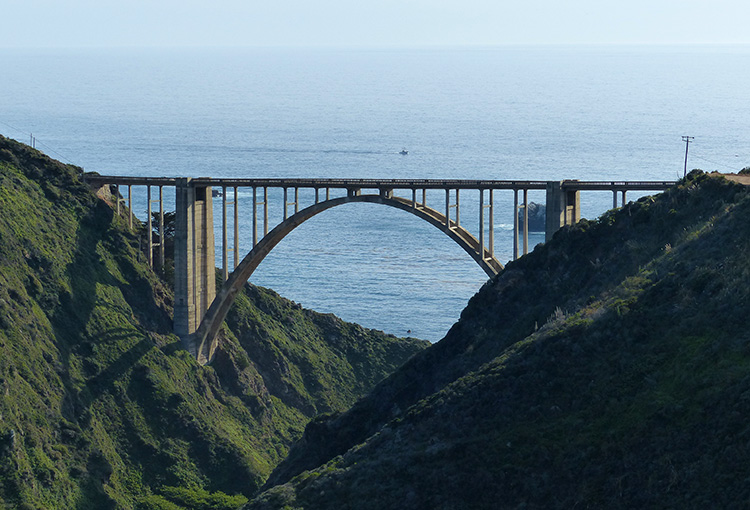
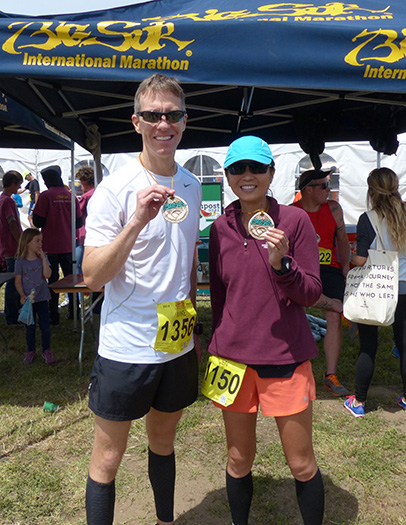
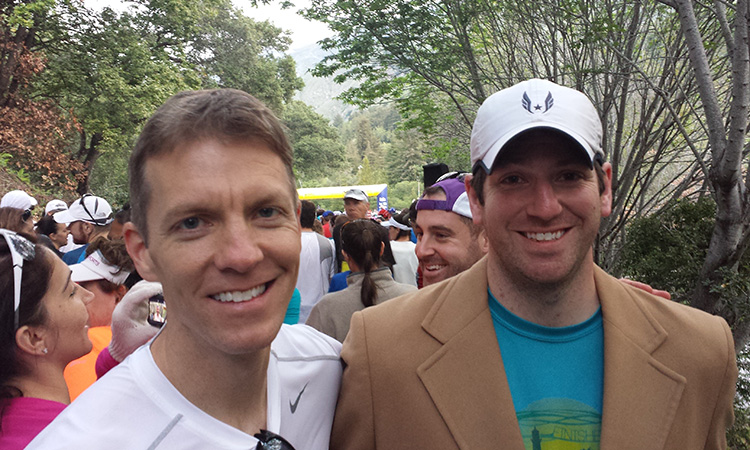
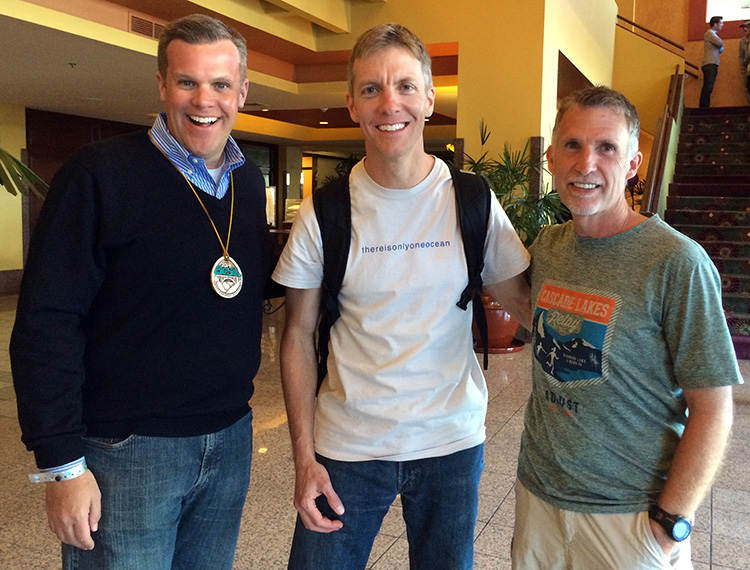
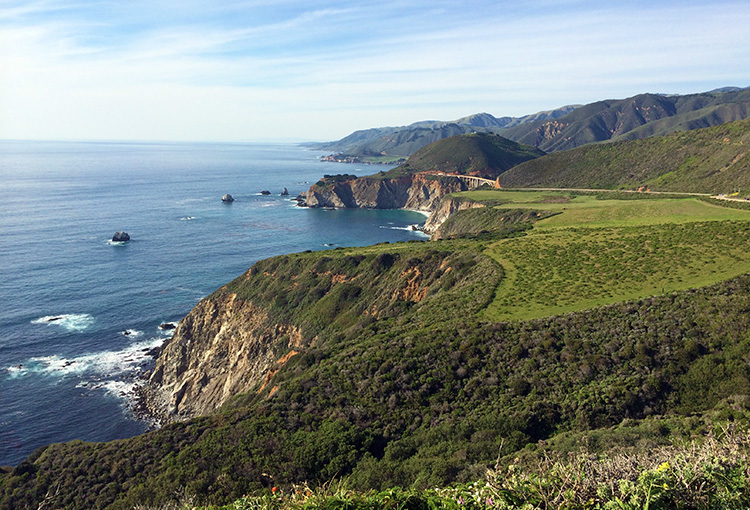
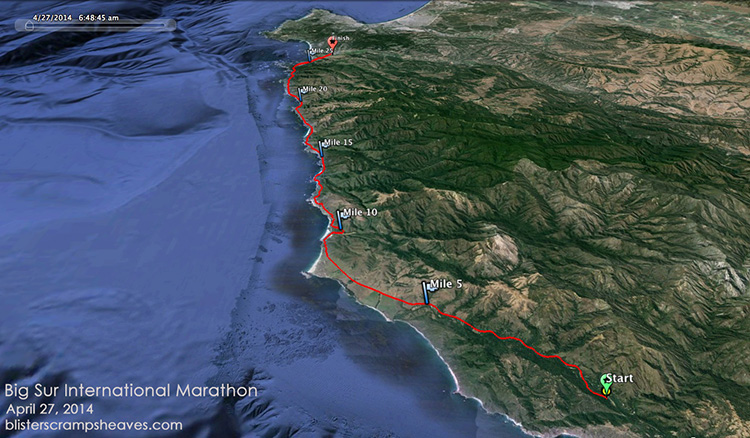
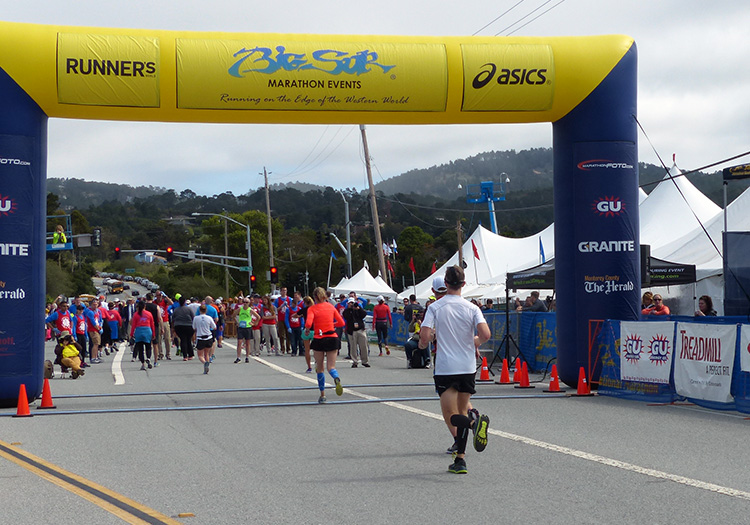
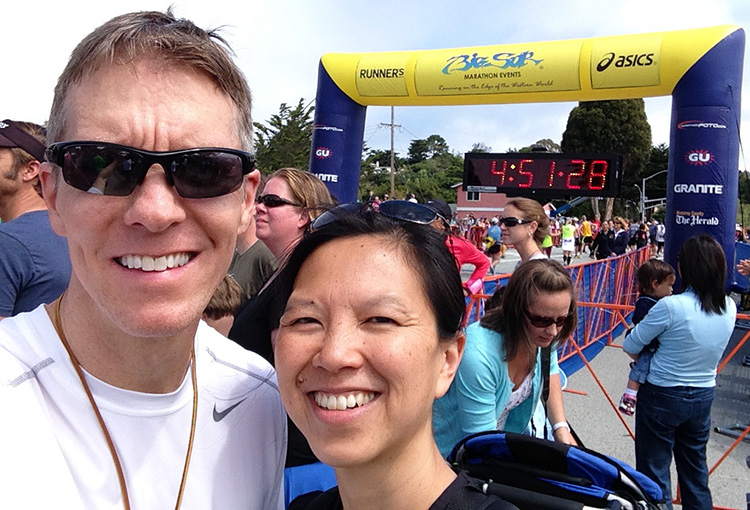
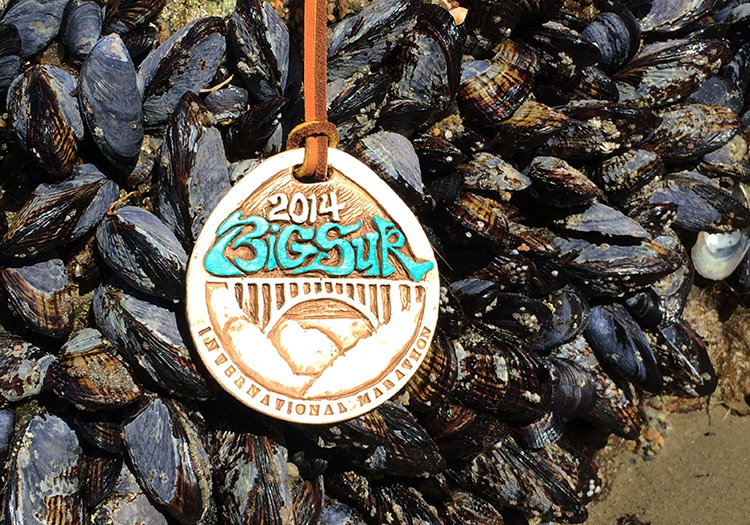
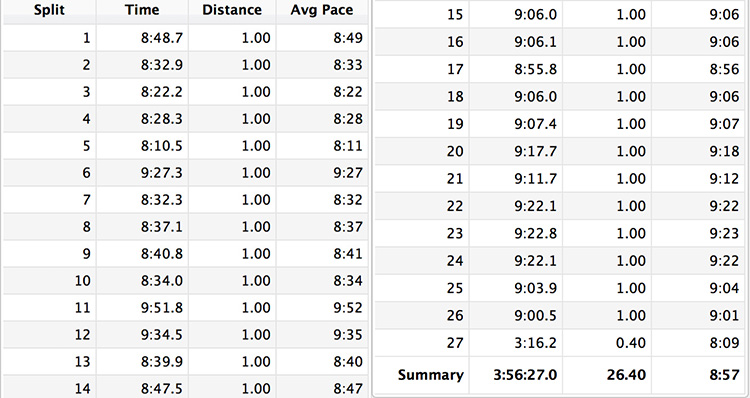
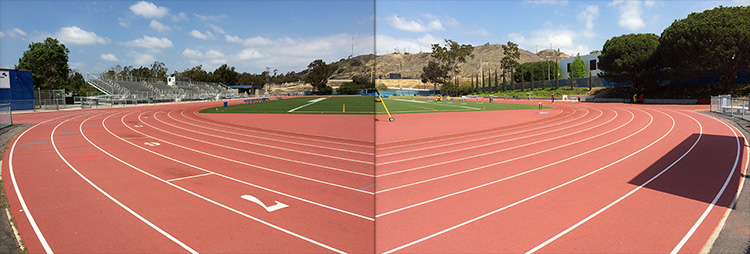
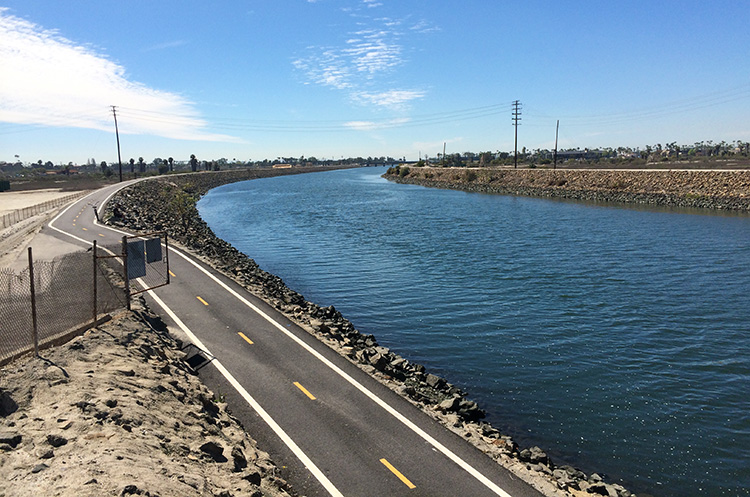

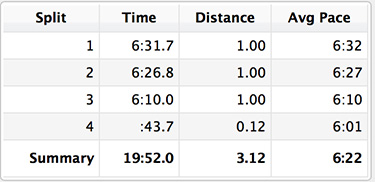
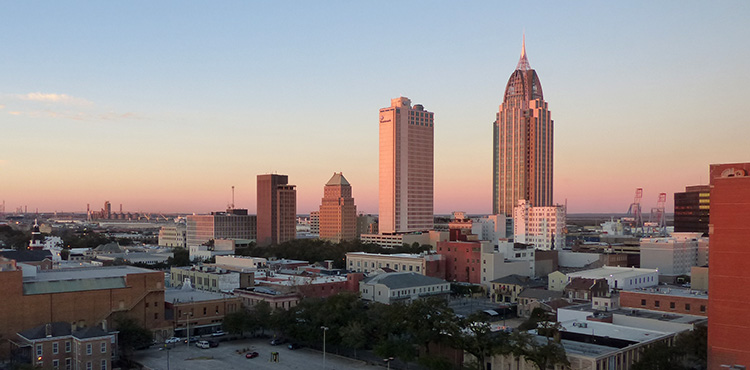
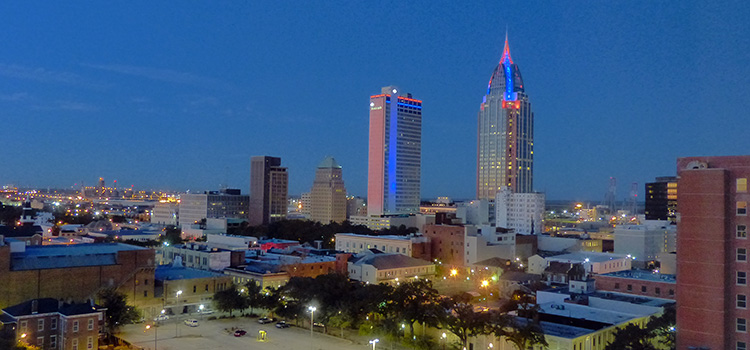
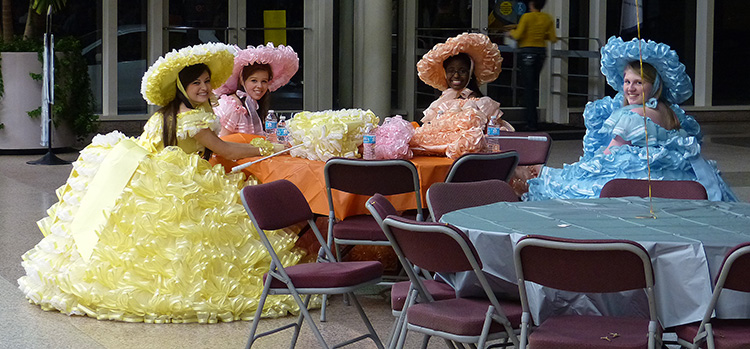
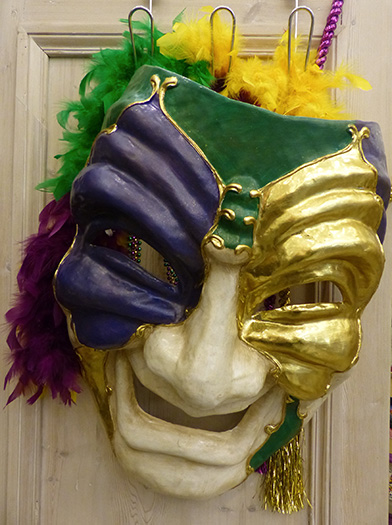
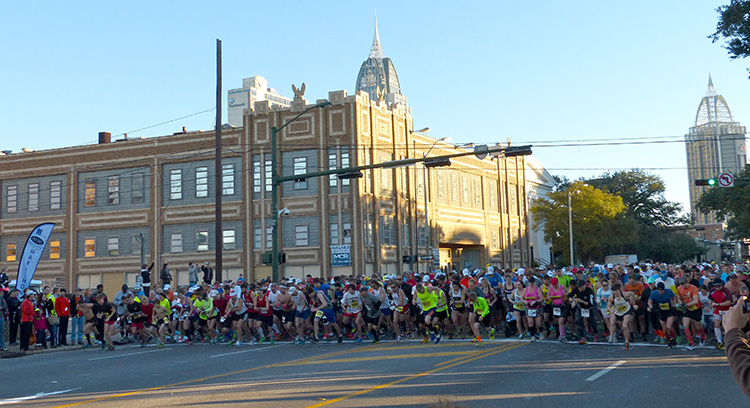
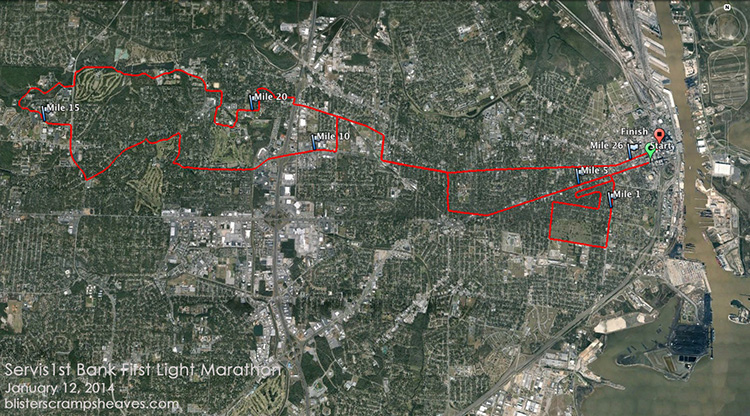
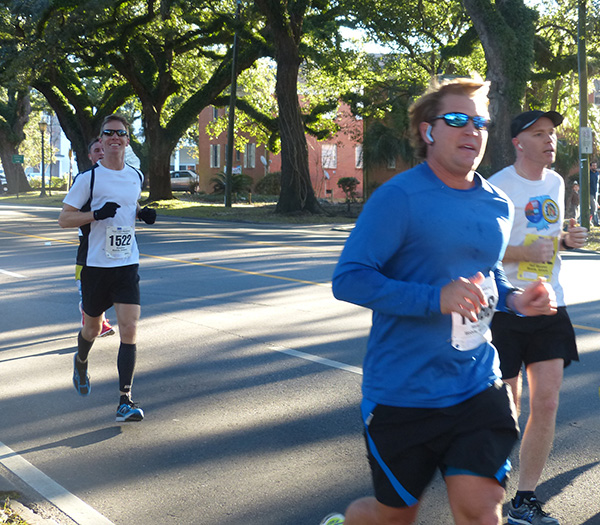
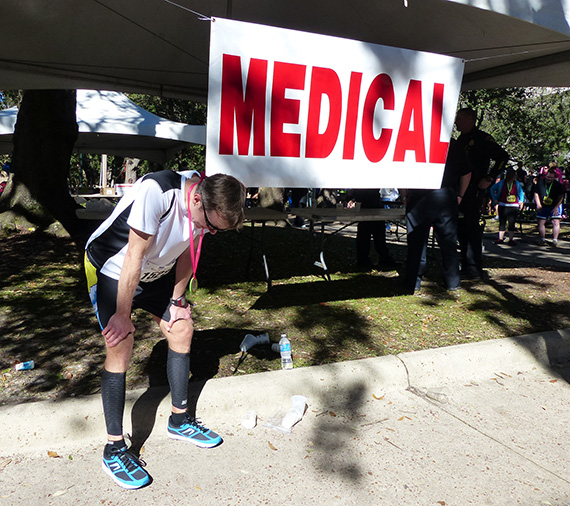
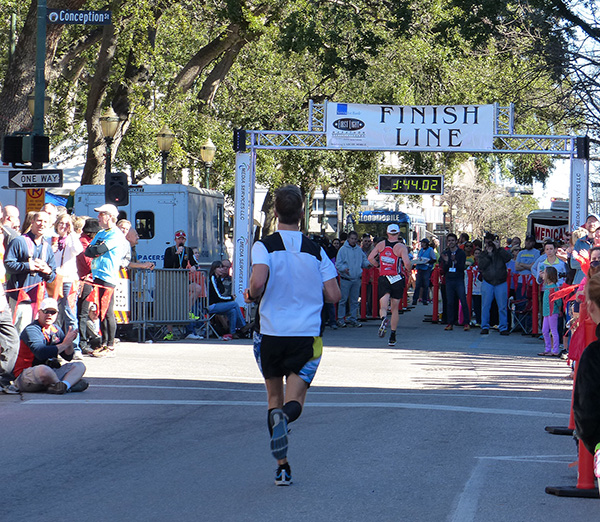
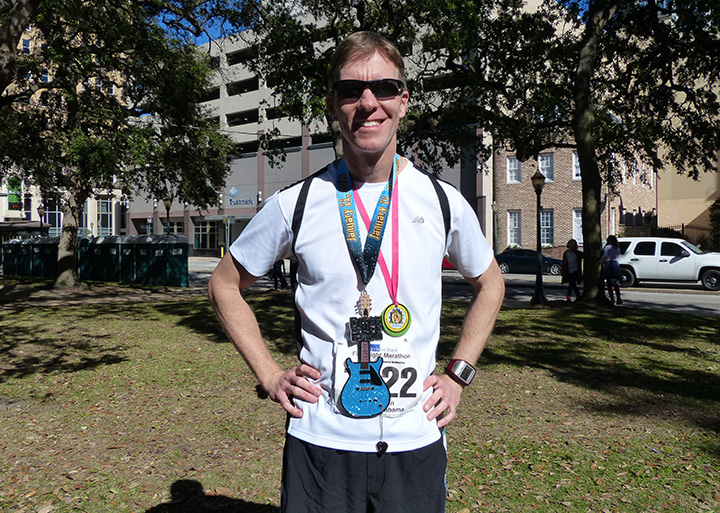
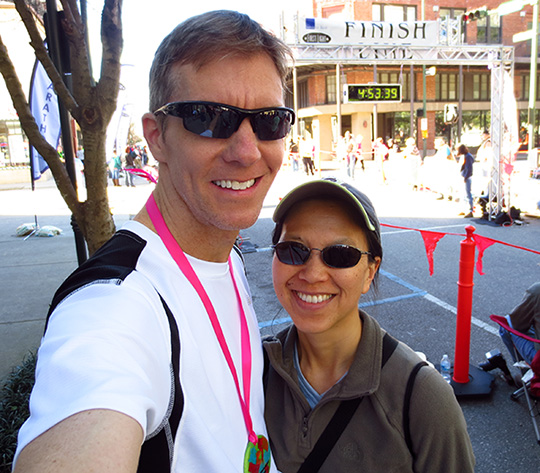
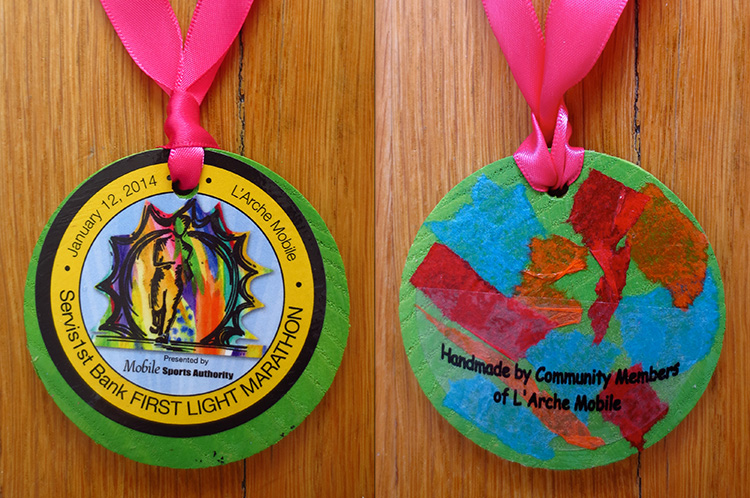
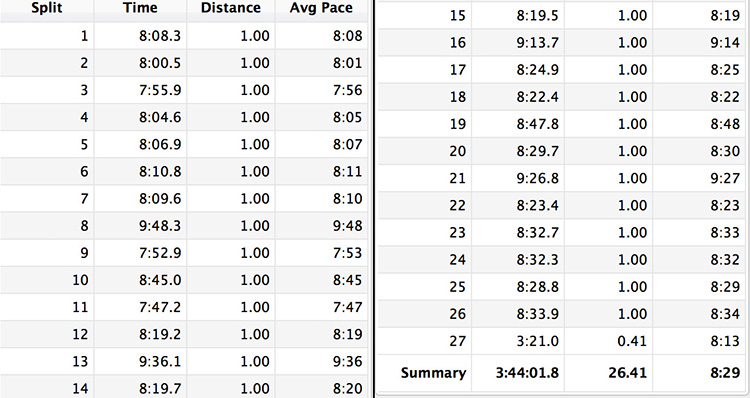


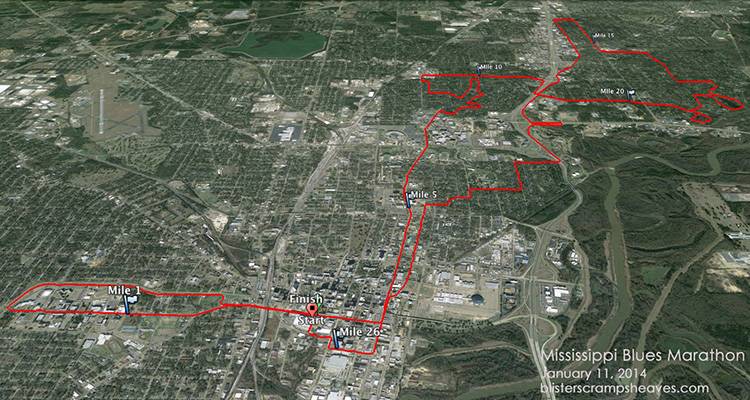
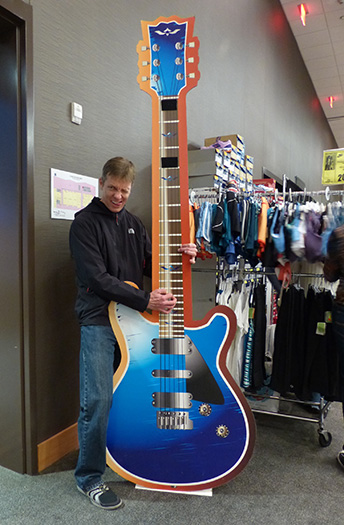


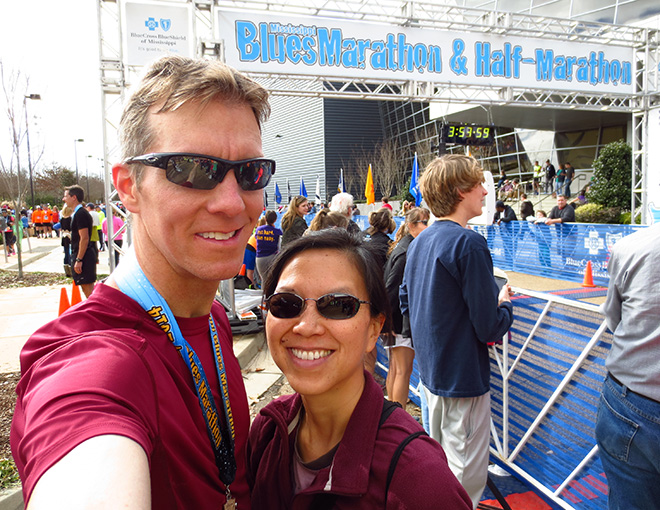
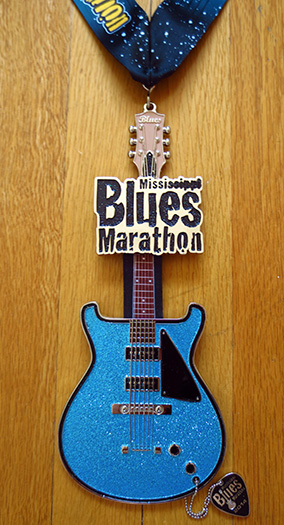


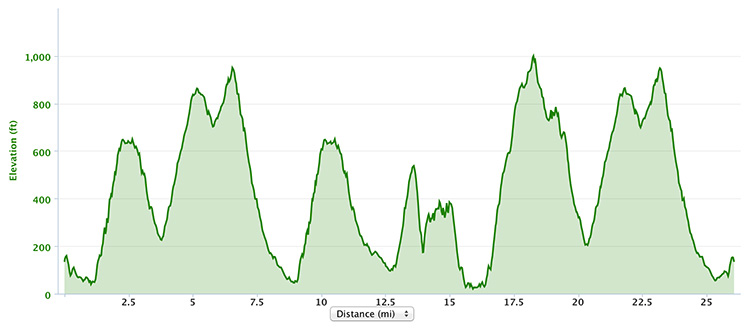


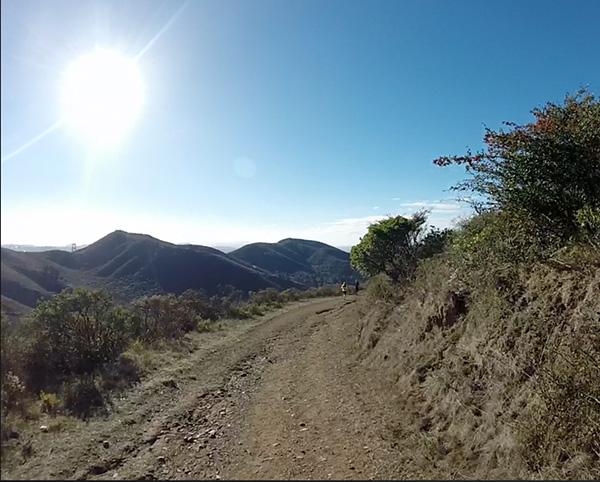


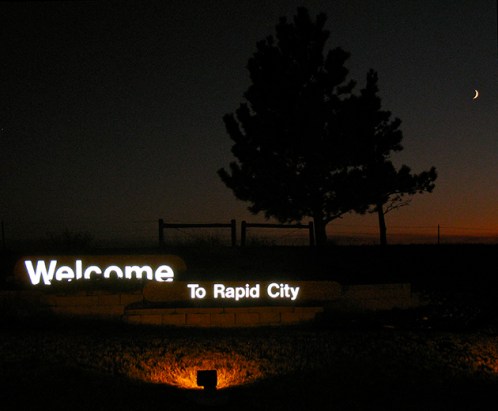


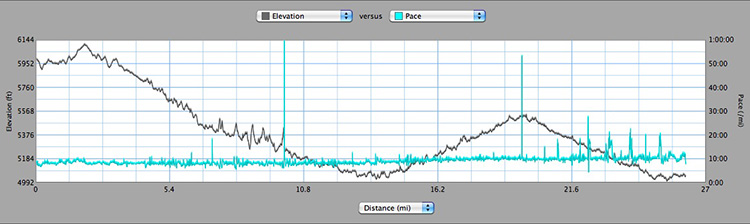


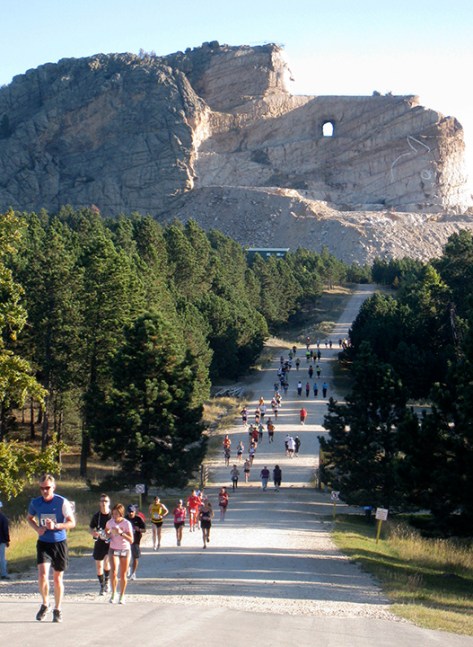

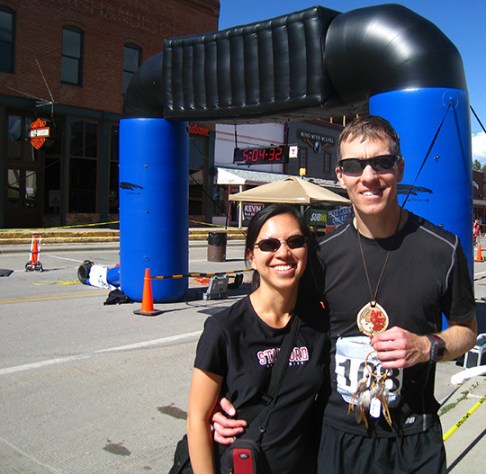
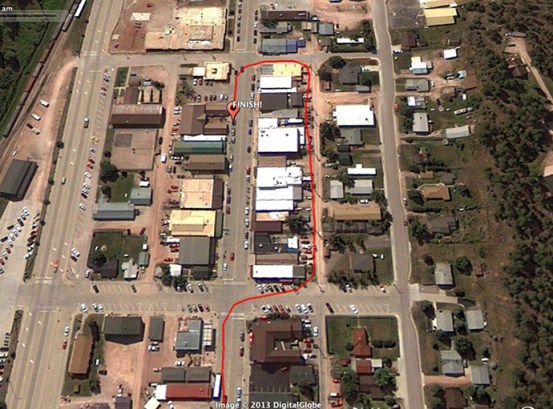

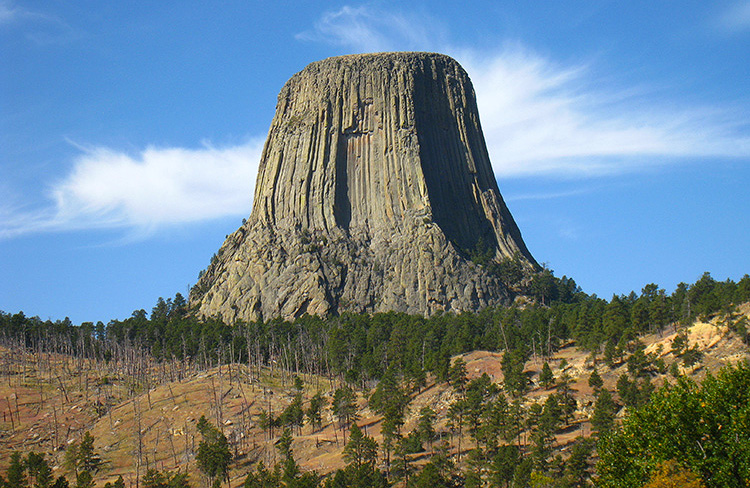



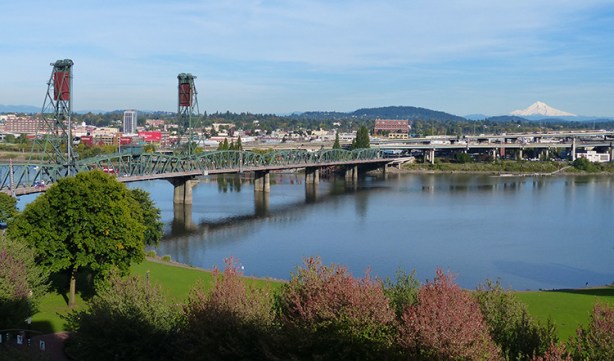


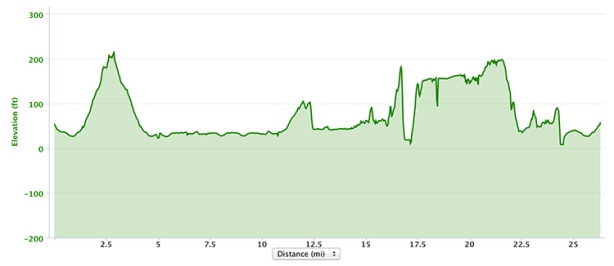
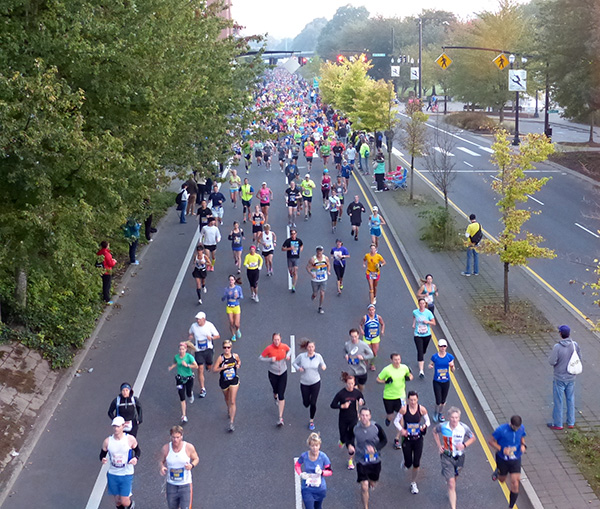

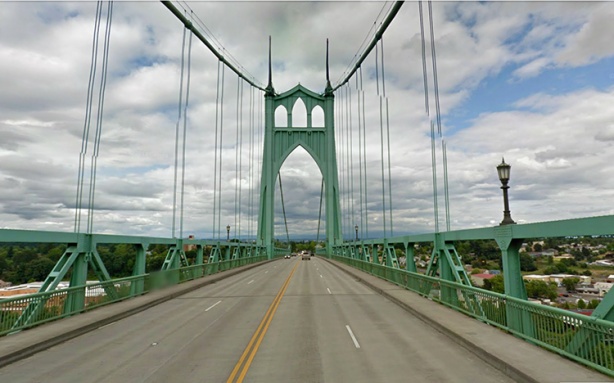
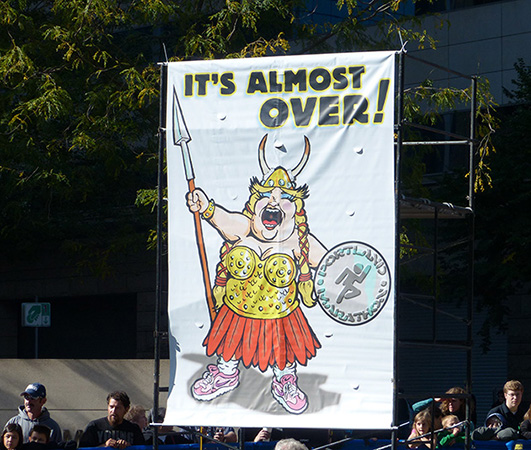
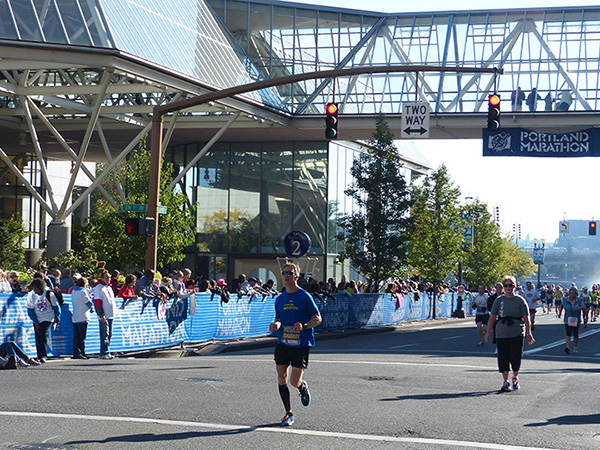

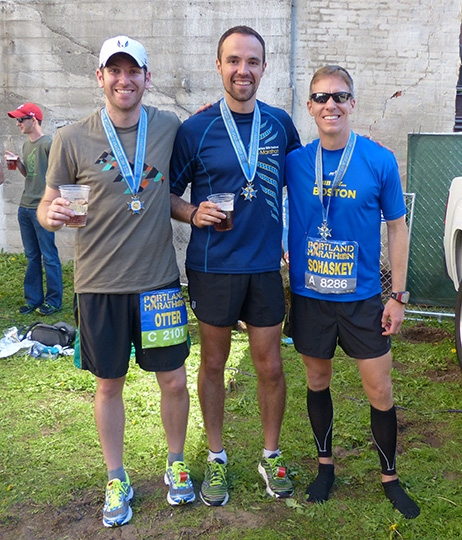


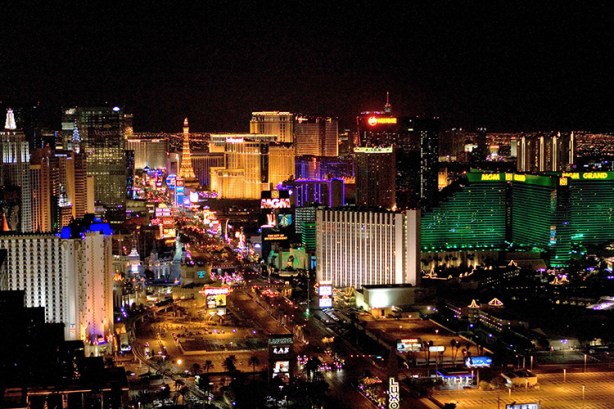


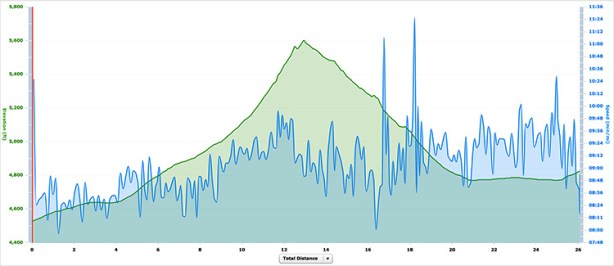


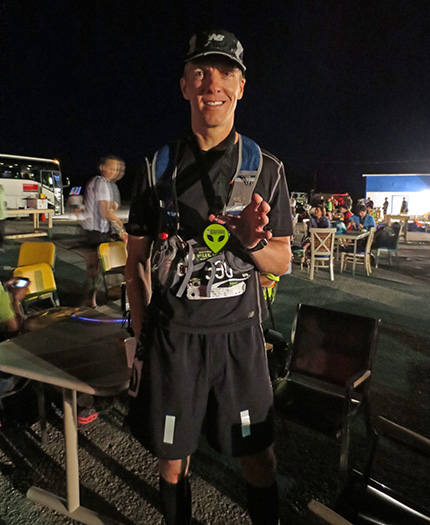





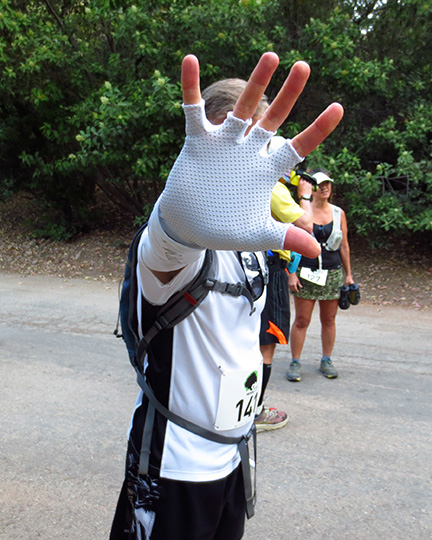
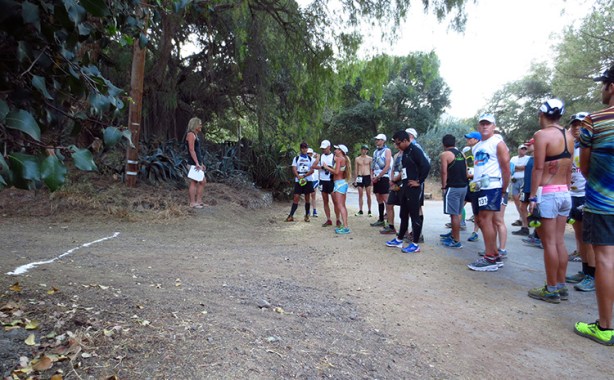


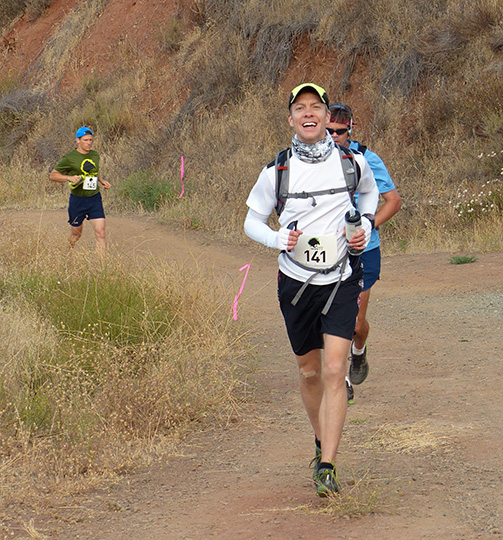



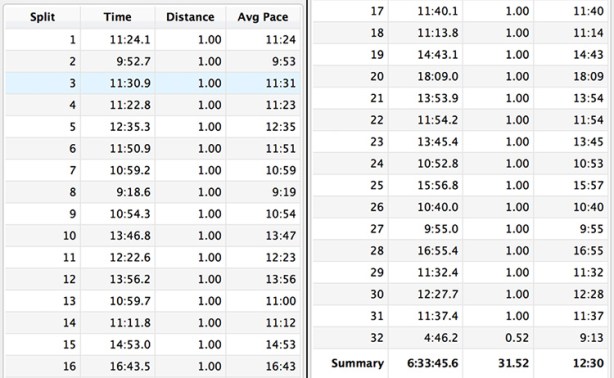


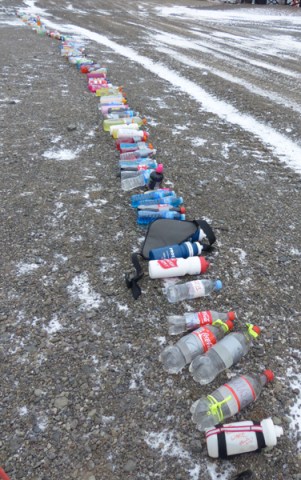

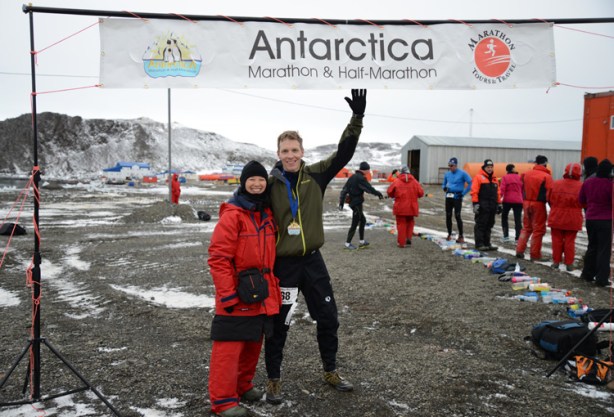


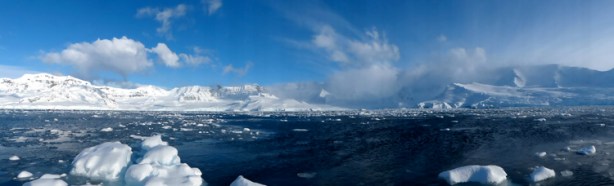

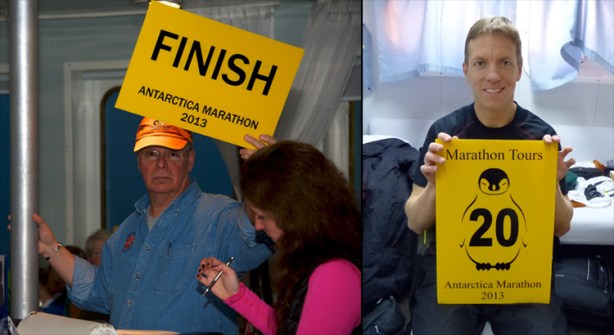

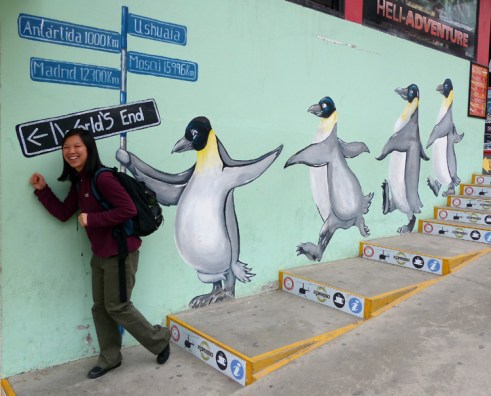
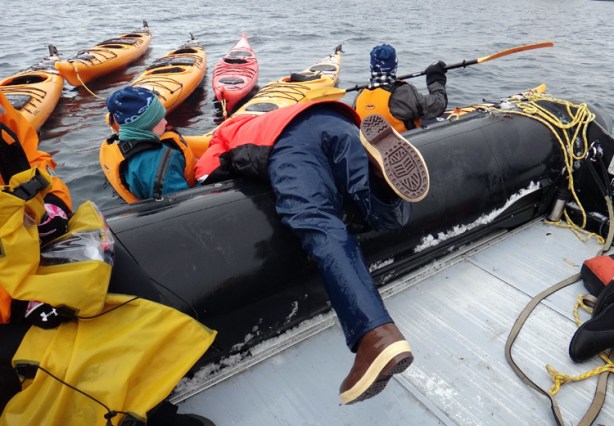

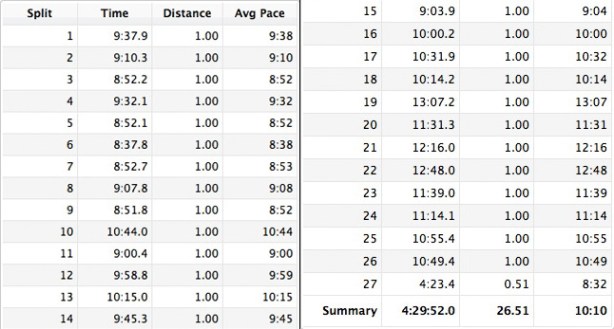
 Blisters, Cramps & Heaves